Form 1023 Checklist: 501(c)(3) Application Requirements
Nonprofit Formation and IRS Compliance Resource
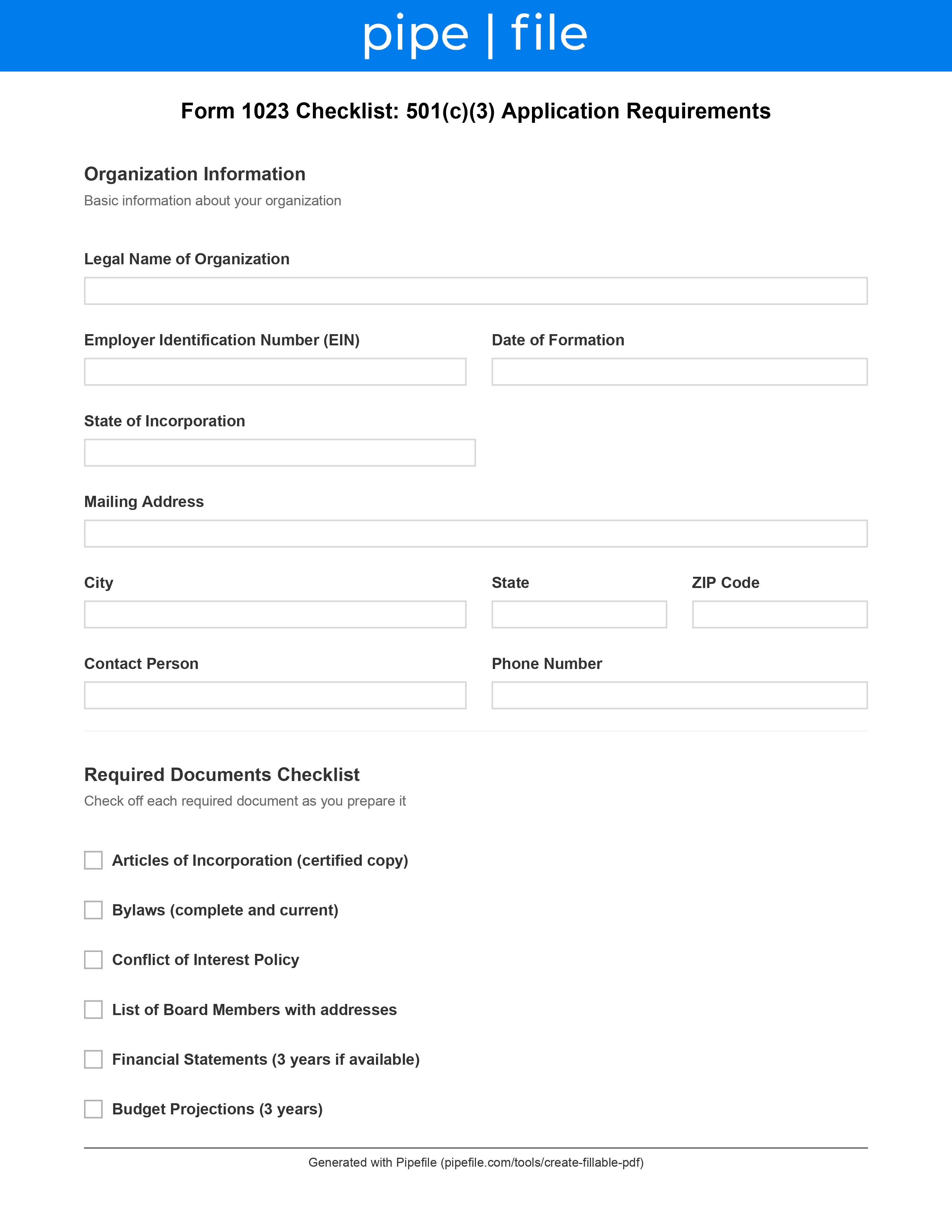
Streamline your 501(c)(3) application with our Form 1023 checklist. For nonprofit founders, attorneys, and formation services. Form 1023 is the IRS application for recognition of exemption under section 501(c)(3). Ensure your organizing document has the required charitable-purpose and dissolution language, gather narrative description of activities, governance and compensation information, conflict of interest policy, financial data and budget, public-support information if claiming public charity status, and required schedules and user fee so you file a complete application and avoid delays or requests for additional information. Use Form 1023-EZ if you qualify for the streamlined option.
Key Benefits
Common Use Cases
Frequently Asked Questions
What is the difference between Form 1023 and Form 1023-EZ?
What must be in the organizing document for 501(c)(3)?
When must we file Form 1023 for retroactive exemption?
What is the Form 1023 user fee?
Checklist
Legal Documents
Articles must include purpose that is exclusively 501(c)(3)-type; dissolution clause directing assets to another exempt org or government; and no private inurement. Amend articles if needed before or with the application.
IRS may request bylaws. They should align with articles and reflect governance (board, officers, meetings). Adopt before or at organizational meeting; keep signed copy.
Application Narrative
Detailed description of what the organization does and will do—programs, who is served, how. Be specific; generic language can trigger questions. Explain how activities further exempt purposes.
Governance & Compensation
List all who receive or will receive compensation; amounts and basis. Document that compensation is reasonable. Family or insider relationships must be disclosed. No inurement.
IRS expects 501(c)(3)s to have a conflict of interest policy. Adopt before filing; attach to application. Supports governance and reasonableness of transactions with insiders.
Financial
Report actual figures for years you have been in existence and projected figures for current and next year. Use IRS categories. Start-up organizations may have minimal or no revenue initially.
Most applicants claim public charity status (e.g. 509(a)(1) or 509(a)(2)). Complete the public support schedule and narrative as required. Private foundation rules apply if you do not qualify as public charity.
Application
Form 1023 instructions list which schedules apply. Common: Schedule A (activities), Schedule O (compensation, family relationships). Answer all questions; attach explanations where needed.
Submission
Check IRS Form 1023 page for current fee. Pay electronically (pay.gov) or as instructed. Include payment proof or confirmation with submission. Fee is generally nonrefundable.
27 months from end of formation month for exemption to apply from formation. After that, exemption typically from postmark date only. Extensions may apply in limited circumstances; see instructions.
Inconsistent name or EIN can delay processing. Use exact legal name and EIN from IRS EIN assignment. Confirm address for IRS correspondence.