Nonprofit Conflict of Interest Policy Template
Nonprofit Governance and Board Compliance Resource
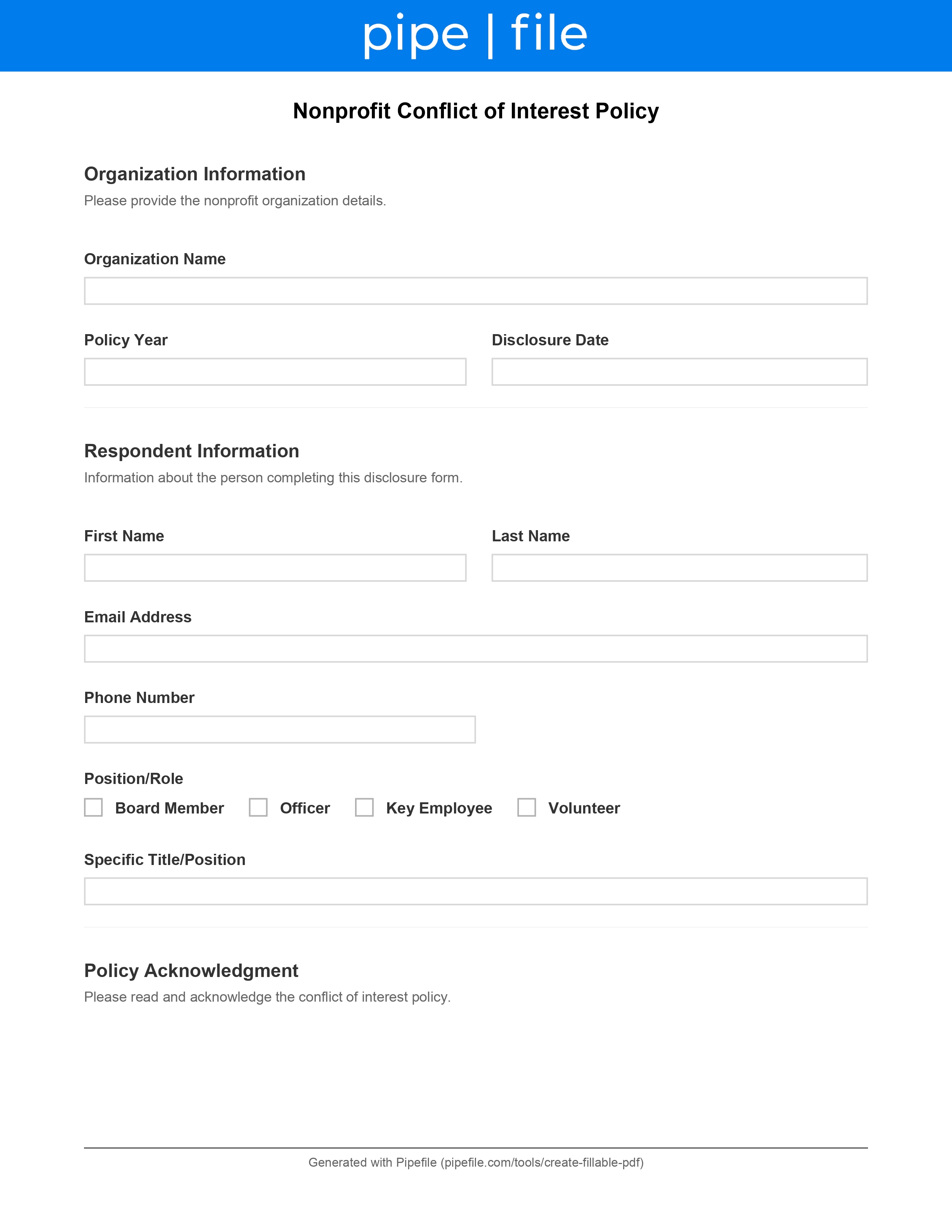
Streamline nonprofit governance with our conflict of interest policy template and checklist. For 501(c)(3) and other tax-exempt organizations, boards, and attorneys. The IRS expects nonprofits to have a conflict of interest policy; many state laws and best practices require one. Ensure your policy defines covered persons and financial interests, requires disclosure, establishes recusal and disinterested decision-making, provides for annual affirmations and documentation, and addresses violations so you protect the organization and meet governance standards.
Key Benefits
Common Use Cases
Frequently Asked Questions
Does the IRS require a conflict of interest policy?
Who should be covered by the policy?
What is a financial interest for conflict purposes?
How should the board handle a disclosed conflict?
Checklist
Policy Framework
Clearly state that the policy is to protect the organization's interest when it is contemplating a transaction or arrangement that might benefit a covered person. List who is covered (board, officers, key employees, committee members, family).
Board reviews the policy periodically and amends as needed. Document adoption and any amendments in board minutes.
Definitions
Interested person = covered person with a financial interest. Financial interest = ownership, compensation, or other arrangement; often with a de minimis exception. Define family (spouse, children, siblings, etc.) and related entities for clarity.
Disclosure
Covered persons must disclose any financial interest in a transaction or arrangement before the board or committee discusses or votes. Require an annual disclosure statement listing known interests; update when circumstances change.
Procedures
After disclosure, the board or committee (excluding the interested person) determines whether a conflict exists. Document the determination. If no conflict, the person may participate; if conflict, recusal procedures apply.
When a conflict exists, the interested person must not participate in discussion or vote. Policy often requires the person to leave the room. Only disinterested directors may deliberate and vote.
The board or committee may approve the transaction only if a majority of disinterested directors determine it is in the organization's best interest and fair. Some policies require competitive bids or documentation of fairness.
Documentation
Minutes should record the disclosure, the decision that a conflict existed, the recusal, and the vote of disinterested directors. Keeps a record for IRS, auditors, and future boards.
Each covered person signs an annual statement disclosing known financial interests or certifying none. Kept on file. Supports Form 990 and governance reviews.
Enforcement
Policy may state that violations should be reported to the board chair or a designated person, investigated, and remedied. Repeat or serious violations may result in removal or other action per bylaws.