Home/Templates/Legal/Nonprofit Annual Compliance Checklist

Nonprofit Annual Compliance Checklist

Nonprofit Governance and Compliance Resource

Streamline nonprofit annual compliance with our checklist for 501(c)(3) and other tax-exempt organizations. For boards, staff, and advisors. Cover federal Form 990 (or 990-EZ / 990-N), state charitable registration renewals and annual reports, board meeting and minute requirements, conflict of interest annual disclosures, registered agent and corporate filings, insurance and governance reviews, and record retention so you stay in good standing with the IRS, state charity offices, and your own bylaws. Use this list year-round to avoid missed deadlines and penalties.
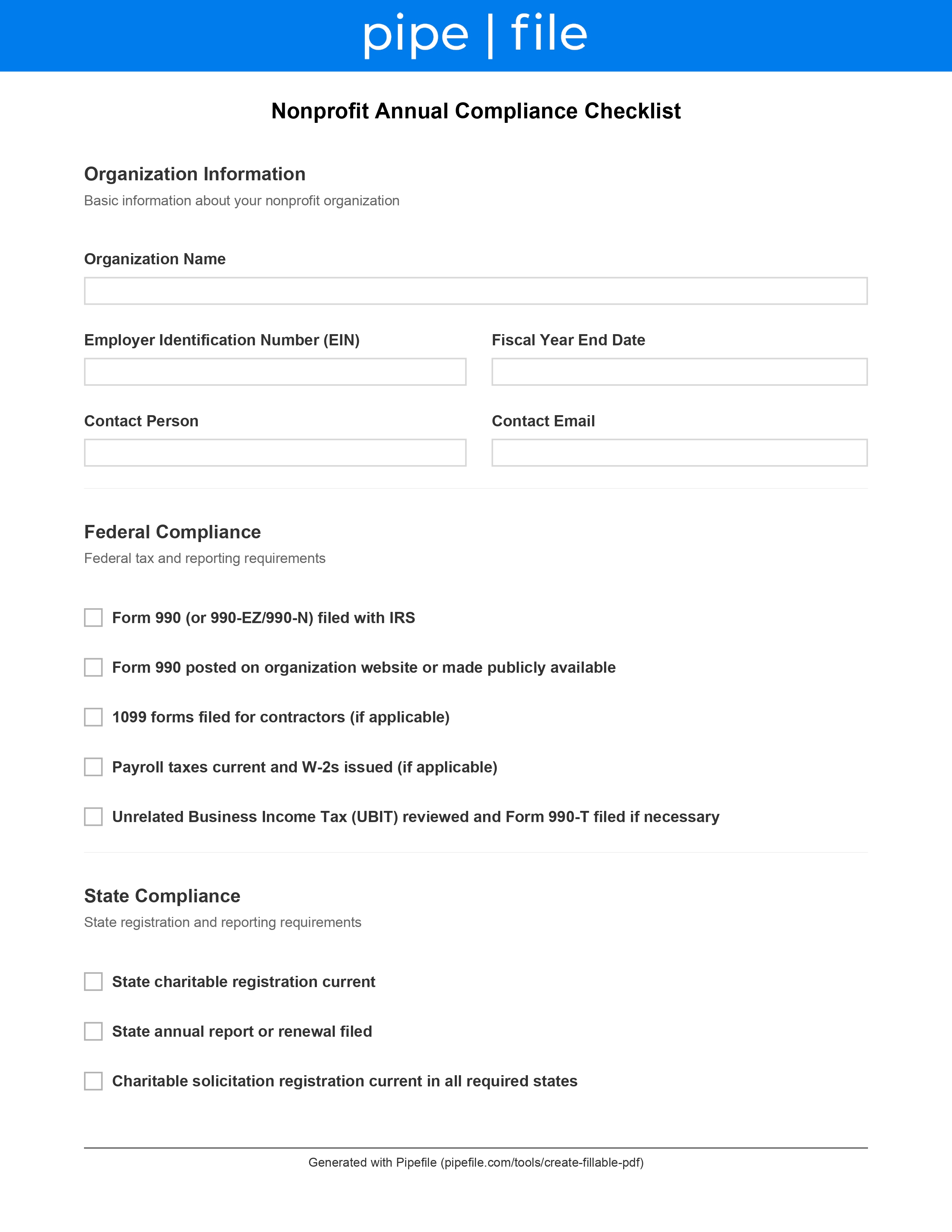
Nonprofit Annual Compliance Checklist form template preview

Key Benefits

Meet federal and state filing deadlines in one place
Track Form 990, state charity, and corporate annual reports
Fulfill board and governance obligations (meetings, conflict disclosures)
Reduce risk of penalties and loss of exempt status
Support audits and grant compliance
Professional nonprofit compliance workflow

Common Use Cases

501(c)(3) boards and staff managing annual complianceNonprofit CFOs or bookkeepers coordinating tax and state filingsAttorneys and CPAs advising nonprofits on ongoing obligationsChurches, charities, and educational organizationsNonprofits registered to solicit in multiple statesNew board members or staff learning the compliance calendar

Frequently Asked Questions

When is Form 990 due?
Form 990 (or 990-EZ or 990-N) is due by the 15th day of the 5th month after the end of your fiscal year (e.g. May 15 for calendar-year organizations). Extensions are available. Small organizations may file 990-N (e-postcard) if gross receipts are $50,000 or less; mid-size may use 990-EZ. Failure to file for three consecutive years can result in automatic revocation of tax-exempt status.
What state filings are required annually?
Requirements vary by state. Commonly: (1) state charity registration renewal and annual report (where you are registered to solicit or operate), (2) secretary of state annual report or biennial report (corporate good standing), and (3) registered agent confirmation if required. Some states have different due dates and forms; check each state where you are registered.
Do we need to file in every state where we solicit?
Most states require nonprofits that solicit donations in that state to register and file annual renewals or reports. If you fundraise nationally (e.g. online), you may have obligations in many states. Exemptions exist (e.g. below threshold, religious). Track where you solicit and each state's rules; consider a compliance calendar or advisor.
What governance items should we do annually?
Typical annual governance tasks include: holding the required board meetings per your bylaws, documenting minutes, collecting signed conflict of interest disclosure forms from directors and officers, reviewing and updating key policies (e.g. conflict policy, whistleblower), confirming registered agent and corporate records, and reviewing insurance (D&O, general liability). Some organizations do an annual board self-assessment or audit committee review.

Checklist

Federal Tax

File federal Form 990, 990-EZ, or 990-N by deadline (5th month after fiscal year end)
Required

Choose correct form by revenue and assets. 990-N for gross receipts ≤$50K; 990-EZ for smaller orgs within limits; full 990 otherwise. Extensions available. Keep copy and confirm acceptance (IRS acknowledgment).

State Charity

Renew state charitable registration and file annual report in each state where registered
Required

States where you solicit or operate may require annual renewal, fee, and/or report. Due dates vary. Track all states where you are registered; file on time to avoid penalties and suspension.

State Corporate

File secretary of state (or equivalent) annual or biennial corporate report
Required

Keeps the corporation in good standing in state of incorporation. Often updates officers, address, registered agent. Missed filings can lead to administrative dissolution.

Confirm registered agent is current and address on file is correct
Required

Agent must be available to accept service and state notices. Update state if you change agent or address. Some states require annual confirmation.

Governance

Hold required board meetings per bylaws and document minutes
Required

Bylaws typically specify minimum meetings per year. Minutes should record attendance, key decisions, and any conflict disclosures and recusals. Keep in corporate records.

Collect annual conflict of interest disclosure statements from directors and officers
Required

Per your conflict of interest policy. Each covered person signs and dates; file with corporate records. Supports Form 990 and good governance.

Periodic review of key policies (conflict of interest, whistleblower, document retention)

Many boards review policies annually or every few years. Update as needed and document adoption in minutes. Supports Form 990 governance questions.

Risk Management

Review and renew D&O, general liability, and other insurance as applicable

Directors and officers insurance and general liability are common. Ensure coverage is adequate and policies are in force; document in board records.

Employment

Complete employment and payroll filings (W-2s, 941, state withholding, etc.) if you have employees

Only if the organization has employees. Federal and state payroll tax, W-2s, and related filings have their own deadlines; include in your compliance calendar.

Records

Maintain corporate records (minutes, filings, financials) per retention policy
Required

Keep copies of all filed returns, state confirmations, board minutes, and key contracts. IRS and states may request them; auditors and grantors often require them.