Home/Templates/Legal/Nonprofit Bylaws Template

Nonprofit Bylaws Template

Nonprofit Formation and Governance Resource

Streamline nonprofit governance with our bylaws template and checklist. For attorneys, nonprofit founders, and boards establishing 501(c)(3) or other tax-exempt organizations. Ensure your bylaws cover corporate name and office, purpose, members (if any), board composition and meetings, officers, committees, conflict of interest, amendments, and indemnification so you meet state requirements and IRS expectations for good governance. Adopt bylaws after filing articles of incorporation.
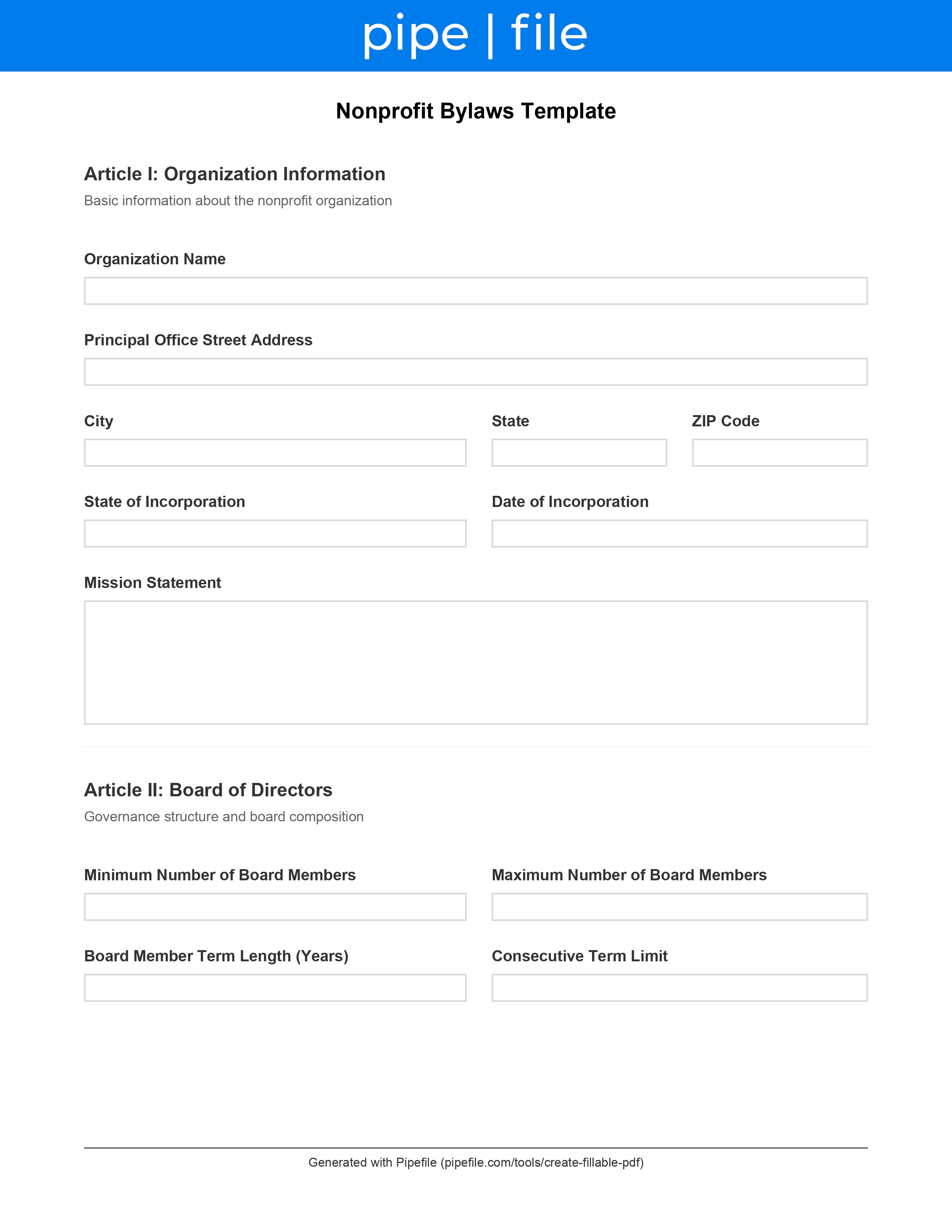
Nonprofit Bylaws Template form template preview

Key Benefits

Include provisions expected by state law and IRS
Define board composition, meetings, and committees
Establish officer roles and duties
Address conflict of interest and indemnification
Support Form 1023 and ongoing compliance
Professional nonprofit governance workflow

Common Use Cases

Attorneys drafting bylaws for new 501(c)(3) or other nonprofitsNonprofit founders adopting bylaws after incorporationBoards updating or restating existing bylawsChurches, charities, and educational organizationsMembership vs non-membership nonprofit structureLegal and compliance review of governance documents

Frequently Asked Questions

What is the difference between nonprofit bylaws and articles of incorporation?
Articles of incorporation are filed with the state and create the legal entity; they typically include name, purpose, registered agent, and dissolution clause. Bylaws are internal rules adopted by the corporation and govern how the board, officers, and (if applicable) members operate—meetings, voting, committees, conflict of interest, and amendments. Both are important for 501(c)(3) eligibility and governance.
Do nonprofit bylaws need a conflict-of-interest policy?
The IRS does not require conflict-of-interest language in the bylaws themselves, but it expects 501(c)(3) organizations to have a conflict-of-interest policy. Many nonprofits include a bylaw section requiring adoption of and compliance with such a policy. This supports transparency and helps satisfy the IRS on governance.
Should our nonprofit have members or be memberless?
A memberless (director-only) nonprofit has no voting members; the board is self-perpetuating. A membership nonprofit has members who may elect the board and vote on major matters. Bylaws must clearly state whether there are members and, if so, their rights, meetings, and voting. Choice affects governance and state reporting.
When should we adopt nonprofit bylaws?
Adopt bylaws after the state approves your articles of incorporation. The incorporators or initial board typically adopt the first bylaws at an organizational meeting. Bylaws should be in place before applying for an EIN or filing Form 1023/1023-EZ, as the IRS may ask about governance.

Checklist

Identity

Corporate name and principal office address
Required

Match name to articles of incorporation. Principal office may be the same as or different from registered office.

Purpose

Statement of purpose (consistent with articles and exempt purpose)
Required

Reference or restate the charitable/exempt purpose from the articles. Keeps bylaws aligned with IRS and state.

Members

Members: whether the corporation has members; if so, classes, rights, dues, meetings, and voting
Required

State clearly if there are no voting members (director-only) or define membership structure, eligibility, and member meeting/voting procedures.

Board

Board of directors: number, qualifications, terms, election or appointment, removal
Required

Minimum number (often 3+), staggered or annual terms, how directors are elected (by board or members). Include removal and resignation.

Board meetings: frequency, notice, quorum, voting, action by consent
Required

Regular and special meetings, advance notice, quorum (e.g. majority of directors), majority vote. Allow unanimous written consent where permitted by state.

Committees: authority to create committees (executive, finance, audit, etc.); scope and limits

Board may create committees; define whether they have authority to act or are advisory. Some states restrict delegation. Audit committee may be required for larger nonprofits.

Officers

Officers: titles (e.g. President, Secretary, Treasurer), duties, election, term, removal
Required

At minimum, many states require a president and secretary. Define duties and who may hold more than one office. Tie to board election and term.

Governance

Conflict of interest: require adoption of and compliance with a conflict-of-interest policy
Required

Bylaw section requiring a written policy and disclosure/recusal procedures. Supports IRS governance expectations and best practices.

Indemnification of directors and officers (per state law)

Permit indemnification to the fullest extent allowed by state law. Optional but common. State statute may mandate or limit; align bylaws with statute.

Amendments

Amendment of bylaws: who may amend (board and/or members), vote required, notice
Required

Typically board may amend by supermajority; if there are members, member vote may be required for certain changes. Check state law.

Administrative

Fiscal year (e.g. January 1–December 31 or July 1–June 30)
Required

Define for financial and reporting consistency. Match to IRS and grant reporting where possible.

Adoption

Adoption: initial bylaws adopted by incorporators or initial board; signed and dated
Required

Record adoption at organizational meeting. Keep signed copy with corporate records. Amendments should be similarly documented.