Home/Templates/Legal/Grant Proposal Template for Nonprofits

Grant Proposal Template for Nonprofits

Nonprofit Grants and Fundraising Resource

Streamline grant applications with our grant proposal template and checklist for 501(c)(3) and other nonprofits. For development staff, grant writers, and program managers. Cover executive summary, organization description, need statement, goals and objectives, methodology, budget and budget narrative, evaluation plan, sustainability, and required attachments (IRS determination letter, board list, financials) so you meet funder guidelines and present a clear, compelling case. Use this structure to draft new proposals and to collect documents funders commonly request.
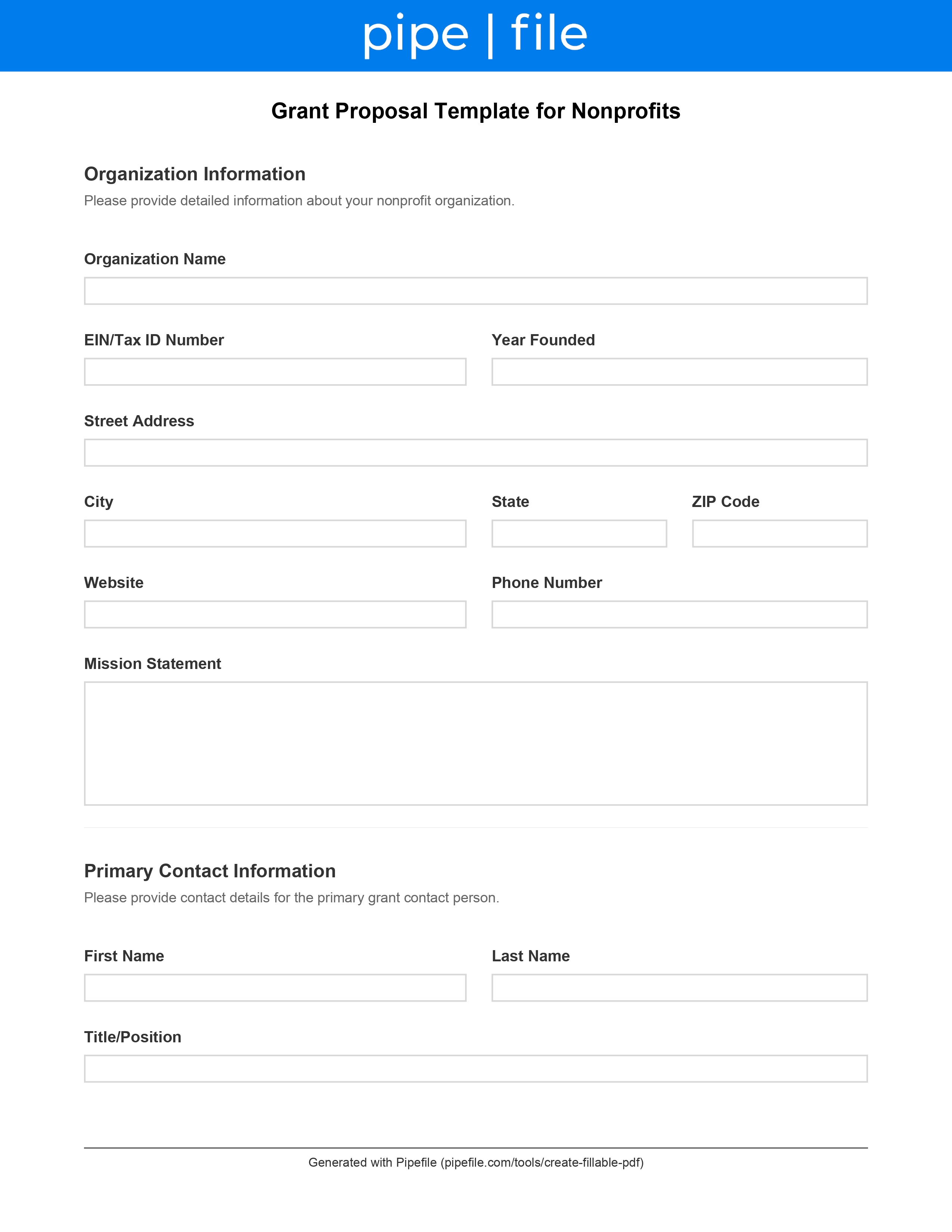
Grant Proposal Template for Nonprofits form template preview

Key Benefits

Structure proposals to meet common funder expectations
Gather narrative and budget elements in one place
Prepare attachments funders typically require
Tailor content to specific funder guidelines
Reduce last-minute document scrambling
Professional grant development workflow

Common Use Cases

501(c)(3) organizations applying for foundation or government grantsDevelopment staff and grant writers drafting proposalsProgram managers contributing to grant applicationsNonprofits building a reusable proposal toolkitOrganizations responding to RFPs and LOIsFirst-time grant applicants organizing their approach

Frequently Asked Questions

What should a grant proposal include?
Most funders expect: an executive summary or cover letter, description of your organization and its mission, a clear statement of need or problem, goals and measurable objectives, methodology or approach, a budget and budget narrative, an evaluation plan, and information on sustainability. Funder guidelines vary—always follow the funder's required format and page limits.
How long should a grant proposal be?
Length varies by funder. Some want 2–5 pages; others allow 10–15 or more. Government and large foundations often have detailed page limits per section. Read the guidelines and stick to them; going over can result in rejection or truncation. Use this template to draft content you can trim or expand as needed.
What attachments do funders usually want?
Common attachments include: IRS determination letter (501(c)(3) status), list of board of directors and key staff, organizational budget and recent financial statements (audit if required), current year budget, and sometimes letters of support or partnership agreements. Each RFP or guideline will list required attachments—checklist them so nothing is missing.
How do I tailor a proposal to a funder?
Review the funder's mission, priorities, and past grants; align your need statement and outcomes with their goals. Use their language where appropriate. Follow their format and answer every question they ask. Address geographic or population restrictions. Proofread and have someone else review before submission.

Checklist

Narrative

Cover letter and/or executive summary (organization, request amount, purpose, key outcomes)
Required

Brief overview so the reader understands who you are, what you're asking for, and why. Many funders read this first; make it clear and compelling. Match length to funder instructions.

Organization description: mission, history, programs, and capacity to do the work
Required

Establish credibility. Include founding date, mission statement, key programs, staff and board capacity, and why your organization is well-positioned for this grant.

Need or problem statement (data, evidence, and relevance to funder priorities)
Required

Describe the need your project addresses. Use data and sources when possible. Tie the need to the funder's stated priorities and geographic/population focus.

Goals and measurable objectives (SMART or funder-specified framework)
Required

What will change as a result of the grant? Goals are broad; objectives should be specific, measurable, and time-bound. Align with funder's desired outcomes.

Methodology or approach: activities, timeline, and key staff or partners
Required

How will you achieve the objectives? Describe activities, sequence, who will do the work, and any partners. Timeline or work plan helps funders see feasibility.

Evaluation plan: how you will measure success and report to the funder
Required

How will you track outputs and outcomes? Data collection, tools, and reporting schedule. Many funders require interim and final reports; state how you'll comply.

Sustainability or future funding (beyond the grant period)

Funders often want to know how the project or organization will continue after the grant. Describe other revenue, earned income, or plans for follow-on funding.

Budget

Budget (line-item or categorical per funder format) and budget narrative
Required

Detail expenses requested and any matching or in-kind. Budget narrative explains each line (e.g. why this amount for personnel, supplies). Use funder's form or categories when required.

Attachments

IRS determination letter (501(c)(3) or equivalent tax-exempt status)
Required

Most foundations and government grants require proof of tax-exempt status. Provide a copy of the IRS determination letter; ensure it's current and legible.

Board of directors and key staff list (names, titles, brief bios if requested)
Required

Funder may require a list or one-page board/staff summary. Keep a current list and bios on file for quick inclusion.

Organizational budget and recent financial statements (audit if required)
Required

Often most recent 990, annual budget, and sometimes audited financials. Larger grants may require an audit; check the RFP.

Submission

Confirm all funder-specific requirements (format, word count, deadlines, attachments)
Required

Check the funder's guidelines for format (font, margins), page or word limits, required attachments, and submission method and deadline. Missing items can disqualify.