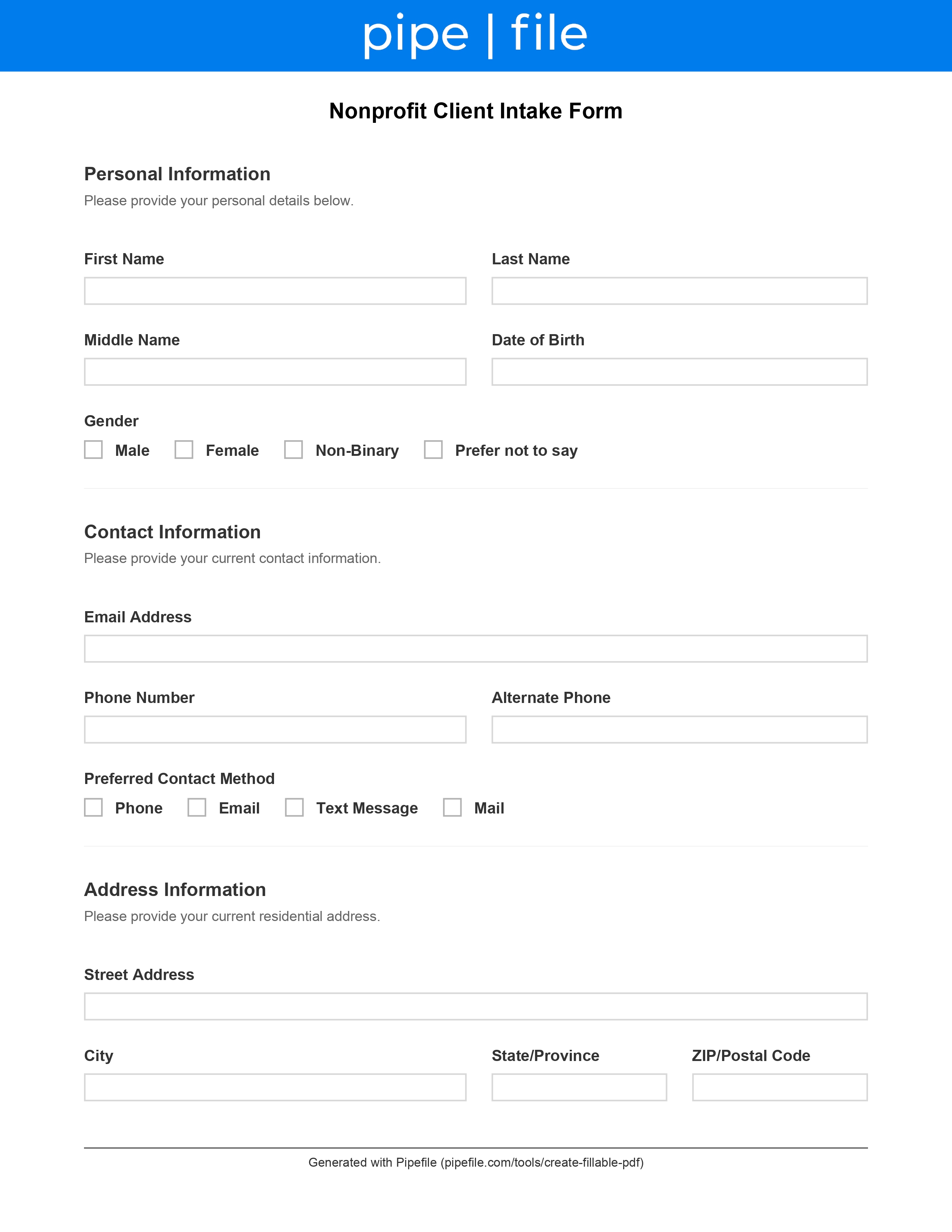
Nonprofit Client Intake Form
Nonprofit Attorney and Formation Resource
Streamline nonprofit client onboarding with our intake form guide. For attorneys, formation services, CPAs, and consultants who work with nonprofits. Collect client and organization contact information, type and purpose of the nonprofit, formation status (not yet formed, incorporated, EIN, 501(c)(3) status), state of formation, client goals (formation, exemption application, compliance, governance, grants), board and key staff overview, and timeline so you can assess scope, conflict-check, and plan next steps. Use this structure for initial consultations and new nonprofit engagements.
Key Benefits
Common Use Cases
Frequently Asked Questions
What is a nonprofit intake form used for?
What should I collect about formation status?
Why ask about client goals in the intake?
Should the intake form replace a document checklist?
Checklist
Client Information
Who is the primary contact? Preferred method and safe times. Language preference if any. Note if they represent the organization or are pre-formation.
Organization Information
Legal name as filed or to be filed with state. Confirm availability if not yet formed. DBA if different from legal name.
Brief description of what the organization does or will do. Confirms 501(c)(3) eligibility and supports purpose language for articles and Form 1023.
Where is the organization in the lifecycle? Drives whether you use formation checklist, 1023/1023-EZ checklist, or compliance checklist.
State where articles are or will be filed. Registered agent name and address if already formed. Affects formation and compliance steps.
Who has helped so far? Avoid duplication; coordinate on documents (e.g. articles, 1023) if another professional is involved.
Scope
What does the client want from this engagement? Formation only, Form 1023/1023-EZ, bylaws, conflict policy, annual compliance, grant prep. Define scope for engagement letter and deliverables.
Any deadline that affects formation, 1023 filing, or compliance? Helps prioritize and set milestones.
Governance
Who is on the board? Who are officers or key staff? Supports conflict check, 1023 compensation section, and governance documents.
Intake Process
Run conflict check before engagement. Note any prior representation of the organization, board members, or related entities. Clear conflicts before signing engagement letter.