Consulting Agreement Template
Consultants and Professional Services Resource
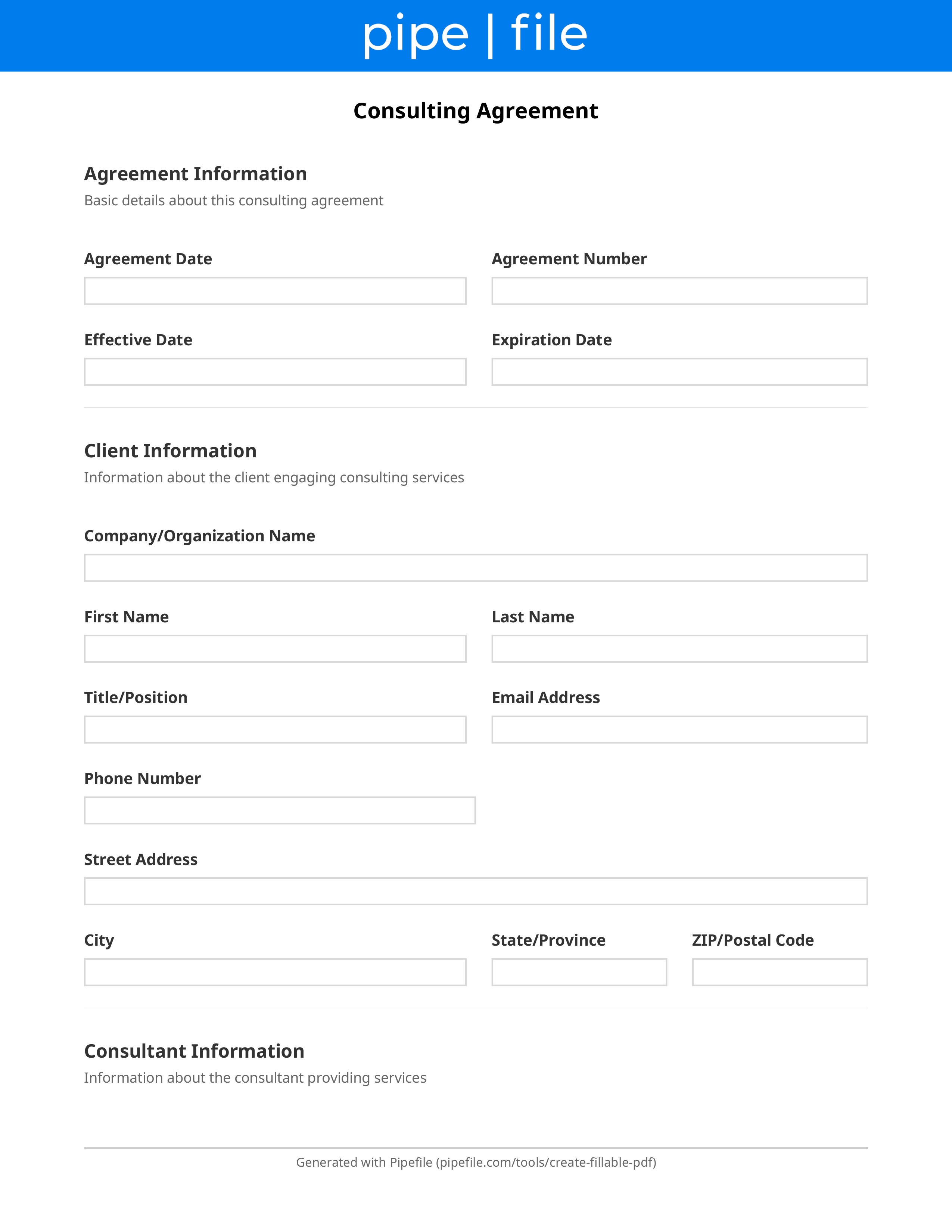
Formalize consulting engagements with our consulting agreement template and checklist. For consultants, clients, and professional service firms. A consulting agreement defines the parties, scope of services (or statement of work), term, compensation (hourly, fixed fee, or retainer), expenses, deliverables, and key legal terms such as independent contractor status, confidentiality, intellectual property, and termination. Use this checklist to draft or review consulting agreements so both sides are clear on scope, payment, and responsibilities. Customize for your industry and jurisdiction.
Key Benefits
Common Use Cases
Frequently Asked Questions
What is a consulting agreement?
Why include independent contractor language?
What compensation structures are common?
Who owns work product and intellectual property?
Checklist
Parties
Full legal names and addresses. If the consultant is an entity, specify the individual(s) performing the work if relevant. Designate primary contacts for each party.
Scope
Describe the services, deliverables, and any milestones. Reference an attached SOW if the agreement is a master agreement. Be specific to avoid scope creep; include a change-order process if needed.
List key deliverables and due dates. How acceptance works (e.g. client has X days to review; deemed accepted if no objection). Revisions included or extra.
Term
Fixed term for a project, or ongoing with termination for convenience or cause. Renewal terms if applicable. Notice period for termination.
Either party may terminate for cause (breach) or for convenience with X days' notice. Payment for work performed through termination. Return of materials. Survival of confidentiality and IP.
Compensation
Clearly state the fee structure. Hourly/daily rate and estimated hours; or fixed fee for the project/phase; or monthly retainer. Cap or estimate if hourly to avoid surprises.
When the consultant invoices (e.g. monthly, per milestone). When the client pays (e.g. net 30 from invoice date). Late payment interest or consequences. Method of payment.
Travel, materials, third-party costs. Pre-approval above a threshold if required. Receipts and reimbursement process. Or state that fees are inclusive of all expenses.
Legal
Consultant is an independent contractor. No benefits, withholding, or control over manner of work. Consultant responsible for own taxes and insurance. Helps both parties with classification.
Each party will protect the other's confidential information. Define what is confidential. Exclusions (public domain, etc.). Duration of obligation. Return or destroy on termination.
Who owns deliverables and IP created during the engagement (usually client, with assignment). Consultant's pre-existing IP and tools: license to client or retained. Moral rights waiver if applicable.
Cap on liability (e.g. fees paid in the last 12 months). Indemnity for third-party claims arising from breach or negligence. Mutual or one-way depending on leverage and risk. Consult counsel.
Which state's law governs. Venue for disputes. Optional: arbitration or mediation clause.
Execution
Duly authorized signatories. Effective date. Retain signed copy. Consider electronic signature.