Engagement Letter Template
Professional Services and Client Intake Resource
Define the scope and terms of professional engagements with our engagement letter template and checklist. For attorneys, accountants, consultants, and other professional service providers. An engagement letter confirms who the parties are, what services will be performed, what is excluded, fees and billing, term and termination, and each party's responsibilities so you reduce scope creep and disputes. Use this checklist to draft or review engagement letters before starting work. Customize for your industry and jurisdiction; many professions have ethics or regulatory expectations for written engagement terms.
Key Benefits
Common Use Cases
Frequently Asked Questions
What is an engagement letter?
When should I use an engagement letter?
Is an engagement letter a contract?
What if the client doesn't sign the engagement letter?
Checklist
Parties
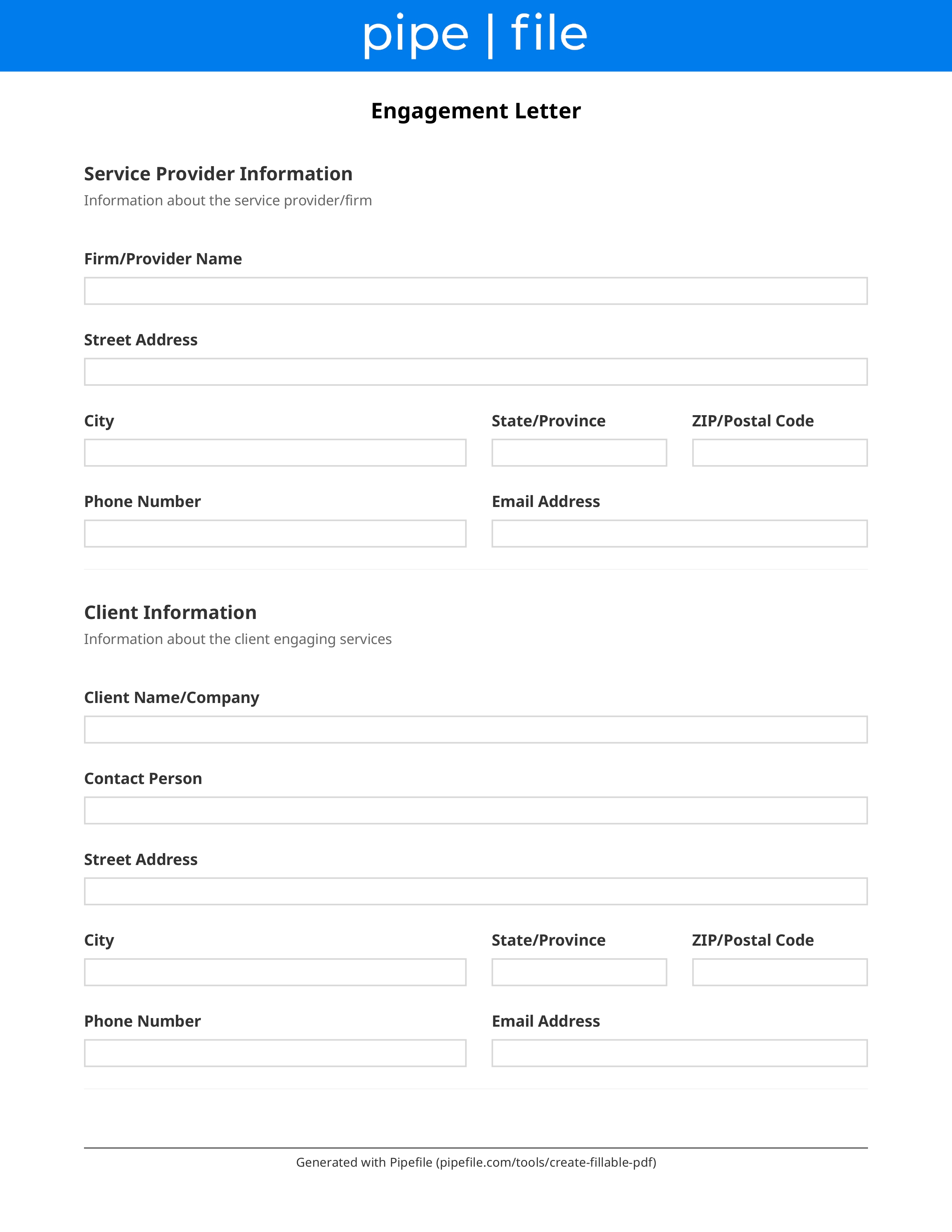
Full legal names and addresses. If the client is an entity, specify who is authorized to sign and who will be the primary contact. For law firms, confirm who the client is (e.g. the company vs. an individual) for conflict and engagement purposes.
Scope
Clearly state what you will do: e.g. 'representation in [matter],' 'preparation of [tax returns],' 'advisory services regarding [topic].' Be specific enough to avoid scope creep; refer to a statement of work or attachment if needed.
List services you will not provide (e.g. no tax advice beyond the return, no litigation, no advice on other jurisdictions). Reduces disputes when the client later asks for something not covered.
Fees
Hourly rates, flat fee, retainer, or other structure. Billing frequency (monthly, per phase, etc.). Payment terms (e.g. net 30). Retainer or advance if required. Expenses and how they are handled.
Term
Start date and duration (or 'until completion of the scope'). Notice required to terminate. Obligations upon termination (e.g. transition, final invoice, return of documents). For attorneys, include withdrawal and client rights per ethics rules.
Responsibilities
Client will provide information and documents in a timely manner, make decisions as needed, and pay fees when due. Delays or nonpayment may affect delivery. Customize for your practice.
You will perform services with due care, communicate as appropriate, and maintain confidentiality. Align with professional standards and any regulatory requirements.
Legal
You will protect confidential information per applicable law and professional obligations. For attorneys, privilege; for CPAs, confidentiality rules. Note any exceptions (e.g. court order, consent).
For law and some other professions, confirm that conflicts have been checked and that the client has consented to the engagement where required. Include any disclosure of non-representation of other parties.
Which state's law governs. Optional: arbitration or mediation for fee or other disputes. Check whether your profession limits choice of law or venue.
Execution
Duly authorized signatories for both sides. Effective date. Consider electronic signature for speed. Retain signed copy in client file.