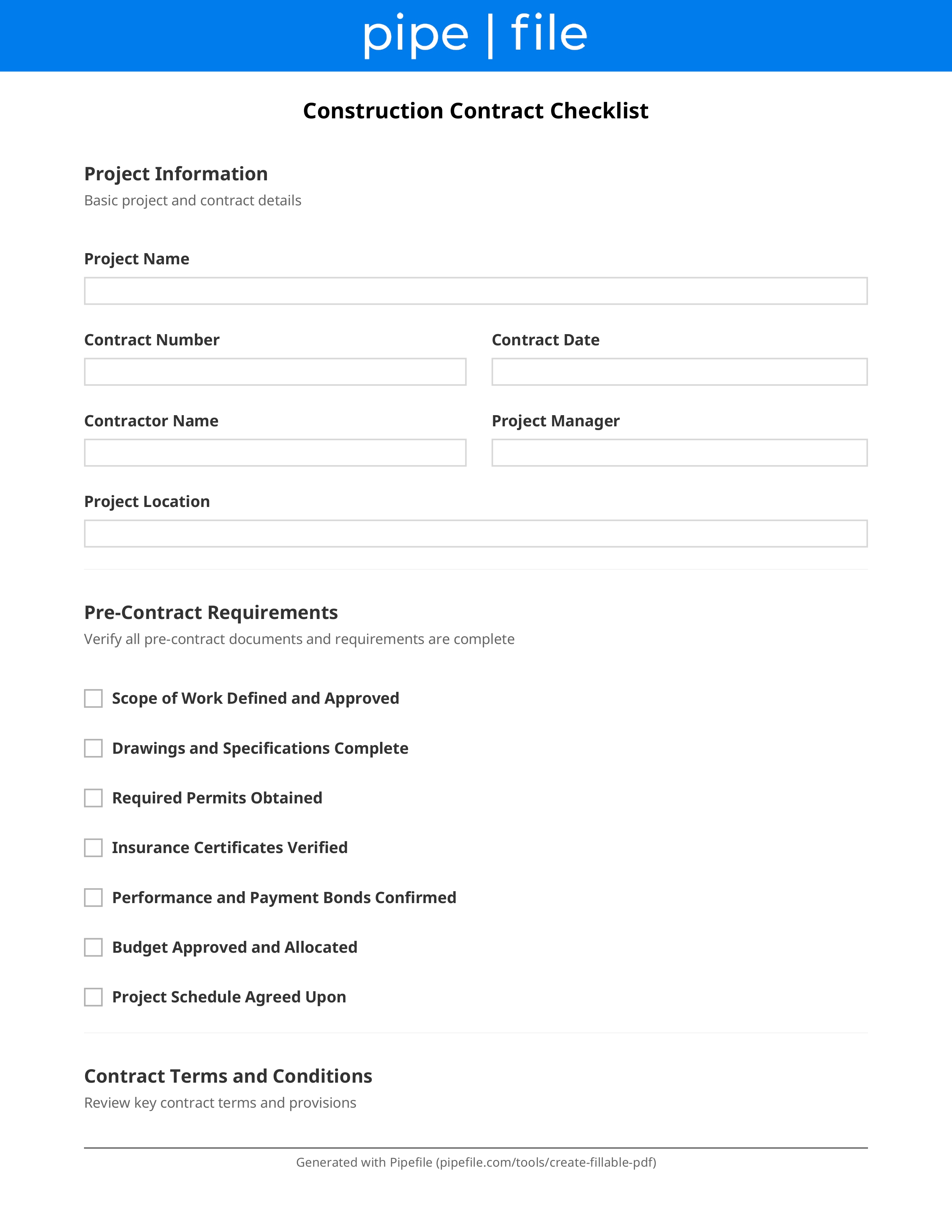
Construction Contract Checklist
Construction and Contracts Resource
Draft and review construction contracts with our construction contract checklist. For owners, general contractors, subcontractors, and construction counsel. Covers parties and roles, scope of work, contract price and payment terms, schedule and milestones, change orders, warranties, insurance and indemnity, lien waiver and bond requirements, dispute resolution, termination, and permits. Use it for new builds, renovations, and subcontracts so key terms are clear and risks are allocated. Contract forms (e.g. AIA, ConsensusDocs) can be used with this checklist to verify critical items.
Key Benefits
Common Use Cases
Frequently Asked Questions
What are the main parts of a construction contract?
What is the difference between fixed price and cost-plus?
Why is scope of work so important?
How should change orders be handled?
Checklist
Parties
Full legal names and roles. For subcontracts: GC and sub. Specify who has authority to bind each party and who will give directions (e.g. owner vs architect).
Scope
Contract documents that define the work. List them by date and title. State that work not shown or specified is not included unless by change order. Clarify exclusions (e.g. owner-furnished items, permits by owner).
Price & Payment
Total contract sum and how it is calculated. For progress payments: frequency (e.g. monthly), application format, retainage (if any), and when payment is due. Comply with prompt-payment or other state rules if applicable.
Schedule
Define contract time and critical dates. If liquidated damages apply for delay, state the daily rate and cap. Address notice and excusable delay (e.g. weather, owner-caused).
Changes
All changes in scope, price, or time must be in writing. Specify who may approve (owner, architect, CM). Require pricing (lump sum, T&M, or unit price) before work. Prohibit performance of extra work without executed change order except emergency or agreed procedure.
Warranties
Contractor warrants work will be free from defects and in conformity with the contract. Specify warranty period (e.g. one year from substantial completion) and any special warranties (e.g. roof, systems). Define when warranty period begins.
Risk
Require commercial general liability, auto (if applicable), workers comp, umbrella. Owner and GC often as additional insured. Waiver of subrogation where appropriate. Require COIs before work and at renewal.
Contractor typically indemnifies owner (and sometimes others) for claims arising from contractor's work. Many states limit indemnity to the extent of fault or prohibit broad form; ensure clause complies with state law.
Compliance
Contract should require contractor (and subs) to provide lien waivers with each payment request. Specify conditional vs unconditional and partial vs final per state law. Use our lien waiver template checklist when preparing waivers.
Public projects and many private projects require payment and performance bonds. State bond amount (often 100% of contract price), obligee (owner or lender), and that bonds must be in place before work.
Specify who pulls permits (usually contractor) and who pays fees. Contractor typically warrants work will comply with laws and codes. Owner may be responsible for zoning or special approvals.
Disputes
Steps for resolving disputes: written notice, good-faith meeting, then mediation and/or arbitration or litigation. Specify governing law and venue. Some contracts require arbitration; others allow court.
Termination
Rights to terminate for cause (e.g. failure to perform, insolvency) with cure period. Owner may want right to terminate for convenience with payment for work done and materials ordered. Define how unpaid balance is calculated.