Home/Templates/Construction/Lien Waiver Template

Lien Waiver Template

Construction and Compliance Resource

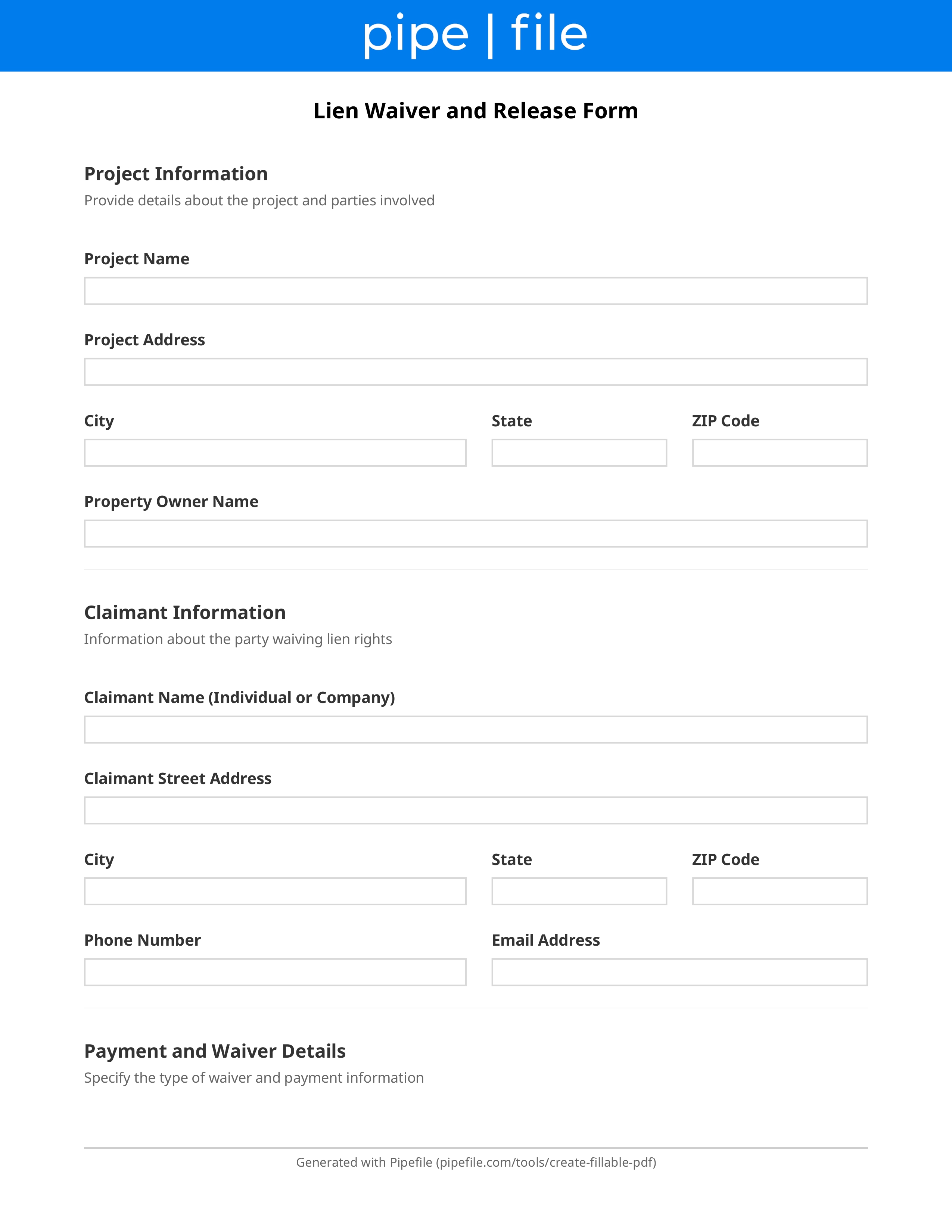
Use lien waivers correctly with our lien waiver template and checklist. For contractors, subcontractors, suppliers, and project owners. A lien waiver is a document by which a party gives up (waives) its right to file a mechanics lien or similar claim for work or materials furnished through a certain date, often in exchange for payment. This checklist covers conditional vs unconditional waivers, partial vs final, parties and amounts, property description, date through which work is waived, release language, and state-specific requirements. Use it to document waivers at pay application and project closeout. Laws vary by state; consult counsel for your jurisdiction.
Key Benefits

Distinguish conditional vs unconditional and partial vs final waivers
Identify parties, property, amount, and date through which work is waived
Use correct release language for your state
Support pay application and closeout documentation
Reduce lien and payment dispute risk
Professional construction compliance workflow

Common Use Cases

General contractors collecting waivers from subs and suppliers with each pay applicationSubcontractors and suppliers signing waivers upon receipt of paymentProject owners and lenders requiring waivers before disbursementPartial (progress) waivers for interim paymentsFinal waivers at project completion or contract closeoutState-specific waiver forms (e.g. AIA, AGC, or state statutory)

Frequently Asked Questions

What is a lien waiver?
A lien waiver is a document in which a contractor, subcontractor, or supplier gives up (waives) the right to file a mechanics lien—or similar claim—against the property for work or materials furnished. It is commonly used when payment is made: in exchange for payment, the payee signs a waiver for that payment period or for the project. Waivers help owners and lenders ensure that lien rights are released as payments flow, reducing the risk of later liens.
What is the difference between conditional and unconditional waiver?
A conditional waiver is effective only when payment is actually received (e.g. when the check clears). An unconditional waiver takes effect when signed, regardless of whether payment has been received. Conditional waivers protect the signer if payment fails; unconditional waivers protect the payer once signed. Many states regulate which type may be used and when; some require conditional for progress payments. Check your state's lien laws.
What is partial vs final waiver?
A partial (or progress) waiver releases lien rights for work and materials through a specific date, usually for a specific pay application. A final waiver releases all lien rights for the entire project or contract. Use partial waivers with each progress payment; use a final waiver when the contract is complete and final payment is made. Getting the wrong type can leave gaps in lien release or over-release before payment.
Do lien waiver requirements vary by state?
Yes. Mechanics lien and waiver rules are state-specific. Some states have statutory waiver forms or required language; others follow common practice (e.g. AIA or AGC forms). Waiver effectiveness, timing, and enforceability differ. Use forms that comply with the state where the project is located and have them reviewed by counsel familiar with that state's lien laws.

Checklist

Type

Choose waiver type: conditional or unconditional; partial (progress) or final
Required

Conditional: effective only upon receipt of payment. Unconditional: effective when signed. Partial: through a specific date/amount. Final: all work under the contract. Select per state law and project practice; many states limit unconditional waivers to after payment.

Parties

Identify claimant (party waiving: contractor, sub, supplier) and property owner
Required

Full legal name of the party signing the waiver (claimant) and the property owner. Include address if required by state form. Confirm the signatory has authority to bind the claimant.

Property

Property description (address, parcel, or project name)
Required

Sufficient to identify the project and property. May include street address, legal description, parcel number, or project name. Must match the property that would be subject to the lien.

Scope

Date through which work, materials, or services are waived
Required

For partial waivers: the last date of work or the period covered by the pay application. For final: typically through the date of the waiver or completion. Be precise so the waiver matches what was paid.

Exceptions or reservations (retainage, disputed amounts, extras not yet paid)

If the waiver does not cover retainage, disputed sums, or change orders not yet paid, state those exceptions. Prevents unintentionally waiving rights to amounts still owed.

Payment

Payment amount (if applicable) and pay application or invoice reference
Required

Amount paid or covered by the waiver. Reference the pay application number, invoice(s), or contract phase. Ensures the waiver aligns with the payment being made.

Legal

Release language: waiver of lien rights (and often other claims) for the scope and period
Required

Clear statement that the claimant waives and releases mechanics lien (and often bond claim) rights for the work/materials through the date specified. Some forms also release other claims. Use state-required or approved language if any.

Execution

Signature of claimant (or authorized representative) and date
Required

Duly authorized signatory. Date the waiver. Some states require notarization; check state law. Provide a copy to the owner, GC, or lender as required by contract.

Compliance

Confirm compliance with state lien and waiver laws (form, timing, language)
Required

Use statutory or approved forms if your state has them. Verify when conditional vs unconditional is allowed, and any notice or timing rules. Consult construction or lien counsel for the project state.