Trust Administration Checklist: Document Requirements
Estate Planning Attorney and Client Resource
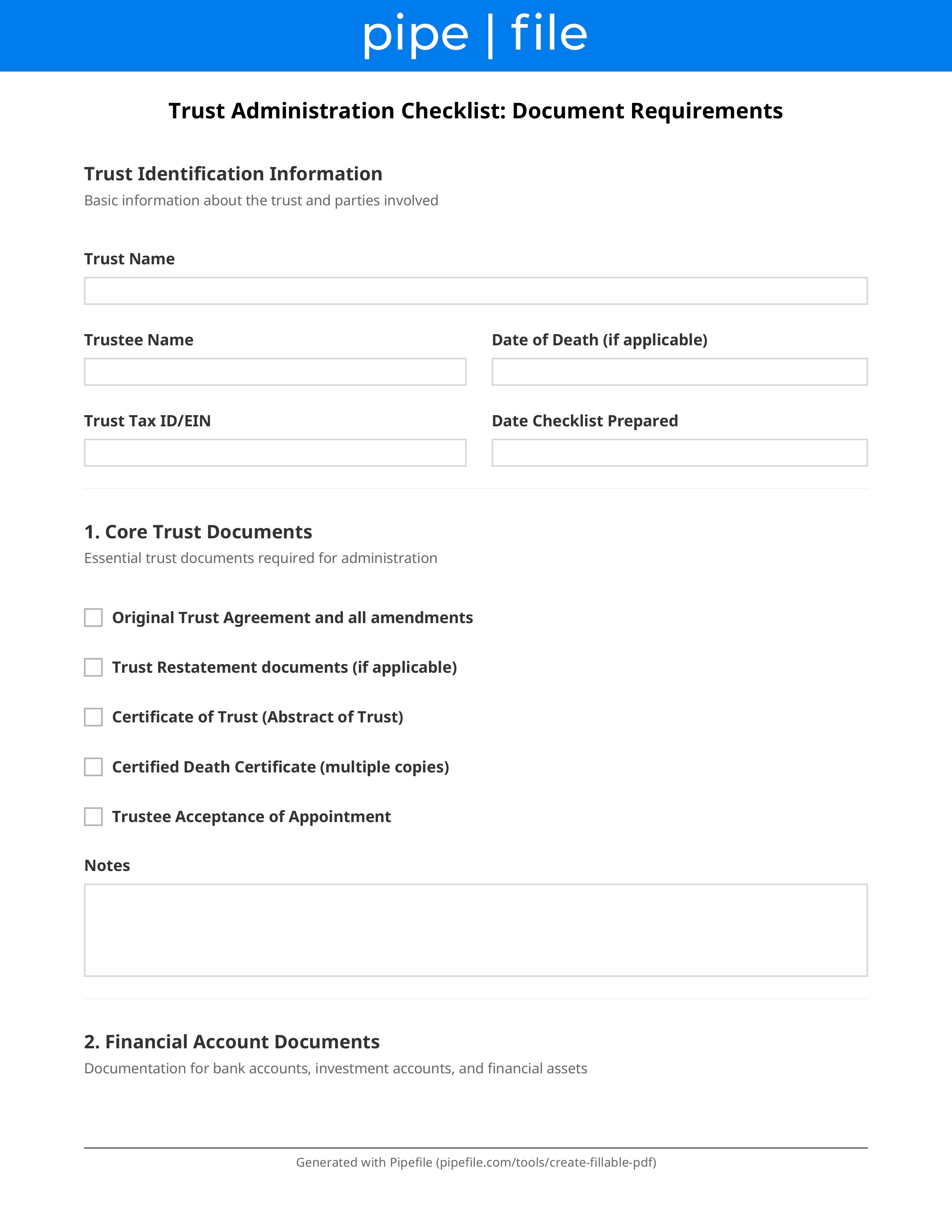
Administer a revocable or irrevocable trust after a death or incapacity with a document checklist. Collect the trust agreement and amendments, death or incapacity evidence, trustee identification, a funded-asset inventory (deeds, accounts, business interests), beneficiary names and notice information, tax-identification records, and prior gift or estate-tax filings so the successor trustee can notify beneficiaries, retitle assets, and prepare accountings. This is not legal or tax advice; notice statutes, creditor-claim periods, and tax elections vary—confirm current state trust law and IRS rules with counsel.
Key Benefits
Common Use Cases
Frequently Asked Questions
What proves the successor trustee may act?
Do beneficiaries have to receive a copy of the trust?
What if an asset was never titled to the trust?
Is this tax advice?
Checklist
Instrument
Confirm you have the latest restatement. Note the governing-law clause and successor-trustee article.
Authority
Some trusts require two physicians. Match the evidence to the instrument.
Banks often want a notarized acceptance and a new EIN letter for a decedent's trust.
Assets
List unfunded assets separately. Include life insurance if the trust is the beneficiary.
Beneficiaries
Calendar the contest window. Include remainder and contingent beneficiaries the statute covers.
Tax
Needed for the final 1040, 1041, and any 706. Keep 1099s that still arrive in the grantor's SSN.
Administration
Some states allow a short creditor process for trusts. Do not pay without a process counsel approves.
Probate Overlap
Opens a parallel probate checklist if anything was left unfunded.