Home/Templates/Legal/Estate Planning/Executor Duties Checklist: Estate Administration

Executor Duties Checklist: Estate Administration

Estate Administration and Probate Resource

Guide executors and estate administrators through probate and estate settlement with our executor duties checklist. For named executors, family members, and estate planning attorneys. From locating the will and securing assets, filing for probate, notifying beneficiaries and creditors, and inventorying assets and debts to paying taxes and claims, distributing to beneficiaries, and closing the estate—use this checklist to stay on track and meet court and tax deadlines. State laws vary; work with an attorney for your jurisdiction.
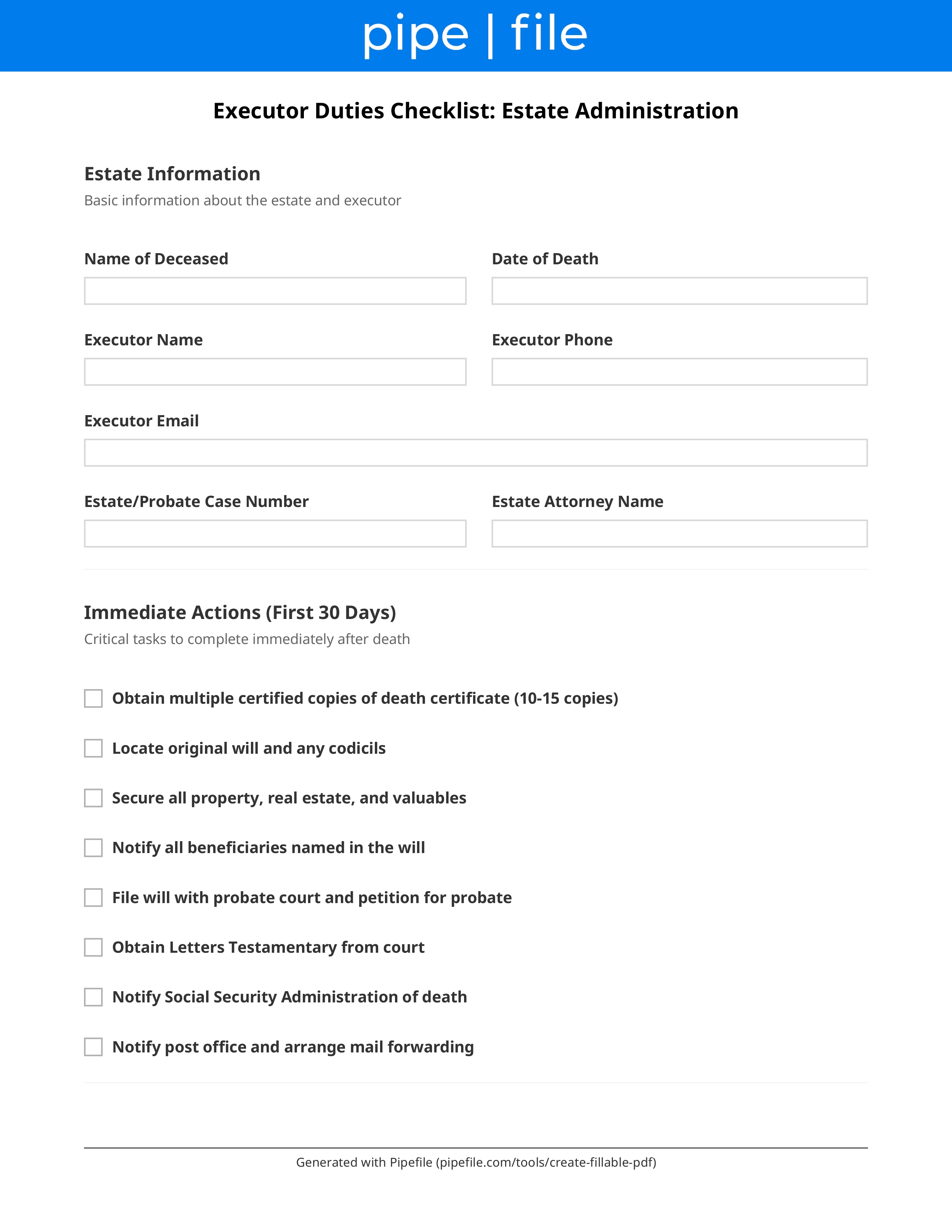
Executor Duties Checklist: Estate Administration form template preview

Key Benefits

Follow a clear sequence from death through closing the estate
Meet probate filing and notice deadlines
Inventory assets and debts systematically
Handle creditor claims and taxes correctly
Distribute to beneficiaries and close the estate
Professional estate administration workflow

Common Use Cases

Named executors (personal representatives) administering a loved one's estateFamily members assisting with estate settlementEstate planning and probate attorneys guiding executor clientsTrustees or successors handling estates with pour-over willsOut-of-state executors navigating another state's probate processEstates with and without formal probate (small-estate procedures)

Frequently Asked Questions

What is an executor and what are their main duties?
The executor (or personal representative) is the person named in the will to carry out the decedent's wishes and administer the estate. Main duties include: locating and safeguarding the will and assets, filing the will with the probate court (if probate is required), giving required notices to beneficiaries and creditors, inventorying and managing estate assets, paying valid debts and taxes, and distributing what remains to the beneficiaries. The executor must act in good faith and in the best interest of the estate.
How long does estate administration take?
Timeline varies by state, estate size, and complexity. Simple estates may close in six months to a year; contested or complex estates can take several years. Creditor claim periods (often 3–6 months from notice), tax filings, and court procedures set minimum timeframes. Your attorney can give a realistic timeline for your situation.
Can I refuse to serve as executor?
Yes. You are not required to accept the role. You can resign before or after qualifying, depending on state law. If you decline before qualifying, the will typically names an alternate, or the court may appoint someone. If you have already started serving, follow your state's procedure for resignation so the court can appoint a replacement.
Is the executor paid?
Many states allow executor compensation (often a percentage of the estate or reasonable fees). The will may specify compensation or say the executor serves without pay. Family members often waive fees. Check your state's statutes and the will; document any fee taken and get court approval if required.

Checklist

Initial Steps

Locate the original will and secure it; determine if probate is required
Required

Find the most recent will. Some assets pass outside probate (joint accounts, beneficiary designations, trusts). Confirm with an attorney whether probate is needed in your state.

Secure and safeguard estate assets (accounts, property, valuables)
Required

Protect property, change locks if needed, notify financial institutions. Do not distribute assets until you have authority and have addressed debts and taxes.

Court

File the will with the probate court and petition for appointment (if probate required)
Required

File within the time required by state law. Obtain letters testamentary (or equivalent) so you have authority to act. Small-estate affidavits may apply for very small estates.

Notices

Notify beneficiaries and heirs as required by state law
Required

States specify who must be notified and how. Failure to give proper notice can delay or invalidate proceedings. Keep proof of mailing or delivery.

Publish and/or send creditor notice to start the claims period
Required

Many states require publication in a newspaper and direct notice to known creditors. The claims period (e.g. 3–6 months) limits when creditors can file claims. Follow state procedure exactly.

Estate Assets

Prepare an inventory of estate assets and their values
Required

List real estate, bank accounts, investments, personal property, and other assets. Values as of date of death (or alternate valuation if elected). File with court if required.

Identify and list estate debts and obligations
Required

Mortgages, loans, credit cards, taxes, medical bills, funeral expenses. Prioritize according to state law (e.g. secured claims, costs of administration, taxes, then other claims).

Manage estate assets during administration (maintain property, invest prudently)
Required

Preserve value; avoid waste. Open an estate bank account. Keep separate records. Get court approval for major sales or investments if required.

Debts & Claims

Review creditor claims; pay valid claims and dispute invalid ones
Required

Allow or reject claims within the period set by law. Pay in order of priority. Document all payments. If estate is insolvent, follow state order of priority.

Taxes

File final income tax return(s) and estate/inheritance tax returns if required
Required

Final Form 1040 for the decedent; fiduciary income tax returns for the estate if it has income. Federal estate tax (Form 706) and state estate/inheritance tax may apply. Get a tax closing letter before final distribution if needed.

Distribution

Distribute assets to beneficiaries per the will (and court approval if required)
Required

After debts, taxes, and expenses are paid (or reserved for), distribute according to the will. Get receipts or signed distribution statements. Some states require a final accounting or petition before distribution.

Closing

File final account and petition to close the estate (or close informally if allowed)
Required

Submit final accounting and close the estate with the court where required. Release executor bond if one was posted. Retain records for the period required by law.