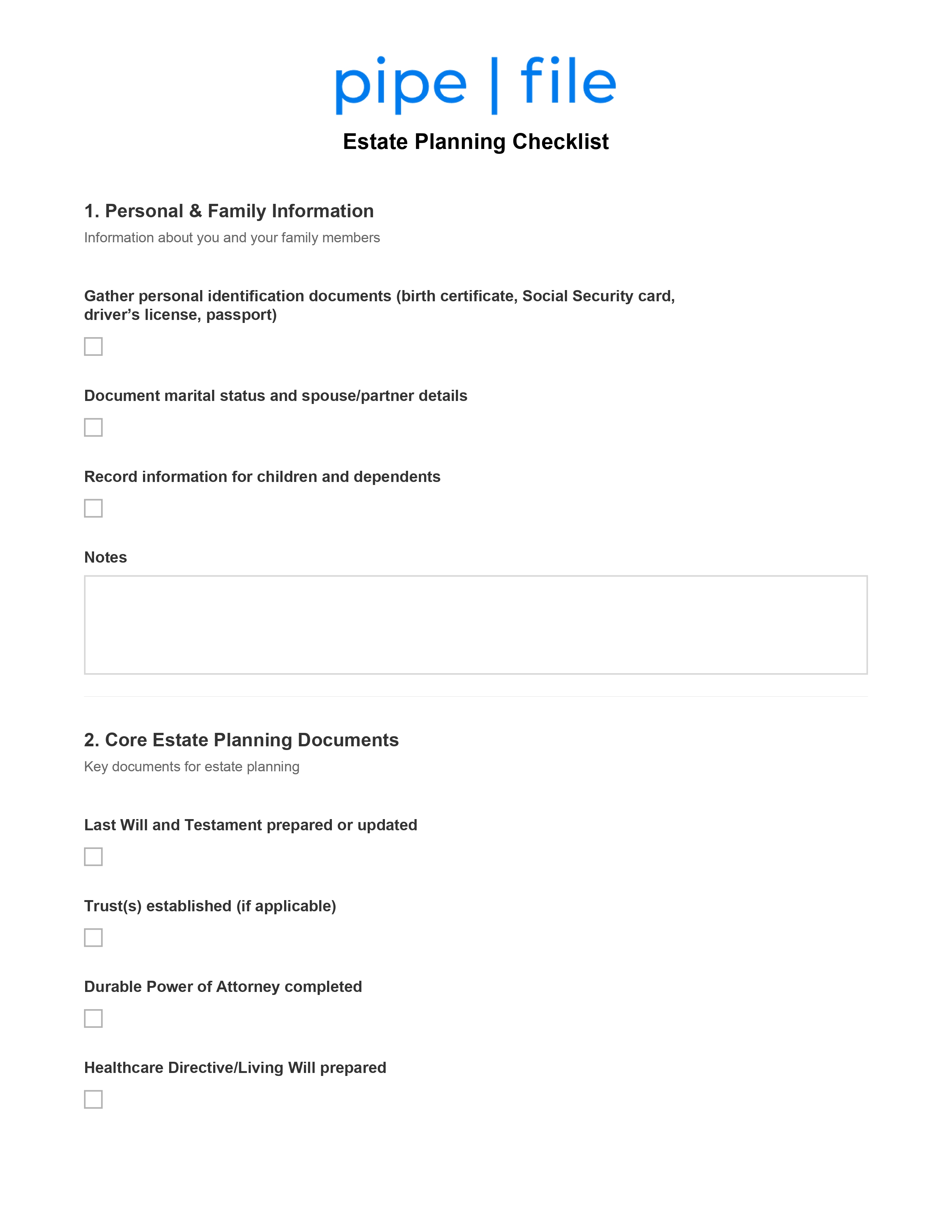
Estate Planning Checklist
For individuals and families planning their estate
Take control of your estate planning with our comprehensive checklist designed for individuals and families. This step-by-step guide helps you gather all essential documents, understand what you need for wills, trusts, and healthcare directives, and prepare for meetings with estate planning attorneys. Protect your family's future with confidence.
Key Benefits
Common Use Cases
Frequently Asked Questions
Why do I need a checklist for estate planning?
What documents are absolutely essential for estate planning?
How long does it take to gather all these documents?
Do I need all these documents even if I don't have many assets?
Checklist
Personal Documents
Make sure your ID is current and not expired. You'll need this to verify your identity when creating legal documents.
Certified copies preferred. Essential for establishing spousal rights and clarifying beneficiary status. Required if client’s marital status has changed.
Signed and dated by client. Should reference any pre-paid arrangements or cemetery plots. Optional but recommended for clarity and to respect client wishes.
Legal Forms
If you already have a will, bring a copy. If not, this is something you'll create with your attorney.
If you already have a trust, bring all related documents. If not, your attorney will help you decide if you need one.
Must be executed in accordance with state law. Specifies agent’s authority; should be notarized and kept up-to-date. Cross-reference with Healthcare Power of Attorney.
Healthcare Directives
Should specify medical wishes and appoint healthcare agent. Requires witness signatures or notarization as per jurisdiction. Review for compliance with local medical statutes.
Financial Documents
Include current account statements, property deeds, vehicle titles, and business interests. List account numbers, financial institutions, and approximate values. Update within last 90 days.
Certified copies required. Must match estate planning directives to avoid conflicts. Update forms after major life events.
Supporting Evidence
Include all real estate and vehicles owned by the client. Deeds must show current legal ownership and be recorded with the county. Vehicle titles should be clear of liens.
Include articles of incorporation, partnership agreements, and shareholder certificates. Essential for succession planning and valuation.