←Home/Templates/Finance/Lending/Stated Income Loan Checklist

Stated Income Loan Checklist

Stated Income and Alternative Documentation Resource

Streamline your stated income loan application with our comprehensive document checklist. For borrowers and lenders using programs that accept declared income with strong assets or credit rather than full tax-return qualifying. Stated-income products are limited and usually Non-QM. Gather the affidavit, asset and reserve support, occupancy, credit explanations, and property documents the investor still requires.
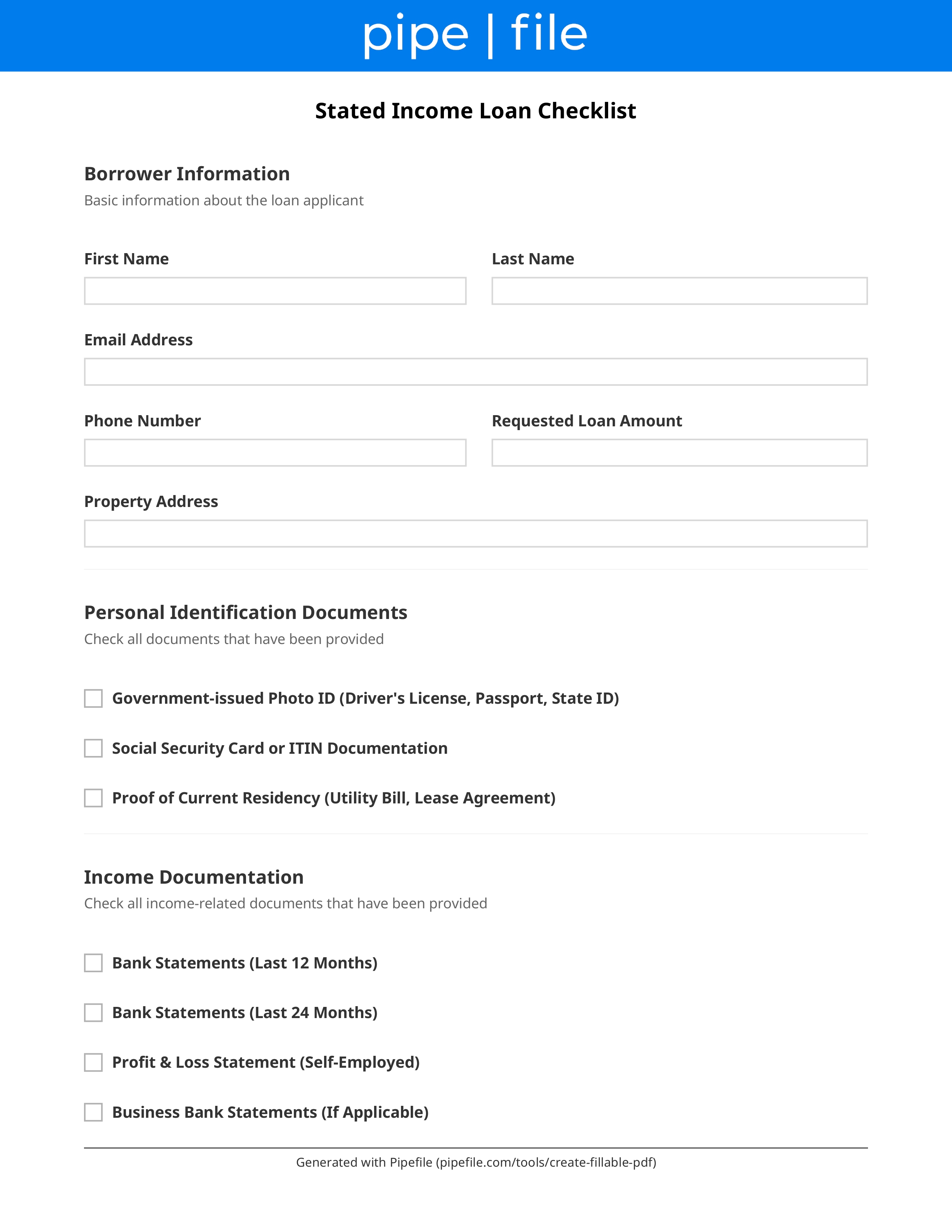
Stated Income Loan Checklist form template preview

Key Benefits

Complete the stated-income affidavit the investor requires
Document assets and reserves that support the declaration
Explain credit and occupancy for a non-full-doc file
Collect property and identity items that are still mandatory
Reduce conditions on limited stated-income overlays
Professional alternative-documentation workflow

Common Use Cases

Borrowers on a lender's stated-income or stated-asset programNon-QM shops offering declared-income overlaysSelf-employed borrowers who cannot use tax-return incomeForeign-national or unique-income files with strong assetsLoan officers comparing stated income vs. bank-statement docsUnderwriters validating reasonableness of stated figures

Frequently Asked Questions

Do stated income loans still exist?
Classic pre-2008 stated-income QM loans do not. A small number of Non-QM or portfolio programs still allow declared income when assets, credit, and LTV are strong, sometimes with a reasonableness test. Many borrowers are better served by bank-statement, P&L, or asset-depletion programs instead.
What documents are required if income is stated?
You still provide a full application, credit, assets, occupancy, ID, and property docs. The income method is an affidavit plus, often, a CPA letter or a reasonableness check against the business type. Reserves are usually higher than on full-doc files.
Is stated income the same as bank-statement income?
No. Bank-statement programs calculate income from deposits. Stated income relies on the borrower's declaration (with overlays). Bank-statement and asset-depletion files are more widely available and easier to defend in underwriting.
What happens if stated income is not reasonable?
Investors can deny or require a different documentation method if the stated figure does not fit the occupation, assets, or credit profile. Do not inflate income. Use this checklist to gather support so the declaration is credible.

Checklist

Application

Complete loan application with occupation and stated monthly income
Required

Income must be consistent across the application, affidavit, and credit report if listed.

Occupancy affidavit (primary, second home, or investment)
Required

Many stated programs limit occupancy types. Follow the overlay.

Income Documentation

Stated income affidavit or investor declaration form
Required

Signed by all borrowers. Some programs add a CPA reasonableness letter.

Support that the stated figure fits the occupation (license, website, CPA letter)

Helps the underwriter pass a reasonableness test without full tax returns.

Asset Documentation

Asset statements documenting down payment and higher reserves
Required

All pages. Stated-income overlays often require substantial seasoned assets.

Credit

Credit authorization and letters for derogatory items
Required

Thin or damaged credit plus stated income is a common decline.

Property Documentation

Purchase contract or refinance package and insurance
Required

Appraisal is lender-ordered. Lower max LTV is common on stated income.

Identity

Government-issued photo ID for all borrowers
Required

Plus business existence docs if the stated income is from self-employment.