Home/Templates/Finance/Lending/Bank Statement Loans Checklist: Self-Employed Mortgage Requirements

Bank Statement Loans Checklist: Self-Employed Mortgage Requirements

Self-Employed Borrower and Mortgage Professional Resource

Streamline bank statement loan (self-employed mortgage) applications with our comprehensive document checklist. For self-employed borrowers, gig workers, business owners, and loan officers using 12–24 months of bank statements to qualify income instead of tax returns. Ensure complete personal and business bank statements, deposit documentation, asset and reserve verification, and identity and occupancy documents so you meet lender requirements and speed up approval. Covers common bank statement program rules and reserve expectations.
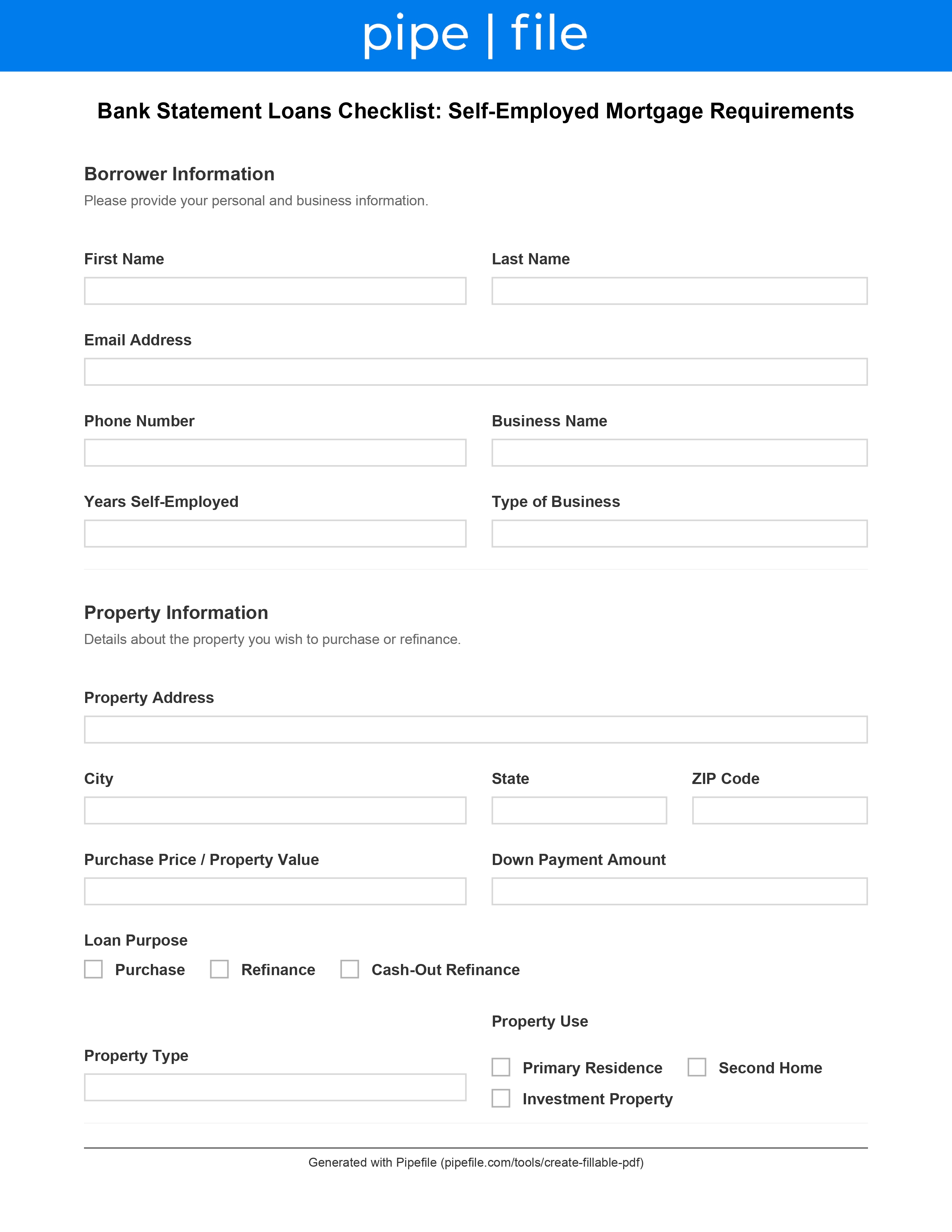
Bank Statement Loans Checklist: Self-Employed Mortgage Requirements form template preview

Key Benefits

Qualify with bank statement income instead of tax returns
Gather 12–24 months of personal and business statements
Document deposits and support qualifying income calculation
Meet reserve and asset requirements
Reduce conditions and speed up underwriting
Professional mortgage and lending workflow

Common Use Cases

Self-employed borrowers applying for mortgage with bank statement programGig workers and freelancers without traditional W-2 incomeLoan officers and mortgage brokers processing bank statement loansBusiness owners with write-offs seeking non-QM or bank statement financingUnderwriters verifying bank statement income and reservesLenders offering alternative documentation programs

Frequently Asked Questions

What is a bank statement loan?
A bank statement loan (or bank statement program) is a mortgage product that qualifies self-employed borrowers based on bank statement deposits rather than tax returns or W-2s. Lenders typically average 12 or 24 months of deposits (often with certain exclusions) to calculate qualifying income. These programs help borrowers whose tax returns don't reflect true cash flow due to deductions.
How many months of bank statements are required?
Most programs require 12 or 24 months of consecutive personal and, if applicable, business bank statements. Some lenders allow 12 months; others require 24. All pages of each statement are usually required. Check your lender's specific program guidelines.
What deposits count toward qualifying income?
Lenders typically include recurring deposits that represent business or self-employment income and may exclude one-time transfers, gifts, tax refunds, or other non-income items. Deposit types and exclusions vary by lender. Your loan officer can explain how your program calculates qualifying income from the statements.
Do I need reserves for a bank statement loan?
Many bank statement programs require reserves (months of PITIA or payments in the bank) after closing. Typical requirements range from 6 to 24 months depending on program, property type, and other factors. Our checklist helps you document reserves and assets.

Checklist

Bank Statements

12–24 months of personal bank statements (all pages, consecutive)
Required

Full statements from the account(s) used for income deposits. No gaps. Some lenders require 24 months; confirm with your loan officer.

12–24 months of business bank statements (if income is deposited to business)

Required when business account receives revenue that supports qualifying income. All pages, consecutive. Lender may average business and personal or use one primary account.

Income Documentation

Documentation supporting large or irregular deposits (if requested)

Lender may ask for source of large deposits (e.g. contract, invoice, transfer from another account). Gifts may require gift letter and donor docs.

Proof of business ownership or self-employment (if required by lender)

DBA filing, business license, LLC/corp docs, or letter from CPA/attorney. Some programs require evidence you've been self-employed 12–24+ months.

Year-to-date or 12-month P&L (if required by program)

Some bank statement programs also want a P&L to support the deposit trend. Use lender's format if provided.

Assets & Reserves

Statements for asset and reserve accounts (savings, investment, etc.)
Required

Proof of reserves (months of PITIA) and other assets. Typically 1–2 months of statements for accounts not used for income. Full balance and account ownership.

Identity

Government-issued photo ID (driver's license or passport)
Required

Current, legible. Name and address should align with application and bank accounts where possible.

Application

Signed credit authorization and application forms
Required

Standard mortgage application and consent for credit pull and verification of employment, income, and assets.

Property

Evidence of occupancy or investment intent (per loan type)
Required

Primary residence, second home, or investment. Lender may require declaration or supporting docs based on occupancy type.