←Home/Templates/Legal/Estate Planning/Probate Client Intake Form

Probate Client Intake Form

Estate Planning Attorney and Legal Intake Resource

Open a probate matter with a client intake form for estate attorneys and intake staff. Collect the decedent's identity and date and place of death, the petitioner's relationship and contact information, whether a will is known and where it is, a first-pass list of heirs, a sketch of real estate and accounts, and any urgency (funeral, property left unsecured, or creditor pressure) so the firm can conflict-check and choose informal, formal, or small-estate procedures. This is not legal advice; domicile, venue, and priority to serve as personal representative are statutory—confirm current local rules before filing.
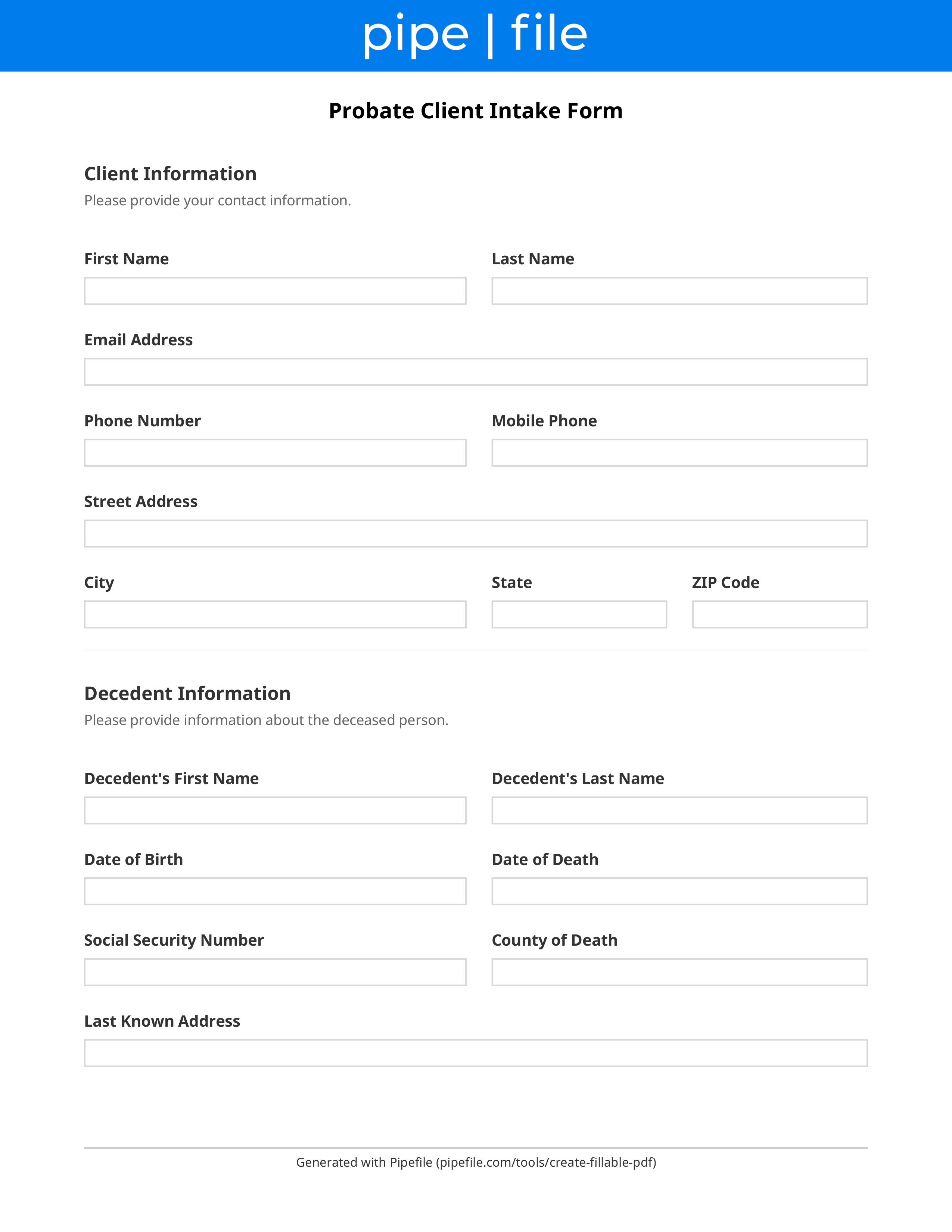
Probate Client Intake Form form template preview

Key Benefits

Record decedent identity, domicile, and date of death
Locate the will and any prior estate-planning counsel
List heirs and the proposed personal representative
Sketch probate versus nonprobate assets at intake
Flag urgency around property, businesses, or creditors
Complete a conflict check before the engagement letter

Common Use Cases

Estate attorneys taking the first call after a deathParalegals opening a probate fileFirms screening whether a small-estate affidavit is enoughOut-of-state families hiring local counselSuccessor-trustee clients who also need a probate for leftover assetsLegal aid clinics interviewing a proposed executor

Frequently Asked Questions

What decedent facts are required at intake?
Full legal name, any AKA, date and place of death, last address (domicile), Social Security number if the family has it, and marital status. Domicile usually controls venue. A missing death certificate can wait; the facts cannot.
What if the caller is not sure they are the executor?
Record their relationship, whether the will names them, and who else might have equal priority. Conflict-check every named person. Do not promise they will be appointed until you have the will and the statute in front of you.
How much asset detail is needed on day one?
Enough to know whether the estate is likely over any small-estate limit and whether real estate or a business needs immediate attention. Full inventories come later. Ask where statements and deeds are stored.
Is this form legal advice?
No. It structures the first interview. Appointment, bond, and creditor procedures are local. Licensed counsel in the decedent's state should advise before anyone spends estate funds.

Checklist

Decedent

Decedent legal name, AKA, date and place of death, last address, and marital status
Required

Ask for a death-certificate copy if they already have one. Note domicile versus place of death if they differ.

Petitioner

Caller or petitioner name, relationship, contact information, and whether they are named in a will
Required

Collect ID details you will later need for the letters application.

Will

Whether a will exists, who has the original, and the drafting attorney if known
Required

Ask about codicils, safe-deposit boxes, and digital copies. Do not instruct anyone to break a box without bank procedure.

Heirs

Spouse, children, and other heirs or devisees with city and state of residence
Required

Enough for a conflict check and a first notice list. Ages of minors matter.

Assets

Known real estate, banks, retirement accounts, vehicles, and businesses
Required

Mark which items the family believes have beneficiaries or joint owners.

Triage

Urgency: unsecured house, business payroll, funeral, or aggressive creditors
Required

Drives whether you seek emergency letters or a special administrator.

Case History

Prior estate-planning or probate counsel and any caveats already filed

Needed for conflicts and to request the original will from another firm.

Intake Process

All parties and institutions named so far for the conflict check
Required

Run conflicts before quoting fees or reviewing the will in depth.