Home/Templates/Legal/Estate Planning/Estate Planning Intake Form

Estate Planning Intake Form

Estate Planning Attorney Resource

Streamline your estate planning practice with our comprehensive client intake form. Perfect for estate planning attorneys to efficiently collect client information, family details, asset information, and estate planning goals for creating personalized estate plans and ensuring comprehensive legacy protection.
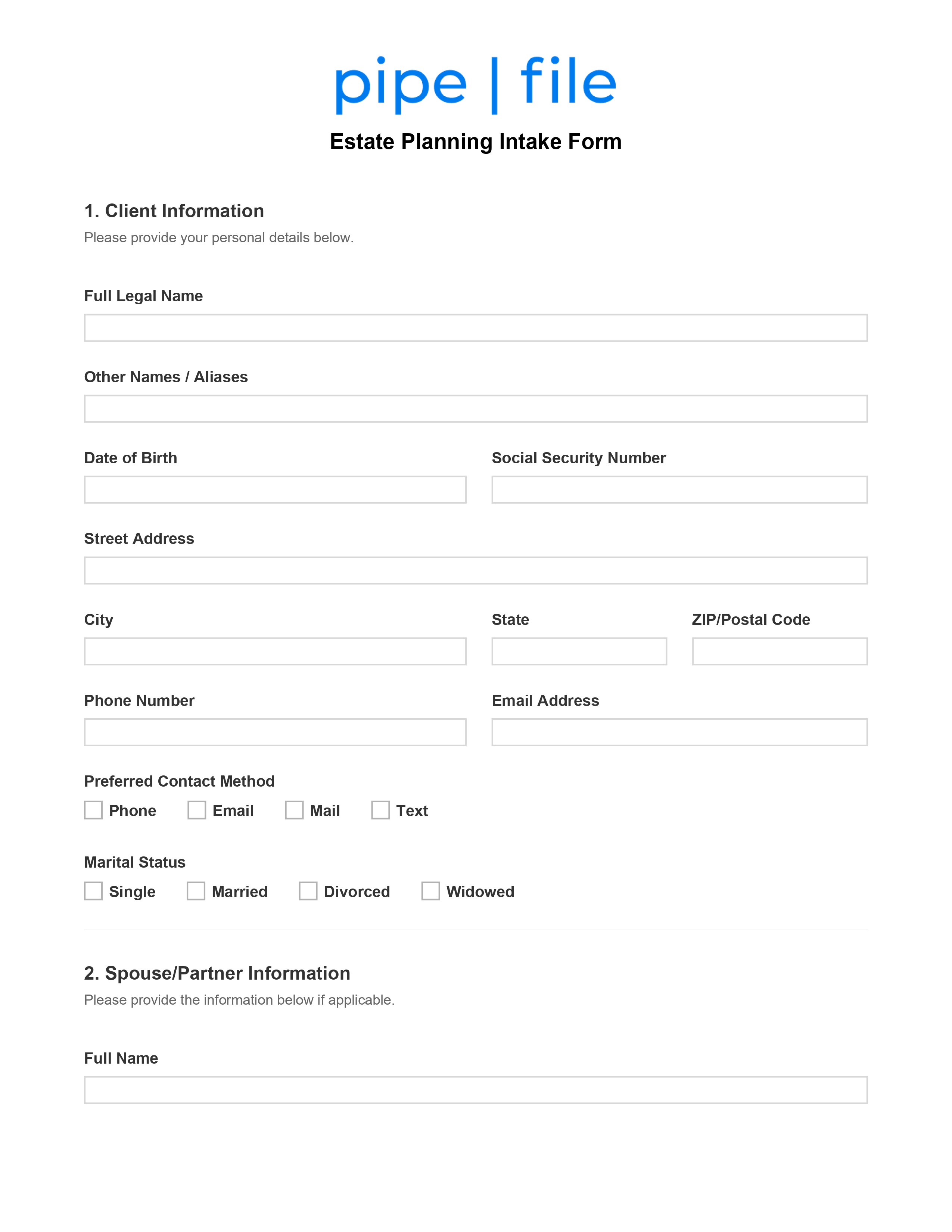
Estate Planning Intake Form form template preview

Key Benefits

Reduce intake time by 50%
Comprehensive client information collection
Systematic asset documentation
Family structure analysis
Professional estate planning foundation

Common Use Cases

Estate planning attorneysTrust and estate lawyersElder law attorneysFinancial advisorsEstate planning specialists

Frequently Asked Questions

What information should be collected in an estate planning intake form?
The form should collect personal information, family details, asset information, existing estate planning documents, healthcare preferences, and specific estate planning goals to create a comprehensive estate plan.
How does this form help with estate planning?
The form standardizes the intake process, ensures all necessary information is collected upfront, helps identify potential estate planning issues, and provides a foundation for creating personalized estate plans.
Can I customize this form for different clients?
Yes, all our forms are fully customizable to fit your specific practice needs and client requirements.
Is this form suitable for complex estates?
Yes, the form is designed to handle both simple and complex estate planning situations, including high-net-worth individuals and business owners.

Checklist

Client Details

Collect basic client information
Required

Name, address, contact information, and identification

Family Details

Document family structure and relationships
Required

Spouse, children, grandchildren, and other family members

Asset Documentation

Complete asset inventory and valuation
Required

Real estate, investments, business interests, and personal property

Document Review

Review existing estate planning documents
Required

Current wills, trusts, powers of attorney, and beneficiary designations

Estate Planning Goals

Identify beneficiaries and distribution preferences
Required

Primary and contingent beneficiaries for all assets

Healthcare Planning

Document healthcare and end-of-life preferences
Required

Living will, healthcare proxy, and medical directives

Guardianship

Nominate guardians for minor children

Primary and alternate guardians for minor children

Business Planning

Plan for business succession

Business ownership transfer and management succession

Tax Planning

Address tax planning considerations
Required

Estate tax implications and planning strategies

Special Considerations

Note special circumstances or concerns

Blended families, special needs beneficiaries, or unique situations

Fiduciary Selection

Select executor and trustee
Required

Primary and alternate executors and trustees

Ongoing Planning

Establish review and update schedule
Required

Regular review schedule for estate plan updates