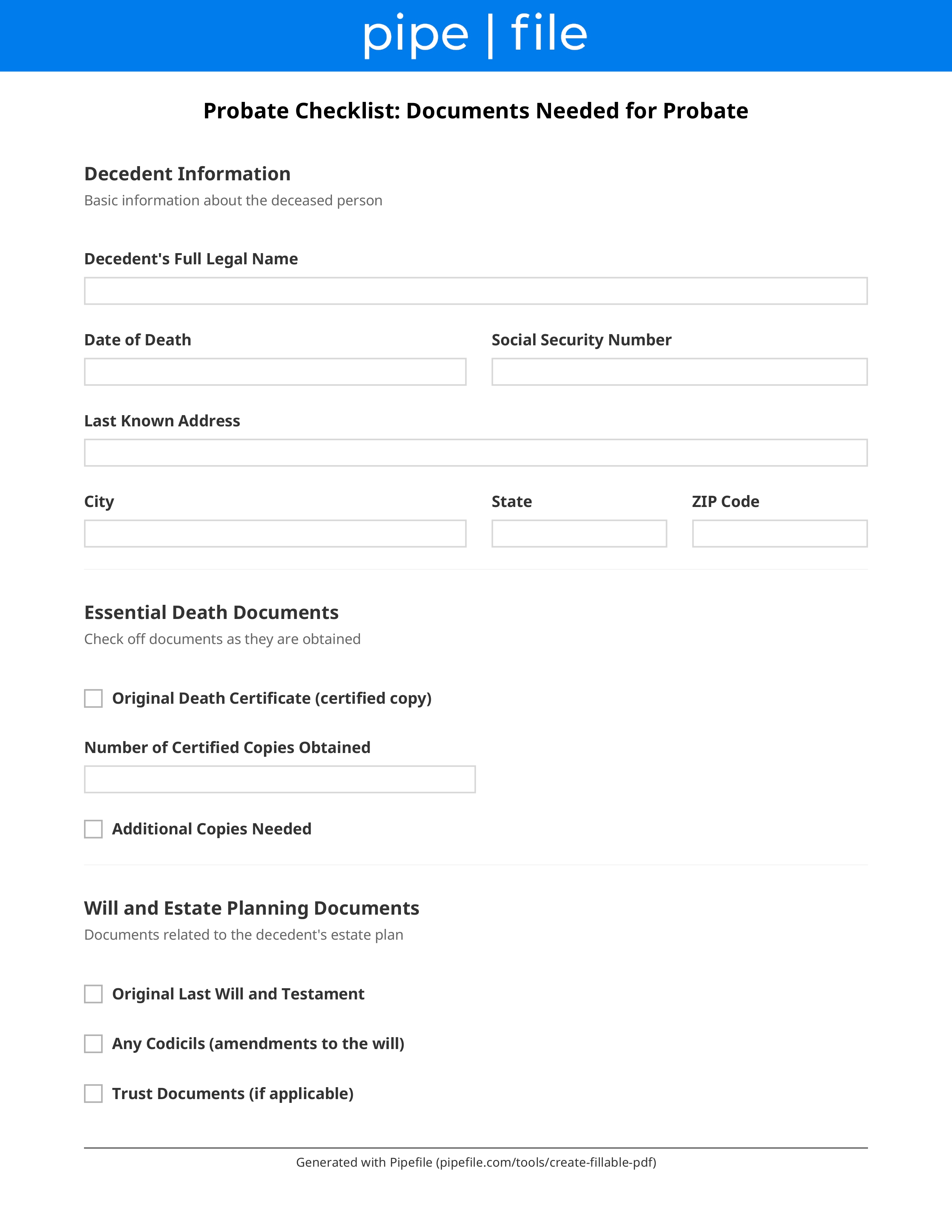
Probate Checklist: Documents Needed for Probate
Estate Planning Attorney and Client Resource
Open and administer a probate estate with a document checklist. Collect the original will and codicils, death certificate, petitioner information, heir and beneficiary names and addresses, asset inventory leads (real estate, accounts, vehicles), known debts, and any existing trust or nonprobate designations so counsel can prepare the petition, notices, inventory, and accountings. For executors, family members, and estate attorneys. This is not legal advice; probate procedures, small-estate shortcuts, and bond rules vary by state and county—confirm current local rules before you file.
Key Benefits
Common Use Cases
Frequently Asked Questions
What if we cannot find the original will?
Which assets actually go through probate?
How many death certificates do we need?
Is this checklist legal advice?
Checklist
Will
Do not unstaple. Note the drafting attorney if known. Include a copy if the original is in a sealed box.
Identity
Order from the vital-records office. Banks and title companies each want their own.
Parties
Include any priority under the will or statute and a list of persons with equal or higher priority.
Needed for formal notice. Include minors and unknown heirs if that is the fact.
Assets
Note whether title is joint, TOD, or in a trust. Out-of-state property may need ancillary probate.
Mark which accounts have POD/TOD or named beneficiaries so they can be treated correctly.
Debts
Keep envelopes from creditors. Do not pay debts until counsel advises on priority.
Nonprobate
Collected so the family sees what is outside the estate and what still needs claims or tax work.