←Home/Templates/Finance/Lending/Merchant Cash Advance Checklist: Document Requirements

Merchant Cash Advance Checklist: Document Requirements

Merchant Funding and Alternative Finance Resource

Streamline your merchant cash advance (MCA) application with our comprehensive document checklist. For merchants considering an advance against future card sales or revenue, and for funders. Collect processing statements, bank statements, ownership IDs, entity documents, and existing debt so you can compare cost and so the funder can underwrite holdback and split.
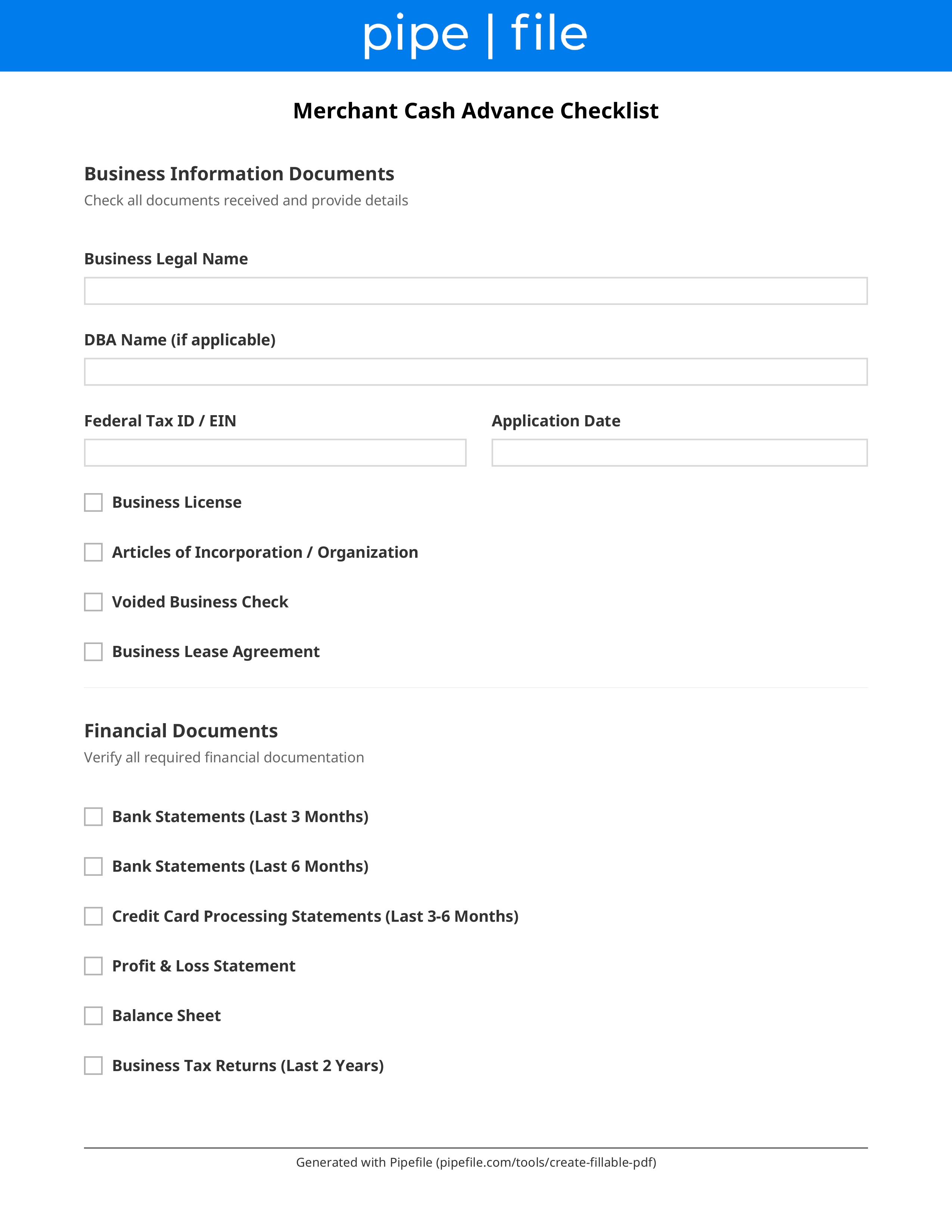
Merchant Cash Advance Checklist: Document Requirements form template preview

Key Benefits

Gather card-processing and bank statements funders require
Document ownership, entity, and existing advances
Compare holdback, factor rate, and stacked debt clearly
Prepare IDs and voided-check items before funding
Reduce last-minute conditions on an MCA offer
Professional merchant-funding workflow

Common Use Cases

Retail and restaurant owners reviewing an MCA offerMerchants who need working capital against card salesMCA funders underwriting a new merchantCompanies comparing MCA cost to a bank line or SBA loanOwners with existing advances disclosing stackingBrokers packaging merchant processing history

Frequently Asked Questions

What is a merchant cash advance?
An MCA is a purchase of future receivables, usually card sales or bank deposits, in exchange for an upfront sum. You repay via a daily or weekly split (holdback) until the purchased amount plus fees is collected. It is typically more expensive than a bank line and is not a traditional loan.
What documents do MCA funders require?
Usually 3-6 months of merchant processing statements, 3-4 months of business bank statements (all pages), a voided check, owner photo ID, voided-check or deposit info, and basic entity documents. Some funders also want a driver's license selfie and a list of existing advances.
How is the payment calculated?
Funders apply a factor rate to the advance and collect a percentage of daily card sales or a fixed ACH until the purchased amount is paid. Slow sales can extend the term; stacking multiple advances raises the effective split. Read the reconciliation and default clauses.
Should I use an MCA instead of a loan?
MCAs fund quickly but can be costly. Compare the total payback and holdback against a business line of credit, SBA 7(a), or invoice factoring. Use this checklist to get complete statements so you can shop more than one offer.

Checklist

Application

MCA application and owner information
Required

Legal name, DBA, EIN, ownership percentages, and requested amount.

Authorization to pull credit and verify processing

Not every MCA pulls personal credit; many still verify the processor.

Sales Documentation

Merchant processing statements (typically 3-6 months)
Required

Card volume, average ticket, and chargebacks. All pages.

Financial Documentation

Business bank statements (typically 3-4 months, all pages)
Required

Shows deposits, existing ACH debits, and negative days.

List of existing MCAs, splits, and balances
Required

Stacking affects approval and holdback. Disclose every funder.

Business Documentation

Entity documents and EIN confirmation
Required

Articles or DBA filing. Sole props may use a voided check and license.

Identity

Photo ID for each owner signing
Required

Driver's license or passport. Some funders require a live photo.

Funding

Voided check or bank letter for the deposit account
Required

Account that will receive the advance and pay the split.