←Home/Templates/Finance/Lending/Invoice Factoring Checklist: Document Requirements

Invoice Factoring Checklist: Document Requirements

Accounts Receivable and Factoring Resource

Streamline your invoice factoring application with our comprehensive document checklist. For B2B companies selling invoices and for factors. Collect A/R aging, sample invoices and contracts, customer concentration, bank statements, entity documents, and UCC or notification items so the factor can underwrite your buyers and set an advance rate.
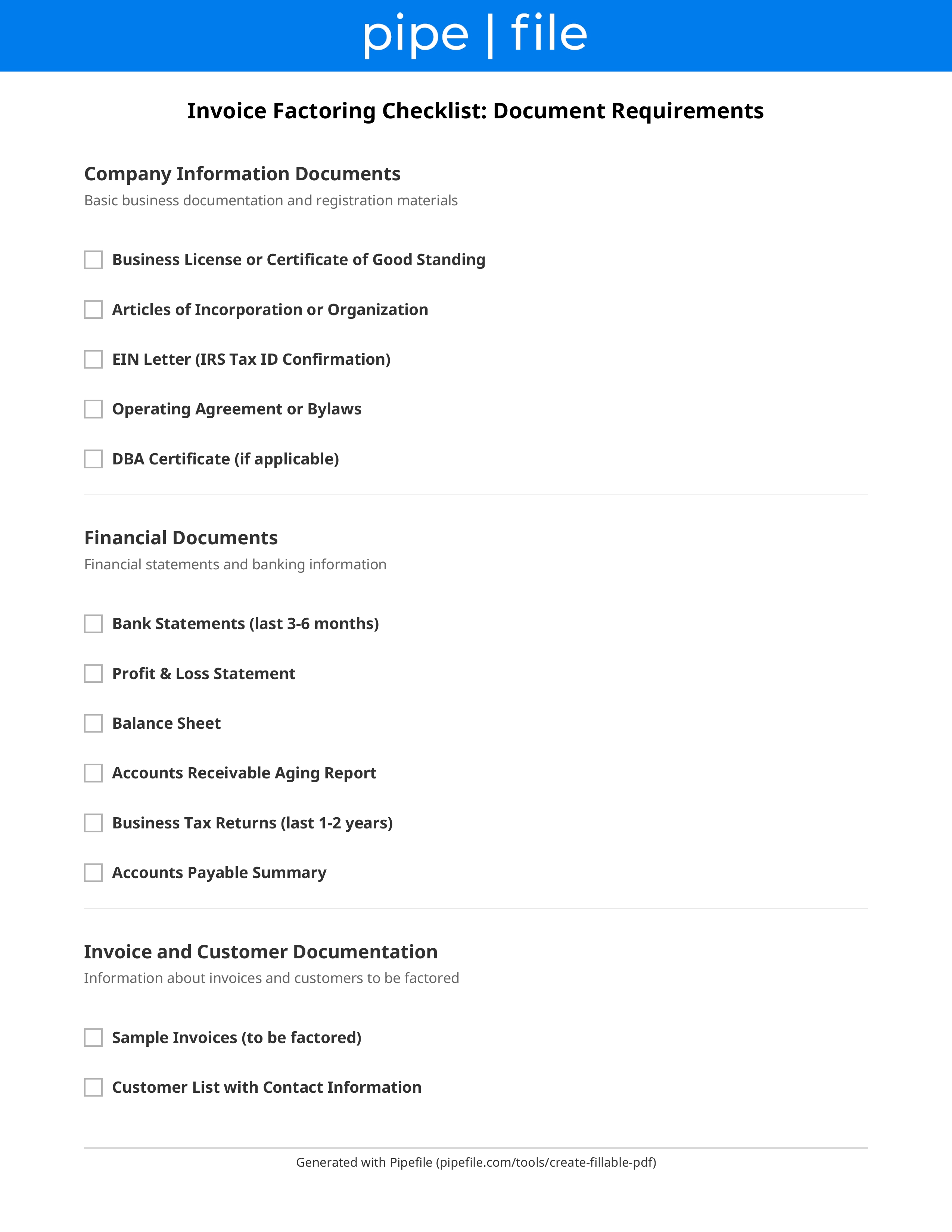
Invoice Factoring Checklist: Document Requirements form template preview

Key Benefits

Assemble A/R aging and invoice samples correctly
Document customer quality and concentration
Prepare entity, bank, and tax items factors request
Understand notification and UCC filing requirements
Reduce back-and-forth before the first funding
Professional receivables-finance workflow

Common Use Cases

B2B companies converting invoices to cashStaffing, trucking, and manufacturing firms using factorsFactors underwriting a new client and debtor bookCompanies that cannot qualify for a bank lineSeasonal businesses covering payroll between invoicesAdvisors comparing factoring to a business line of credit

Frequently Asked Questions

What is invoice factoring?
Invoice factoring is the sale of B2B accounts receivable to a factor at a discount. You get an advance (often 70-90%) when you submit an approved invoice; the balance minus fees is remitted when the customer pays. The factor underwrites your customers as well as your company.
What documents do factors require?
A current A/R aging, sample invoices and contracts, a customer list with concentration, articles and EIN, owner IDs, bank statements, sometimes tax returns, and authorization to verify invoices with your customers. Notification factoring also needs remittance-address change materials.
What invoices can I factor?
Factors want completed B2B work billed to creditworthy customers. Consumer invoices, progress bills without milestones, and invoices to affiliates are often ineligible. High concentration in one debtor can lower the advance or require credit insurance.
Is factoring a loan?
True factoring is a purchase of receivables, not a loan, though some products are A/R credit lines. Notification, UCC filings, and personal guarantees are still common. Compare total cost and customer-notice impact against a bank line before you choose.

Checklist

Application

Factoring application and owner questionnaire
Required

Legal name, industry, monthly invoice volume, and requested advance.

Receivables

Current accounts receivable aging (by invoice and customer)
Required

Typically aged 0-30, 31-60, 61-90, 90+. Ties to the general ledger.

Sample invoices, purchase orders, and customer contracts
Required

Shows billing terms, deliverables, and that work is complete.

Customer list with contact info and concentration percentages
Required

Factors underwrite debtors. Flag any disputes or slow payers.

Financial Documentation

Business bank statements (typically 3 months, all pages)
Required

Supports cash flow and existing lender relationships.

Business tax returns or financials if requested

Some factors are A/R-only; others still want returns for the client.

Business Documentation

Entity documents, EIN letter, and ownership IDs
Required

Articles, operating agreement, and photo ID for each owner.

Legal

Existing UCC search and acknowledgment of notification terms

Prior UCC filings can block a new factor. Notification changes remittance address.