←Home/Templates/Finance/Lending/Revenue-Based Financing Checklist: Document Requirements

Revenue-Based Financing Checklist: Document Requirements

Revenue-Share and Growth Finance Resource

Streamline your revenue-based financing (RBF) application with our comprehensive document checklist. For companies raising capital repaid as a share of revenue, and for RBF funders. Collect historical revenue, payment-processor or bank data, existing financing, unit economics, and entity documents so the funder can set a cap, holdback, and term you can compare to a loan or MCA.
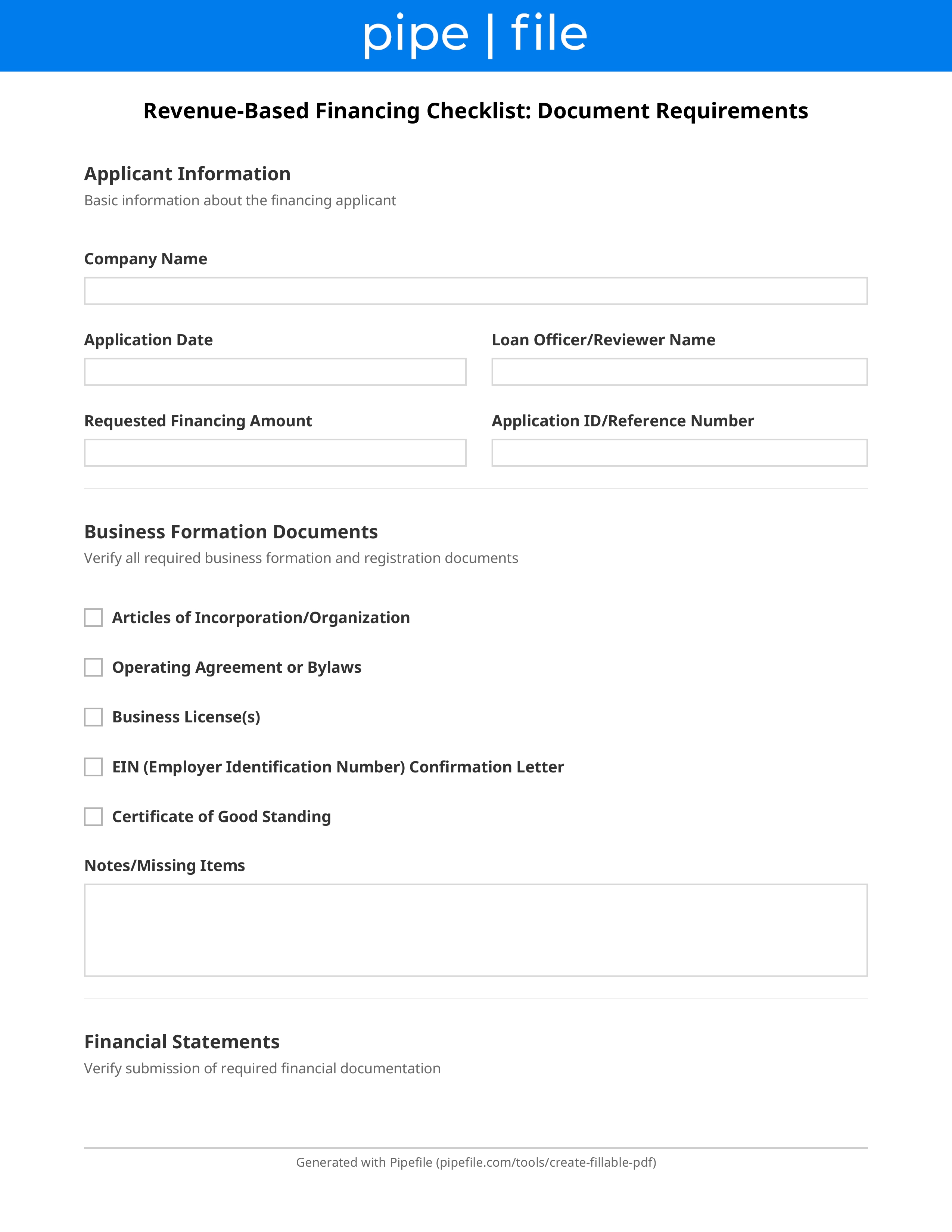
Revenue-Based Financing Checklist: Document Requirements form template preview

Key Benefits

Assemble 12 months of revenue and processor history
Document existing debt, MCAs, and payment splits
Present unit economics and customer concentration
Prepare entity and ownership items funders require
Compare cap and holdback against other capital
Professional revenue-based financing workflow

Common Use Cases

SaaS and e-commerce companies raising RBFBusinesses that want no equity dilutionFunders underwriting a revenue-share facilityOwners comparing RBF to an MCA or term loanCompanies with recurring revenue but thin EBITDAAdvisors packaging a growth-capital data room

Frequently Asked Questions

What is revenue-based financing?
RBF is capital repaid as a percentage of ongoing revenue until a cap (for example 1.3x-1.8x) is reached. Payments flex with sales. It is usually non-dilutive. Cost and default terms vary widely, so compare the cap, holdback, and personal-guarantee language to a bank line or MCA.
What documents do RBF funders require?
Typically 12 months of revenue (P&L or processor exports), 3-6 months of bank statements, existing debt and advance list, customer or channel concentration, entity documents, and owner IDs. SaaS firms add MRR/churn; e-commerce adds Shopify or Amazon reports.
How is the payment calculated?
The funder takes an agreed share of monthly (or weekly) revenue until the purchased amount plus the cap is repaid. Slow months mean smaller payments and a longer term. Read whether there is a minimum payment or a maturity balloon.
Is RBF better than a merchant cash advance?
RBF is often more transparent (stated cap, monthly true-up) than a daily MCA split, but not always cheaper. Use the same bank and processor package to shop both. Disclose stacked advances; they change holdback and approval.

Checklist

Application

RBF application and use-of-funds narrative
Required

Requested amount, cap discussion, and how proceeds support revenue.

Financial Documentation

Revenue history (typically 12 months) by month
Required

P&L, processor exports, or accounting system. SaaS: MRR and churn.

Business bank statements (typically 3-6 months, all pages)
Required

Reconciles reported revenue to deposits.

Schedule of existing loans, MCAs, and revenue splits
Required

Stacking changes holdback capacity. Disclose every facility.

Sales Documentation

Payment processor or platform reports (Shopify, Stripe, Amazon)

Required when revenue is card- or marketplace-driven.

Business Documentation

Entity documents, EIN, and ownership schedule
Required

Articles, operating agreement, and who can bind the company.

Identity

Photo ID for each owner signing
Required

Driver's license or passport.

Underwriting

Customer concentration or unit-economics summary if requested

Top customers, channels, and gross margin. Helps size the holdback.