Home/Templates/Legal/Estate Planning/Power of Attorney Template

Power of Attorney Template

Estate Planning and Financial Authority Resource

Streamline power of attorney drafting with our template and checklist. For individuals, estate planning attorneys, and families. A power of attorney (POA) lets someone (the agent) act on your behalf. This resource focuses on durable financial POA: identify the principal and agent, define the scope of authority (banking, real estate, taxes, benefits, business), choose immediate or springing effectiveness, name a successor agent, and execute according to state law (witnesses, notarization). Healthcare POAs and living wills are separate documents. Use this checklist to draft or review a financial POA so your agent can act when needed.
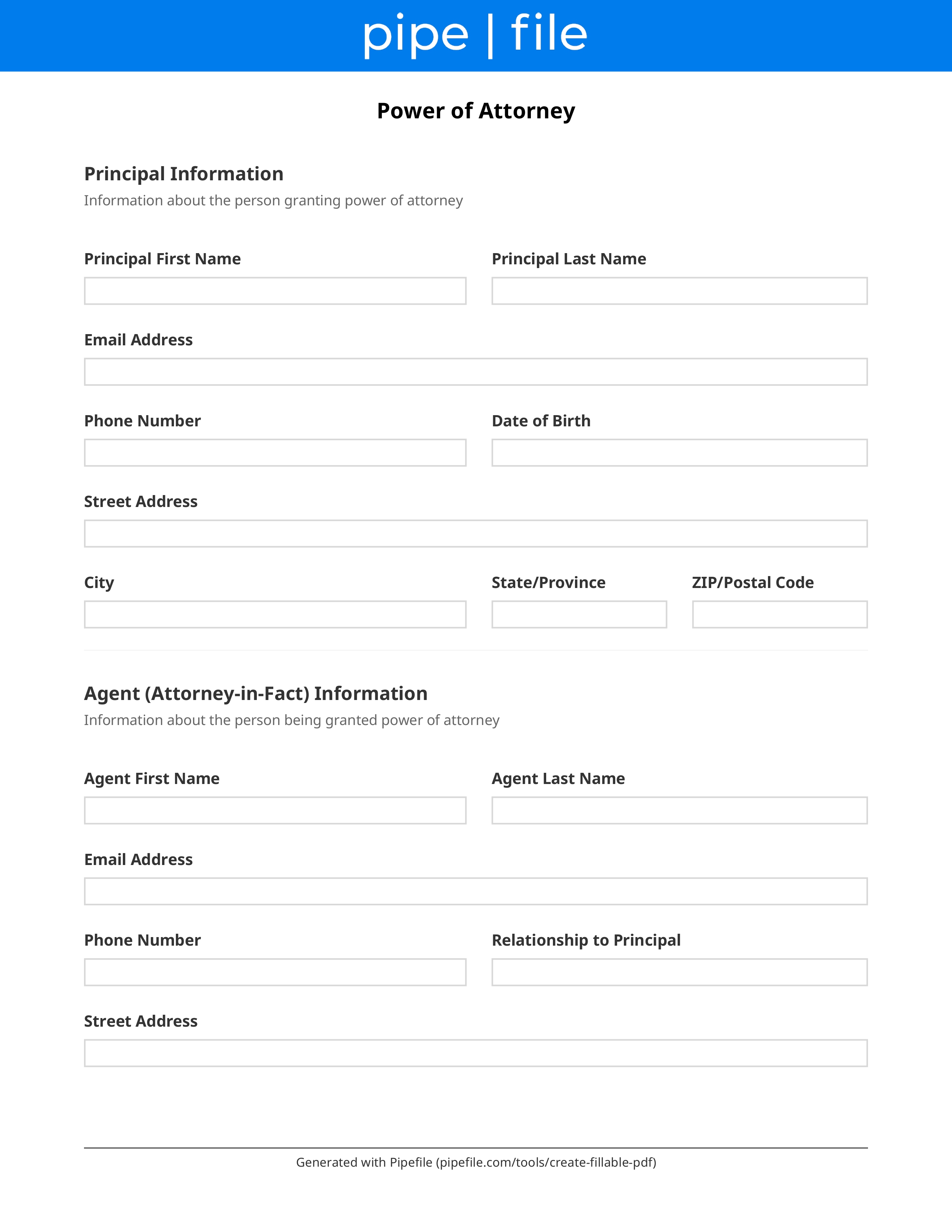
Power of Attorney Template form template preview

Key Benefits

Clearly designate agent and scope of authority
Choose durable (continues if incapacitated) and immediate or springing
Cover banking, real estate, taxes, benefits, and business as needed
Name successor agent and address revocation
Execute in compliance with state law
Professional estate planning workflow

Common Use Cases

Adults creating a durable financial POA as part of estate planningEstate planning attorneys drafting POAs for clientsFamilies preparing for aging parents' financial managementIndividuals who travel or may become incapacitated and need someone to actAgents (attorneys-in-fact) understanding the scope of authority they will haveUpdating an existing POA after a move or change in circumstances

Frequently Asked Questions

What is a durable power of attorney?
A durable power of attorney remains in effect if the principal becomes incapacitated. A non-durable (general) POA typically ends when the principal loses capacity. For estate planning and long-term care planning, a durable financial POA is standard so your agent can manage finances, pay bills, and handle property even if you cannot make decisions.
What is the difference between immediate and springing POA?
An immediate POA is effective as soon as it is signed; the agent may act right away (subject to any limits you set). A springing POA becomes effective only when a specified condition is met—usually when one or more physicians certify that the principal is incapacitated. Each approach has pros and cons; state law may restrict or recognize springing POAs differently.
Is a power of attorney the same as a healthcare directive?
No. A financial power of attorney authorizes someone to handle your financial and legal matters (bank accounts, property, taxes). A healthcare power of attorney (or healthcare proxy) authorizes someone to make medical decisions for you when you cannot. A living will states your wishes about end-of-life care. Often people have both a durable financial POA and a healthcare directive; they are separate documents with different execution rules in many states.
Can I have more than one agent?
Yes. You can name co-agents who must act together (jointly) or may act separately (severally). Joint authority can prevent one person from acting alone but may slow things down. You can also name a successor agent who steps in if the first agent cannot or will not serve. State law and the form's language govern how multiple agents work.

Checklist

Document Type

Confirm type: durable financial POA (this template); healthcare POA is a separate document
Required

Durable = continues if principal is incapacitated. For healthcare decisions use a healthcare power of attorney or advance directive; for finances use this type.

Parties

Identify principal (person granting authority) and agent (attorney-in-fact) with full legal names and addresses
Required

Principal must have capacity when signing. Agent should be someone trusted; they owe a fiduciary duty to the principal.

Name one or more successor agents (optional but recommended)

If the primary agent cannot or will not serve, the successor may act. Specify order and whether they may act jointly or separately.

Authority

Define scope of authority: banking, real estate, taxes, government benefits, business, gifting (if any)
Required

List specific powers (e.g. open/close accounts, sell/buy real estate, file taxes, apply for benefits). Broad 'all legal and financial' language may be used but some institutions prefer specific grants. Gifting authority may have tax or Medicaid implications.

Effectiveness

Choose effective date: immediate upon signing or springing (upon incapacity as defined)
Required

Immediate allows agent to act now (useful for convenience). Springing activates only when principal is certified incapacitated; some states limit or do not recognize springing POAs. Define incapacity clearly if springing.

Execution

Execute per state law: witnesses and/or notarization as required
Required

State requirements vary. Many states require notarization; some require one or two witnesses; some require both. Financial institutions may require a recent or certified copy. Check your state's statutes.

Understand revocation: principal may revoke while competent; document how revocation is done
Required

Principal can revoke by written notice to the agent and (ideally) to any third parties who have relied on the POA. Death of the principal terminates the POA. Some forms state that divorce revokes authority for the ex-spouse; state law varies.

Sign originals and provide copies to agent and key institutions as needed
Required

Keep original in a safe place. Agent may need certified or original copies for banks, title companies, or government agencies. Some principals give the agent the original only when it becomes effective (e.g. springing).