←Home/Templates/Finance/Lending/Asset Depletion Loan Checklist

Asset Depletion Loan Checklist

Asset-Based Mortgage and Non-QM Lending Resource

Streamline your asset depletion loan application with our comprehensive document checklist. For borrowers who qualify on investable assets rather than W-2 income, plus loan officers and non-QM lenders. Gather brokerage and retirement statements, depletion calculation support, reserves after drawdown, identity, and property documents so underwriting can convert assets to qualifying income and move faster to approval.
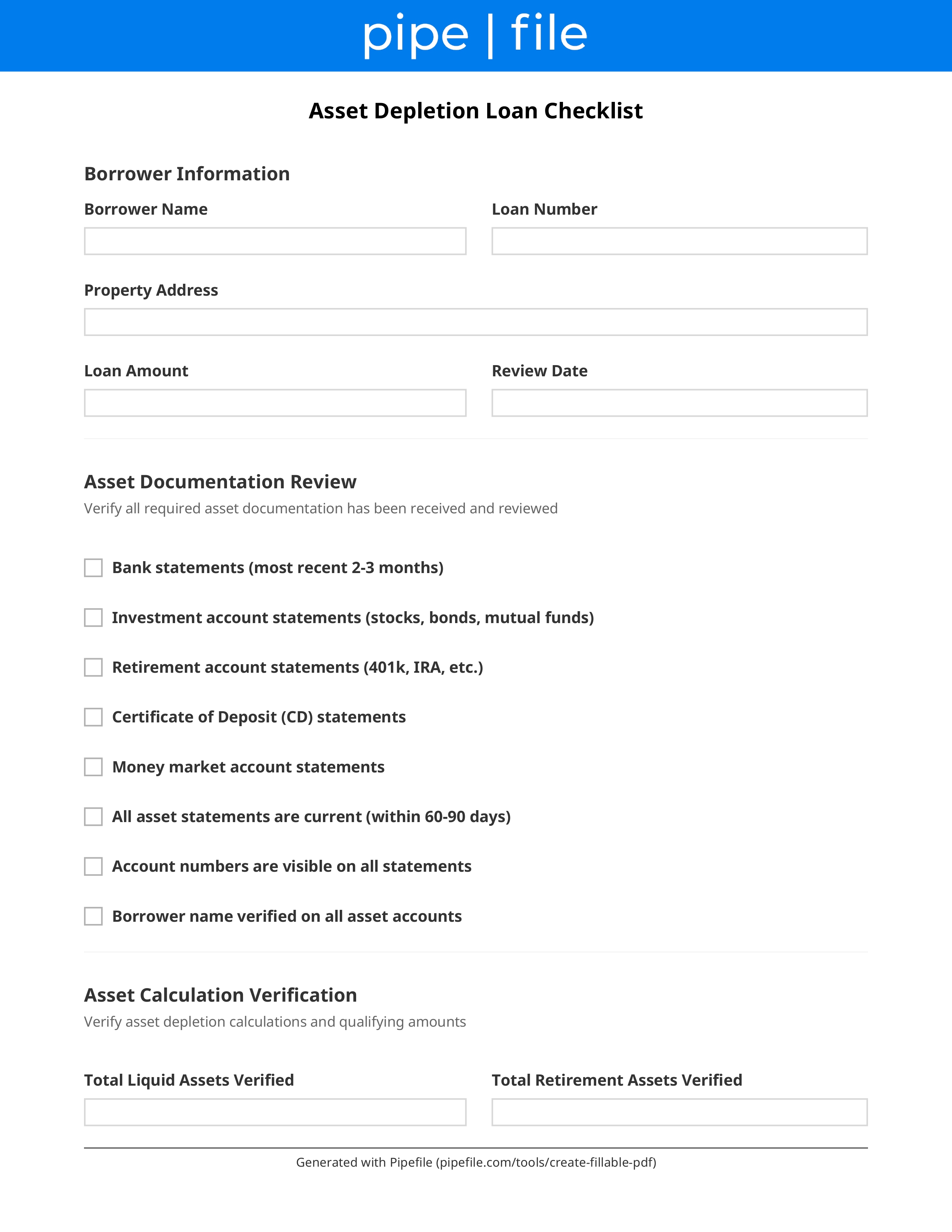
Asset Depletion Loan Checklist form template preview

Key Benefits

Qualify using investable assets instead of traditional income
Gather brokerage, retirement, and cash account statements
Support the lender's asset depletion calculation
Document post-closing reserves and remaining liquidity
Reduce conditions on non-QM and jumbo asset programs
Professional asset-based mortgage workflow

Common Use Cases

Retirees applying for a mortgage with portfolio assetsHigh-net-worth borrowers with low reported incomeLoan officers originating asset depletion or asset-utilization loansNon-QM lenders underwriting asset-based qualifying incomeBorrowers using retirement accounts to support a purchase or refinanceWealth managers preparing clients for asset-based mortgage docs

Frequently Asked Questions

What is an asset depletion loan?
An asset depletion (or asset utilization) loan qualifies the borrower by converting eligible assets into a monthly income figure. Lenders typically divide usable account balances by a term (for example 240 or 360 months) after haircuts. It helps retirees and high-net-worth borrowers whose tax returns understate cash flow.
Which assets count toward depletion income?
Common eligible assets include taxable brokerage accounts, stocks, bonds, mutual funds, and sometimes retirement accounts (IRA, 401k) with a larger haircut. Cash and CDs may count. Primary residence equity usually does not. Each program lists eligible accounts and seasoning rules.
How many months of statements do I need?
Most programs want the most recent 2 months of all pages for each account used in the calculation, plus proof of ownership and any required seasoning. Some jumbo or portfolio shops ask for a quarterly statement package. Follow your lender's overlay.
Do I still need tax returns for asset depletion?
Some programs are true asset-only and skip income tax returns. Others still collect returns for credit, occupancy, or residual-income tests. Our checklist flags both paths so you can gather what your specific lender requires.

Checklist

Application

Complete loan application (1003 or lender form)
Required

All borrowers. Accurate assets, property, and occupancy. Signed and dated.

Credit report authorization
Required

Signed authorization to pull credit. Explain derogatory items if requested.

Asset Documentation

Brokerage and investment account statements (typically 2 months, all pages)
Required

Taxable accounts used for depletion. Show ownership and current balances.

Retirement account statements if used (IRA, 401k, pension)

Many programs apply a haircut. Confirm the account is eligible and accessible.

Bank and cash-equivalent statements for remaining reserves
Required

Checking, savings, money market. Documents liquidity after the depletion calculation.

Income Documentation

Asset depletion or utilization worksheet (lender form)

Lists accounts, haircuts, and divisor. Complete if the lender provides one.

Federal tax returns (2 years) if the program still requires them

Some asset-only programs waive this. Collect if your lender or occupancy rules require it.

Property Documentation

Purchase contract or current mortgage and insurance documents
Required

Purchase, refinance, or HELOC context. Appraisal is typically lender-ordered.

Identity

Government-issued photo ID for all borrowers
Required

Driver's license or passport. Current and legible.