←Home/Templates/Legal/Business/Corporate/Trademark Application Checklist: Document Requirements

Trademark Application Checklist: Document Requirements

Business and Legal Professional Resource

Prepare a U.S. trademark application with a document checklist. Collect the exact mark drawing or standard-character text, owner legal name and entity type, goods and services descriptions, dates of first use and specimens if you are filing use-based, a bona fide intent statement if you are filing intent-to-use, and any prior foreign or state filings so counsel can file in TEAS with fewer office-action surprises. This is not legal advice; USPTO fees, classes, and specimen rules change—confirm current Trademark Manual and fee schedule before you file, and run a clearance search first.
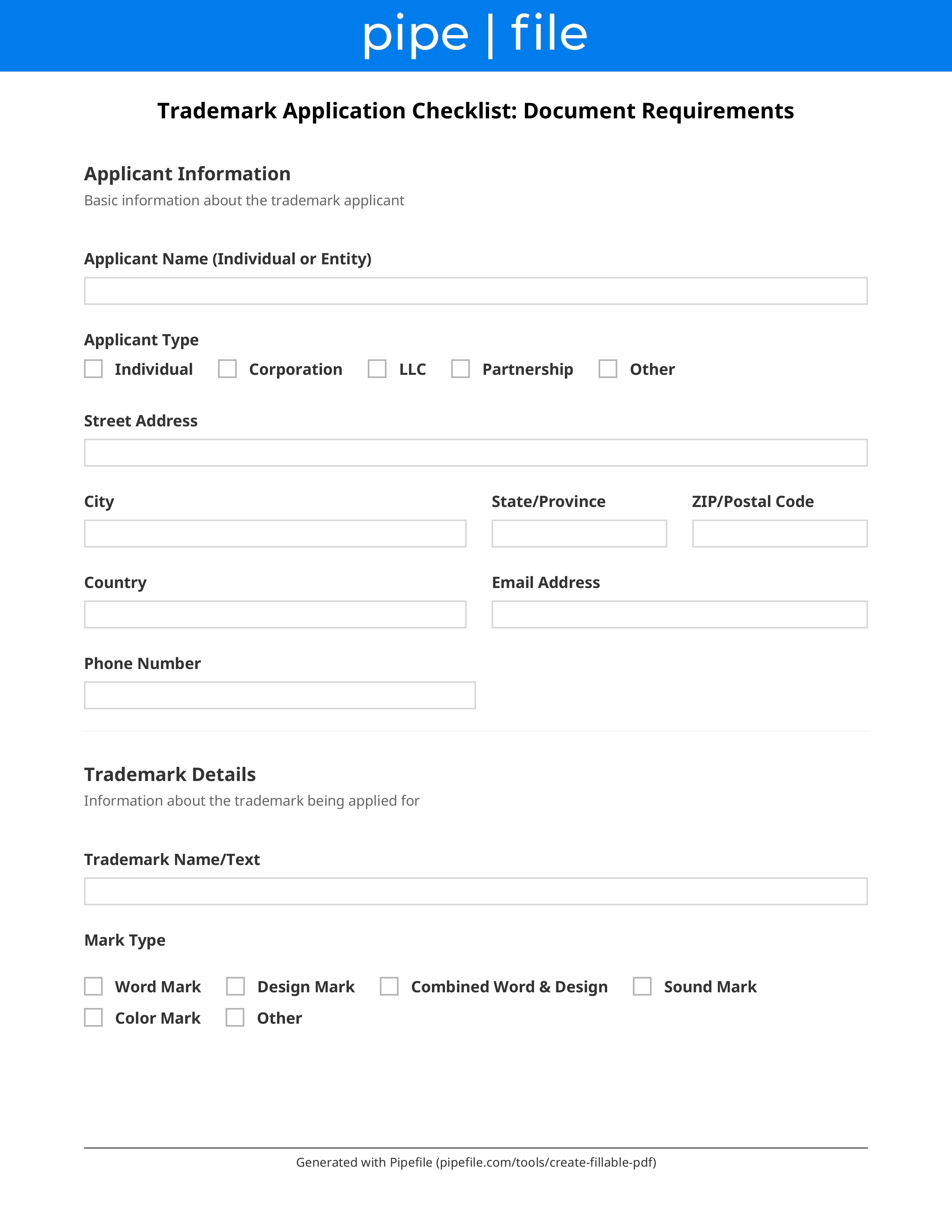
Trademark Application Checklist: Document Requirements form template preview

Key Benefits

Lock the owner name and entity type before filing
Prepare a drawing or standard-character statement
Write goods and services in USPTO-acceptable language
Collect use dates and specimens for §1(a) filings
Document bona fide intent for §1(b) filings
Reduce office actions caused by missing attachments

Common Use Cases

Businesses filing a first U.S. trademark applicationCounsel preparing a TEAS Plus or Standard filingBrand teams gathering specimens from packaging and websitesIntent-to-use applications before launchForeign applicants claiming a Paris Convention priority dateIn-house teams refreshing a stale specimen file

Frequently Asked Questions

Should we file based on use or intent to use?
File §1(a) if the mark is already used in U.S. commerce on those goods or services and you have a specimen. File §1(b) if you have a bona fide intent to use but have not yet used the mark that way. Do not claim use you cannot document.
What makes a good specimen?
For goods, a photo of the mark on the product, hangtag, or packaging as sold. For services, a website or brochure that shows the mark in connection with the services. Mockups and internal decks usually fail. Keep the URL and capture date.
Who should be named as the owner?
The legal person who controls the mark—usually the company, not the designer or an employee. A mismatch with later assignments causes real problems. Match the owner to the entity on the EIN and formation documents.
Is a checklist a clearance search?
No. Search the USPTO database and common-law uses before you file. This list is the filing packet. It is not legal advice and does not predict registrability.

Checklist

Applicant

Owner legal name, entity type, citizenship or state of formation, and address
Required

Must be the owner of the mark, not the law firm. Include DBA only if it is the owner.

Mark

Standard-character text or a special-form drawing (logo) meeting USPTO rules
Required

Decide whether you are claiming the word mark, the design, or both in separate applications.

Identification

Goods and services list by class in acceptable identification language
Required

TEAS Plus requires IDs from the Trademark ID Manual. Overbroad wording invites refusals.

Use

Dates of first use anywhere and first use in U.S. commerce, if filing §1(a)

Month, day, and year if you have them. The specimen must match these goods or services.

Specimen showing the mark as used in commerce (photo or URL capture)

One specimen per class is typical at filing. Keep the original file, not only a screenshot crop.

Intent

Bona fide intent-to-use statement and launch plan notes if filing §1(b)

You will later need an amendment to allege use and a specimen.

Prior Rights

Prior U.S., state, or foreign filings and any priority claim documents

Include application numbers and filing dates for a Convention priority claim.

Filing

Correspondent email for USPTO notices and fee-payment method
Required

Docket office-action deadlines as soon as the filing receipt issues.