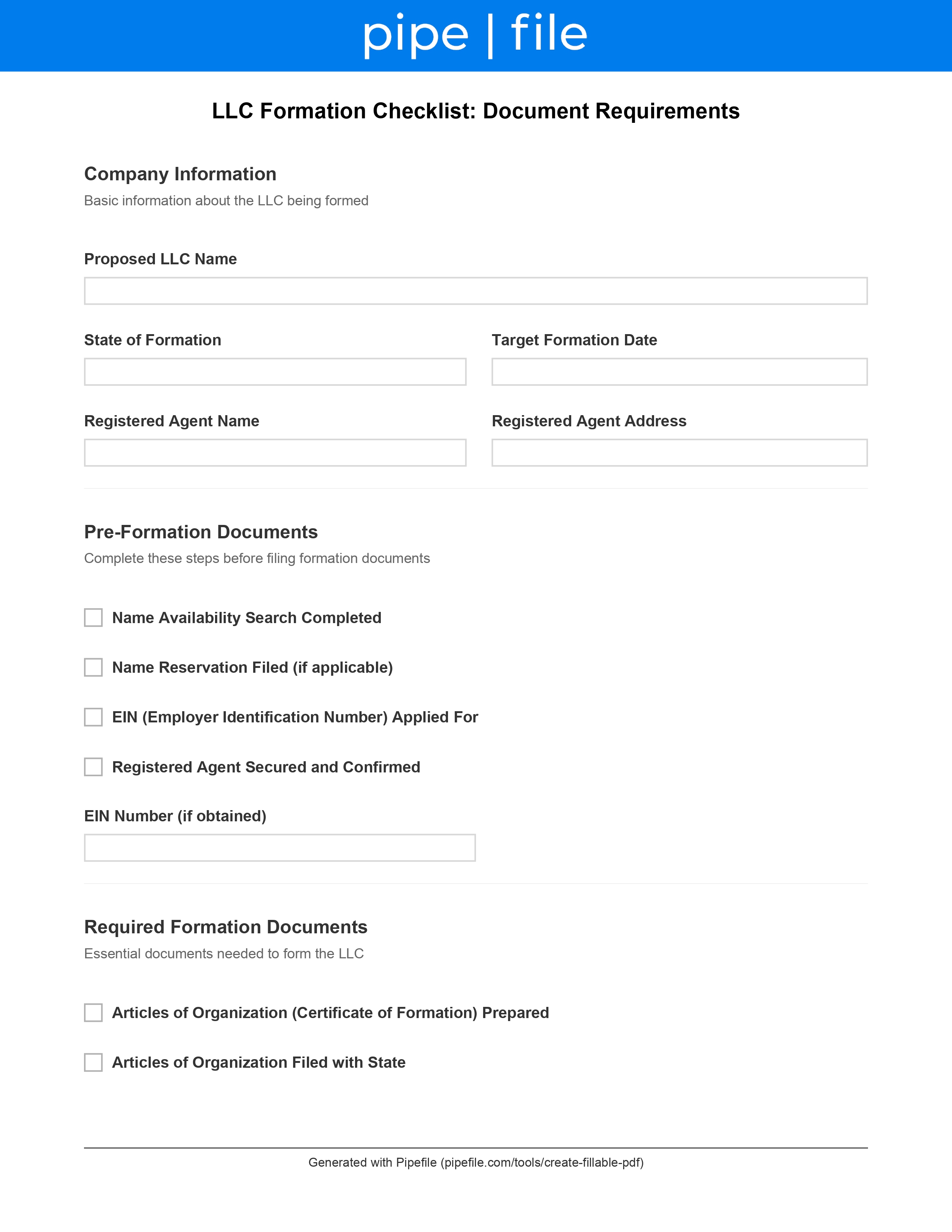
LLC Formation Checklist: Document Requirements
Business Formation and Corporate Resource
Streamline LLC formation with our document and step checklist. For entrepreneurs, attorneys, and formation services. Cover name availability and reservation, articles of organization (or certificate of formation) filing with the state, registered agent, operating agreement, EIN from the IRS, publication requirement (in states that require it, e.g. New York), state tax and license registration, and opening a business bank account so you form the LLC correctly and maintain good standing. State requirements vary; use this checklist as your roadmap and confirm with your state and advisor.
Key Benefits
Common Use Cases
Frequently Asked Questions
In what order should I form an LLC?
Do I need an operating agreement if my state doesn't require it?
What is a registered agent and why is it required?
Which states require LLC publication?
Checklist
Pre-Formation
Name must comply with state rules (often must include LLC, L.L.C., or similar). Search secretary of state database; reserve name if state allows and you are not filing immediately.
State Filing
State form or custom document. Typically includes LLC name, purpose, registered agent, registered office, duration, and organizers. Pay filing fee. Obtain certified or filed copy for records and EIN.
State Compliance
Must have physical address in state; accept service of process and state notices. Update state if agent or address changes. Many states require annual or biennial reports.
Some states require publishing notice in newspapers after formation. Check state rules; file proof of publication and certificate if required. Noncompliance can affect standing.
State income/franchise tax, sales tax (if applicable), and any industry or local licenses. Requirements vary by state and business type.
If you form in one state but conduct business in others, you typically must register as a foreign LLC in those states and comply with their reporting requirements.
Governance
Not always required to be filed but strongly recommended. Defines management (member-managed vs manager-managed), capital contributions, distributions, and transfer rules. Single-member LLCs should have one too.
Federal
Apply online, by fax, or mail. Free. Needed for bank account, hiring employees, and multi-member LLCs. Single-member LLCs without employees may use owner SSN in some cases but EIN is often preferred for separation and banking.
Operations
Bank will require EIN, articles of organization, and possibly operating agreement and resolution. Keeps business and personal funds separate and supports liability protection.
Ongoing Compliance
Most states require periodic reports and fees. Missed filings can lead to administrative dissolution. Set reminders for your state's deadlines.