Spousal Support Checklist: Alimony Document Requirements
Family Law Attorney and Client Resource
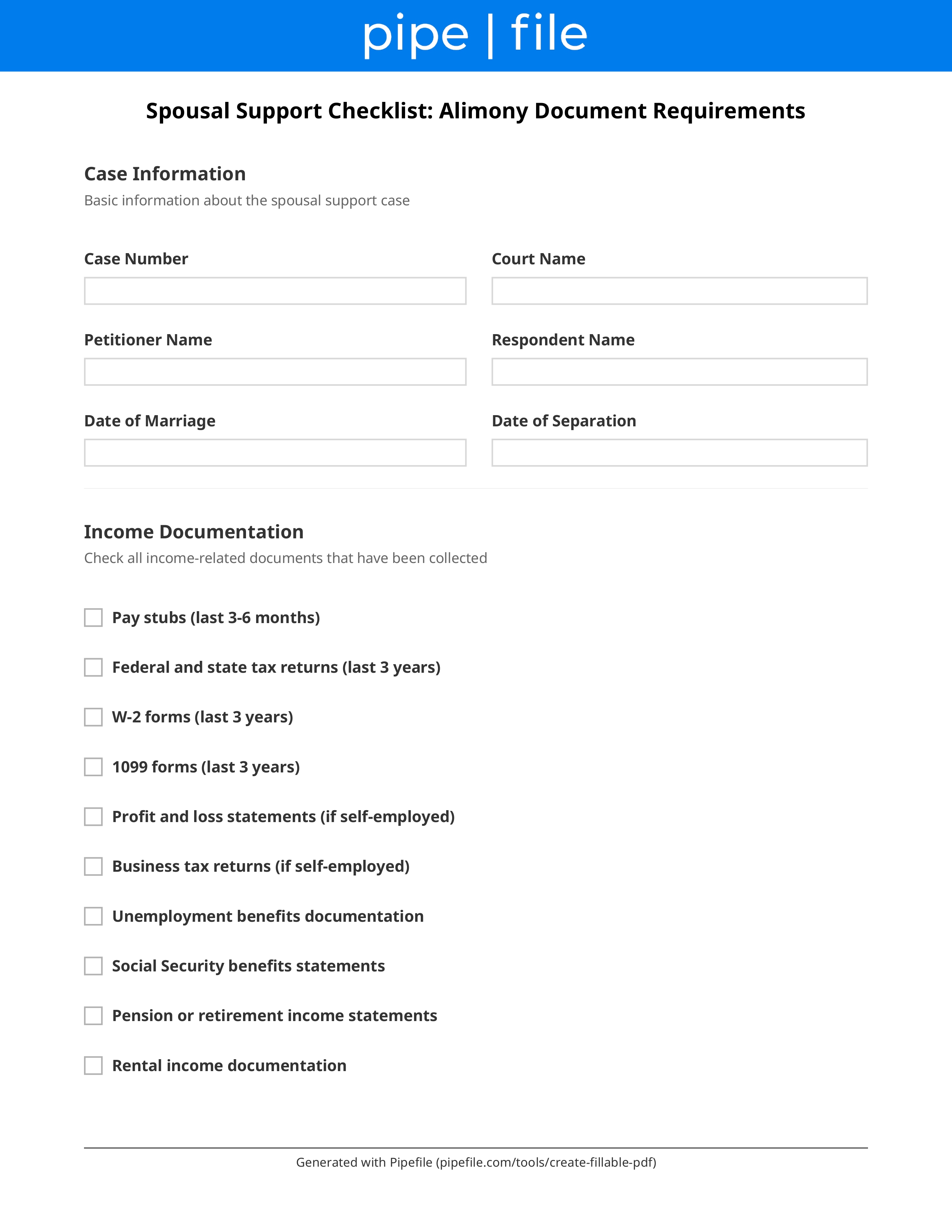
Organize a spousal support (alimony) file with a document checklist for family law attorneys and clients. Collect both parties' income and tax records, monthly budgets, marital-lifestyle evidence, health-insurance and retirement information, the marriage and separation dates, and any prenuptial or prior support orders so counsel can analyze need, ability to pay, and duration. Use this list for initial filings, temporary support, or modification. This is not legal advice; factors, formulas, and duration limits vary widely by state—confirm current statutes and guidelines before relying on any figure.
Key Benefits
Common Use Cases
Frequently Asked Questions
What financial records matter most for spousal support?
Do I need the other spouse's records too?
How do prenuptial agreements affect the checklist?
Is this checklist a support calculation?
Checklist
Income
Usually 2–3 years of returns and recent pay stubs. Self-employed parties need current profit-and-loss statements.
Need
Housing, food, transportation, insurance, and debt service. Use actual bills rather than estimates where possible.
Lifestyle
Joint account statements or tax-deductible expenses from the marriage help show the standard of living.
Insurance
Note COBRA or marketplace estimates if a spouse will lose coverage at judgment.
Assets
Needed when courts consider property income or when a QDRO interacts with cash support.
Case Facts
Duration and health are statutory factors in many states. Attach a brief physician note only if the client already has one.
Agreements
Include any waiver, durational cap, or review clause. Flag if enforceability is disputed.
Existing Orders
Needed for modification or enforcement. Include the worksheet attached to any prior order.