Home/Templates/Legal/Family Law/Divorce Client Intake Form

Divorce Client Intake Form

Family Law Attorney and Legal Intake Resource

Streamline divorce case intake with our comprehensive client intake form guide. For family law attorneys, paralegals, and legal intake staff. Collect client and spouse information, marriage and separation dates, grounds for divorce, minor children details, client goals (custody, support, property division), prior agreements or orders, and any safety or urgency concerns so you can assess the case, conflict level, and next steps. Use this structure for initial consultations and new divorce or separation matters.
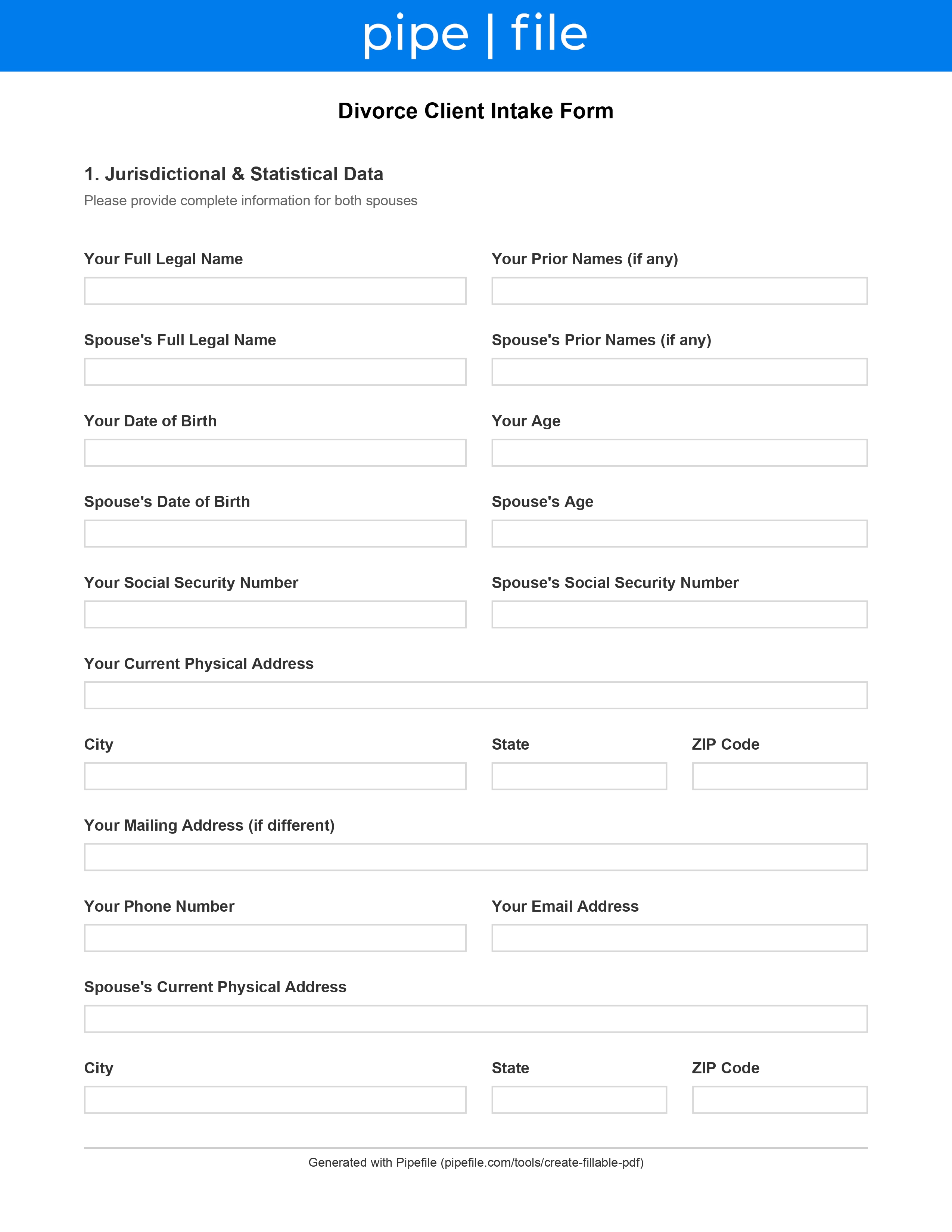
Divorce Client Intake Form form template preview

Key Benefits

Capture client and spouse information in one place
Document marriage, separation, and grounds clearly
Identify client goals for custody, support, and property
Note prior orders, agreements, and case history
Flag safety and urgency for triage
Professional family law intake workflow

Common Use Cases

Family law attorneys conducting divorce initial consultationsParalegals and intake staff onboarding new divorce clientsLaw firms standardizing divorce intake across the practiceMediators gathering background before divorce mediationLegal aid and pro bono programs screening divorce casesSeparation or dissolution matters requiring structured intake

Frequently Asked Questions

What is a divorce intake form used for?
An intake form helps the attorney and staff collect consistent information from the client at the start of a divorce case. It covers who the parties are, when they married and separated, grounds for divorce, children, what the client wants (custody, support, property), and any prior court history or safety concerns. It supports conflict checks, case assessment, and preparation for the first meeting or filing.
What information should I collect about the marriage?
Collect date and place of marriage, whether it is a first marriage for both, date of separation (if separated), and grounds or basis for the divorce (no-fault, fault-based, or other per your jurisdiction). This supports jurisdiction, venue, and initial pleading strategy.
Why ask about safety or urgency in the intake?
Safety questions (domestic violence, substance use, financial control, risk to children) help the firm triage urgent matters, plan for protective measures, and comply with ethical and court obligations. Flagging urgency ensures time-sensitive issues get prompt attention.
Should the intake form replace a document checklist?
No. The intake form gathers facts and goals. A separate document checklist (e.g. divorce consultation checklist, divorce financial checklist) is still needed for what the client must bring or produce. Use both for a complete onboarding process.

Checklist

Client Information

Client full name, contact information, and preferred method of contact
Required

Phone, email, mailing address. Note if safe to contact at home or work; language preference if any.

Party Information

Spouse (other party) full name, contact, and attorney if known
Required

Full name, last known address and phone. Whether they have retained counsel or expressed intent to file.

Marriage Information

Date and place of marriage; whether first marriage for both
Required

Jurisdiction and venue may depend on where married. Prior marriages can affect property or support.

Date of separation (if applicable) and current living arrangement
Required

Same roof vs separate residences. Relevant for support, custody, and some jurisdictions’ grounds or procedures.

Case Information

Grounds or basis for divorce (no-fault, fault, or other per jurisdiction)
Required

Client’s understanding of no-fault vs fault grounds. Attorney will advise on best approach for jurisdiction.

Client’s goals (custody, visitation, child support, spousal support, property division)
Required

What outcome the client is seeking. Uncontested vs contested; mediation or litigation preference if known.

Safety or urgency concerns (domestic violence, substance use, financial control, risk to children)
Required

Yes/no and brief description. Drives triage, safety planning, and need for TRO or emergency filing.

Children Information

For each minor child: full name, date of birth, and current residence (with whom, address)
Required

Legal name and DOB for each child under 18. Who they live with now. School district if relevant.

Case History

Prior court orders (custody, support, protection) or agreements (prenup, postnup, separation)
Required

List any existing orders, agreements, and case numbers. Whether current matter is initial divorce or modification.

Pending cases (criminal, DCF/CPS, bankruptcy) involving the parties or children
Required

Other open matters that may affect divorce timeline, discovery, or scheduling.

Intake Process

Conflict check: spouse and any related parties or entities for conflict clearance
Required

Run conflict check before engagement. Note any prior representation of the other party or family.