←Home/Templates/Legal/Family Law/Domestic Violence Client Intake Form

Domestic Violence Client Intake Form

Family Law Attorney and Legal Intake Resource

Support safer, more consistent intake for protective-order and family-violence matters with a professional client intake form. Collect the client's preferred safe contact methods, household and children's locations only as needed, a factual incident timeline, existing orders or police reports the client already has, and immediate safety or housing needs so counsel can triage urgency without forcing the client to retell events unnecessarily. Use trauma-informed, confidential intake practices. This is not legal advice or a substitute for emergency services; confirm current protective-order rules in your jurisdiction and never share the file through channels the client has marked unsafe.
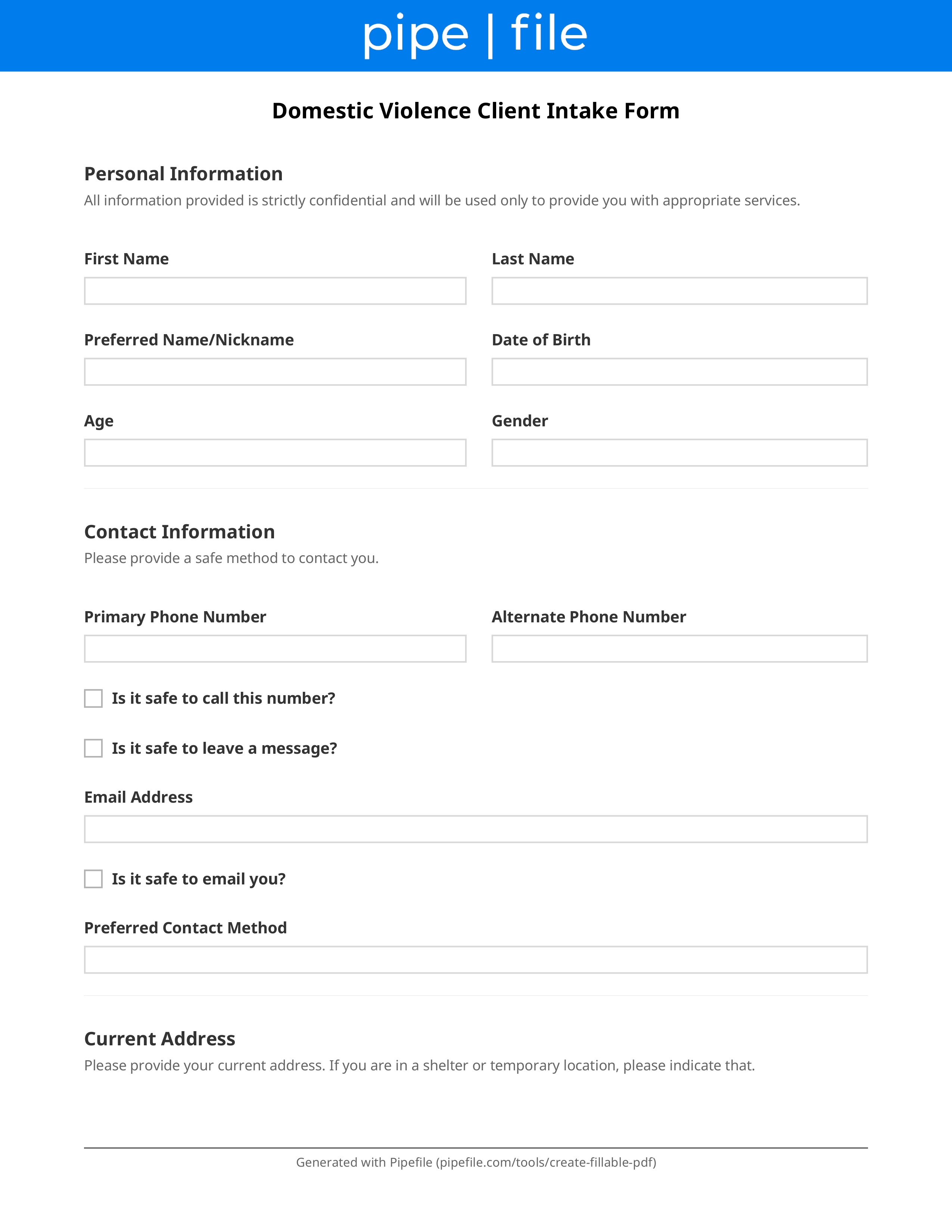
Domestic Violence Client Intake Form form template preview

Key Benefits

Record safe contact methods before any outbound call or email
Capture a factual incident timeline without requiring graphic detail
Note existing orders, police reports, and case numbers already in hand
Identify children, housing, and immediate safety needs for triage
Support conflict checks with party names only as the client can share
Professional, confidential family-violence intake workflow

Common Use Cases

Attorneys screening requests for protective or restraining ordersLegal aid and victim-services programs doing first-contact intakeFamily law firms flagging safety issues inside divorce or custody mattersParalegals collecting documents the client already possessesClinics coordinating with advocates while keeping files confidentialAfter-hours triage when a client needs an emergency hearing the next day

Frequently Asked Questions

How should intake handle contact information?
Ask first how and when it is safe to call, text, or email, and whether mail to a shared address is allowed. Record a safe alternative (advocate, friend, or P.O. box) if home or work contact is not safe. Never leave detailed voicemails unless the client has said that is acceptable.
How much incident detail belongs on the intake form?
Collect dates, locations, whether children were present, whether weapons or injuries were involved, and whether police or medical providers were contacted. A short factual timeline is enough for triage. Detailed narratives can wait for an attorney interview so the client is not asked to repeat events more than necessary.
What existing documents should the client bring if they have them?
Prior protective orders, police report numbers, medical discharge papers, photographs already saved, and any family-court orders. Do not instruct a client to return to an unsafe location to retrieve records. Work with what they can share now.
Is this form a safety plan or legal advice?
No. It is an intake tool. Clients in immediate danger should contact emergency services or a local hotline. An attorney must still evaluate jurisdiction, available orders, and filing options under current local law.

Checklist

Client Safety

Client name and safe contact methods, times, and addresses only
Required

Ask which phone, email, and mailing address may be used. Note interpreter needs. Do not list a shared household contact as default.

Confidentiality preferences and any third parties who may receive updates
Required

Record whether an advocate, family member, or interpreter may be copied. Default to client-only communication.

Party Information

Other party's name and last known location only if the client can share it safely
Required

Needed for conflict check and petition captions. Do not require an address the client does not have or cannot safely obtain.

Children

Names and ages of children and whether they were present during incidents
Required

Record current caregiver and whether any child is in common with the other party. Limit location detail to what is needed for filing.

Incidents

Short factual timeline: dates, locations, injuries, weapons, and police or medical contact
Required

Bullet dates and outcomes. Defer a full narrative to counsel. Note if the most recent incident is within any local emergency-order window.

Case History

Existing protective orders, family-court orders, or criminal cases and case numbers
Required

Include issuing court and expiration dates if known. Attach copies only if the client already has them.

Evidence on Hand

Police report numbers and medical records the client already possesses

Do not send the client back into an unsafe setting to collect files.

Triage

Immediate needs: emergency hearing, housing, firearms surrender, or no-contact terms
Required

Used to prioritize same-day or next-day filings. Coordinate with advocates when the client wants that support.