←Home/Templates/Finance/Accounting/Business Succession Checklist: Planning Document Requirements

Business Succession Checklist: Planning Document Requirements

Business Owner and Advisor Resource

Build a business succession file with our planning document checklist. For business owners, CPAs, financial advisors, and estate attorneys coordinating ownership transitions. Gather entity documents, valuations, buy-sell agreements, key-person insurance, tax elections, and training or transition plans so a sale, gift, or leadership handoff is executable—not theoretical. Confirm current tax and legal advice for your structure. Not legal or tax advice.
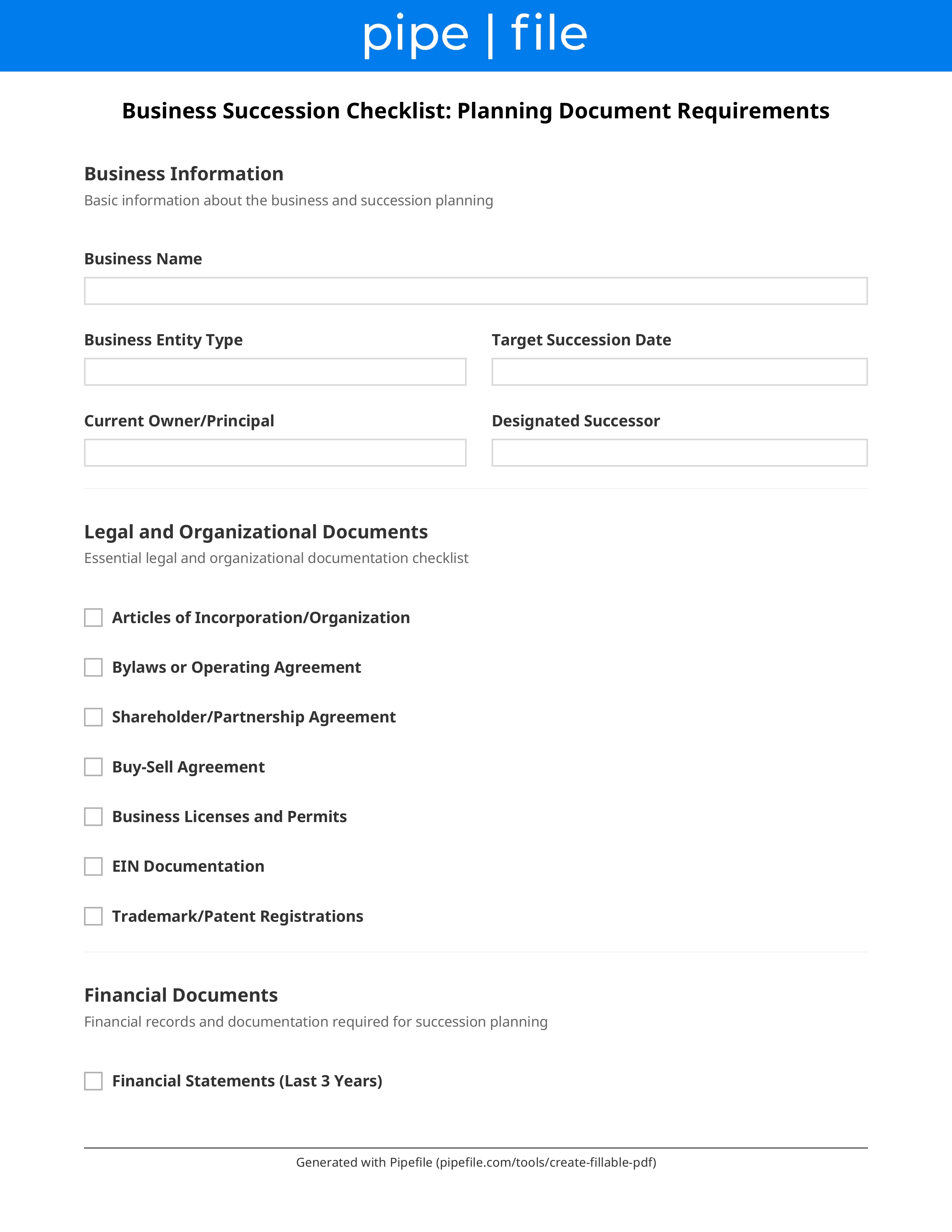
Business Succession Checklist: Planning Document Requirements form template preview

Key Benefits

Locate governing documents and ownership ledgers
Align buy-sell funding with valuations
Capture tax elections and basis records
Document key-person and continuity plans
Coordinate CPA, attorney, and advisor workstreams
Reduce family and partner conflict at transition

Common Use Cases

Family businesses planning a next-generation handoffPartners updating or funding a buy-sell agreementOwners preparing for a sale to employees or a third partyCPAs assembling succession due diligence filesFinancial advisors coordinating insurance fundingEstate attorneys integrating business interests into estate plans

Frequently Asked Questions

What is a buy-sell agreement?
A buy-sell agreement sets who can buy an owner’s interest, at what price or formula, and on what triggering events (death, disability, divorce, retirement). It should match how the purchase will be funded—often life insurance or installment terms.
Do I need a formal business valuation?
Many plans use a periodic appraisal or an agreed formula. Lenders, gift/estate tax filings, and ESOP or third-party sales often need a qualified valuation. Update valuations when ownership or earnings change materially.
Which tax documents matter for succession?
Keep entity elections (e.g., S corp), stock or membership ledgers, basis schedules, prior gift tax returns if interests were gifted, and recent business tax returns. Your CPA and attorney will identify structure-specific needs.
How does key-person insurance fit in?
Key-person or buy-sell life/disability insurance can fund a purchase of shares or stabilize cash flow after a founder’s death or disability. Keep policies, beneficiary designations, and premium records with the succession file.

Checklist

Entity

Articles, operating agreement / bylaws, and current ownership ledger
Required

Confirm who owns what percentage and any transfer restrictions already in the governing documents.

Agreements

Signed buy-sell or shareholders’ agreement (and amendments)
Required

Check triggers, valuation method, and funding. Note conflicts with estate plans.

Valuation

Recent business valuation or valuation formula documentation
Required

Keep the report, effective date, and any formula schedule used for buyouts.

Funding

Key-person or buy-sell life/disability insurance policies and beneficiaries

Match coverage to buy-sell funding needs. Confirm owner and beneficiary are correct.

Tax

Entity tax elections, basis schedules, and recent business tax returns
Required

Include S elections, QSub, or other classifications. Track stock/debt basis for owners.

Operations

Key customer, vendor, lease, and financing agreements with assignment clauses
Required

Change-of-control or anti-assignment clauses can block a transition without consent.

Leadership

Org chart, successor role descriptions, and training / transition plan
Required

Document who steps into leadership and over what timeline.

Estate

Personal estate documents that reference business interests (wills, trusts, POAs)
Required

Ensure estate plans and buy-sell terms do not conflict on who inherits or must sell.