Home/Templates/Finance/Accounting/Schedule C Checklist: Sole Proprietor Tax Document Requirements

Schedule C Checklist: Sole Proprietor Tax Document Requirements

Sole Proprietor and Tax Preparation Resource

Streamline Schedule C (Profit or Loss From Business) preparation with our comprehensive document checklist. For sole proprietors, freelancers, gig workers, and single-member LLCs filing with Form 1040. Ensure complete income reporting, deductible expense categories (COGS, advertising, vehicle, insurance, home office, and more), and supporting records so you maximize deductions and stay IRS-compliant. Perfect for self-employed taxpayers and CPAs preparing Schedule C returns.
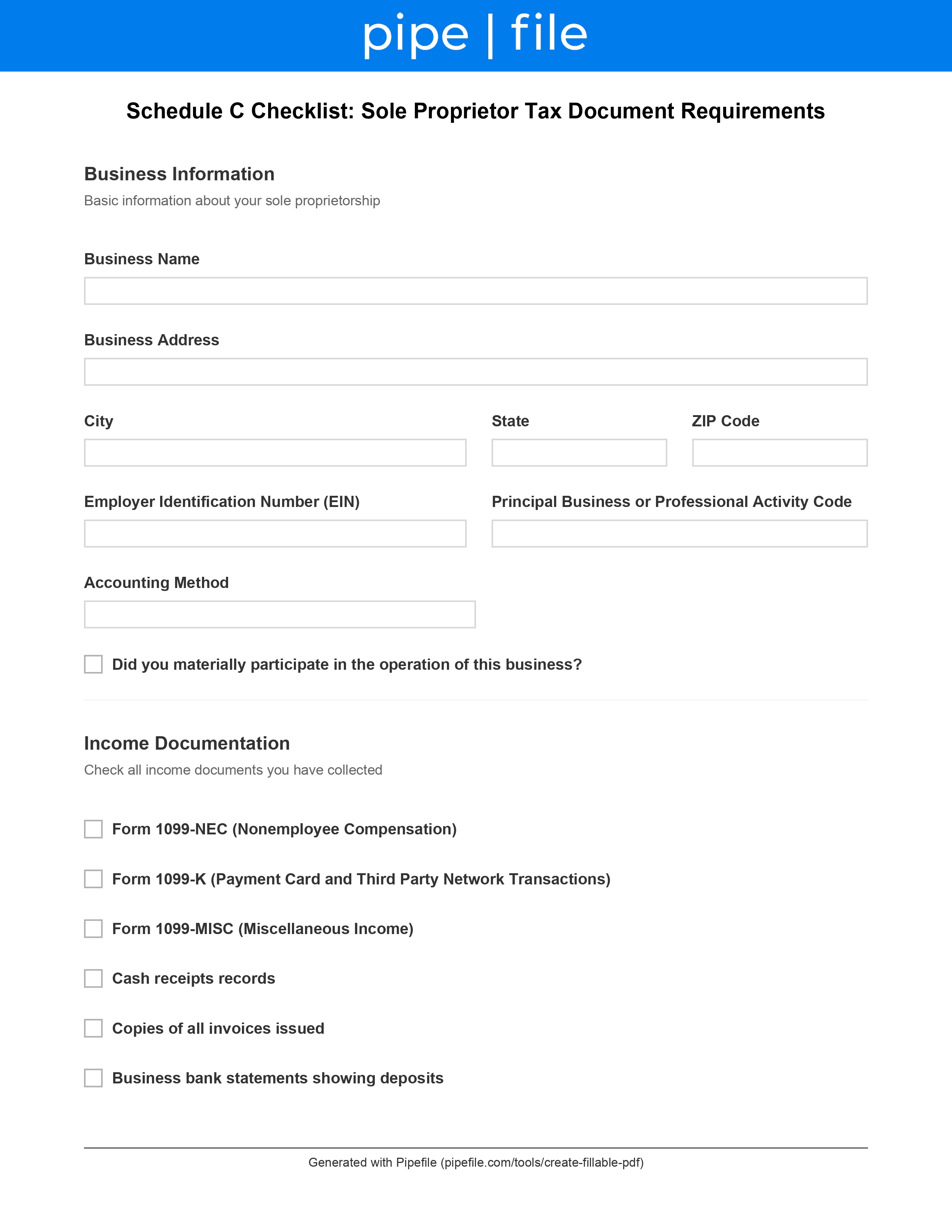
Schedule C Checklist: Sole Proprietor Tax Document Requirements form template preview

Key Benefits

Report all business income (1099s, cash, checks)
Capture deductible expenses by category
Support home office deduction if applicable
Document vehicle and other common Schedule C deductions
Reduce audit risk with organized records
Professional tax prep workflow

Common Use Cases

Sole proprietors and freelancers preparing taxesGig economy and contract workers reporting business incomeCPAs and tax preparers with Schedule C clientsSingle-member LLCs taxed as sole proprietorsBookkeepers organizing client records for Schedule CSelf-employed individuals maximizing deductions

Frequently Asked Questions

What is Schedule C and who files it?
Schedule C (Form 1040) reports profit or loss from a business operated as a sole proprietorship (or single-member LLC not electing otherwise). You file it with your Form 1040 if you have self-employment income. Income and expenses are reported by category; net profit is subject to income tax and self-employment tax.
What income do I report on Schedule C?
Report all gross income from the business: 1099-NEC and 1099-MISC income, payments from clients (cash, check, card, transfer), sales, and other business revenue. Keep invoices, payment records, and bank deposits to support the amounts reported.
What expenses can I deduct on Schedule C?
Ordinary and necessary business expenses are deductible. Common categories include cost of goods sold, advertising, car and truck, insurance, interest, office expense, supplies, contract labor, travel, meals (subject to limits), utilities, and home office (if you use the simplified or regular method). Keep receipts and records for each category.
Do I need records for the home office deduction?
Yes. For the regular method you need records of direct and indirect expenses (utilities, rent/mortgage interest, repairs, etc.) and the square footage of the office and home. For the simplified option you need the square footage of the office (max 300 sq ft). Our checklist covers both approaches.

Checklist

Income

Gather all business income records (1099-NEC, 1099-MISC, invoices, payment records)
Required

Report gross income. Match 1099s and other payments to bank deposits and books. Include cash, check, and electronic payments.

Expenses

Cost of goods sold (COGS) records, if applicable

Inventory, purchases, and cost of labor for businesses that sell products. Required for Part III if you have inventory.

Vehicle expenses (mileage log or actual expenses)

Standard mileage rate or actual expenses (gas, insurance, repairs, depreciation). Keep a mileage log for business miles.

Travel and meal expenses (receipts and business purpose)

Travel: lodging, transport. Meals generally 50% deductible; document business purpose, date, amount, and attendees.

Office expense and supplies (receipts and invoices)

Supplies, postage, small equipment. Separate from home office if you claim it.

Contract labor / subcontractor payments (1099s issued, W-9s on file)

Amounts paid to contractors. You may need to issue 1099-NEC; keep W-9s and payment records.

Business insurance (liability, professional, etc.)

Premiums for business-related insurance. Do not include health insurance here (different deduction).

Interest on business loans and credit cards

Interest attributable to business. Allocate if loan or card is used for both business and personal.

Advertising and marketing expenses

Website, ads, brochures, business cards. Keep invoices and proof of payment.

Home office records (if claiming deduction)

Regular method: square footage of office and home, utilities, rent/mortgage interest, repairs. Simplified: square footage of office (max 300). Exclusive and regular business use required.

Other deductible expenses (utilities, phone, subscriptions, etc.)

Business portion of phone, internet, software, and other recurring expenses. Allocate if shared personal/business.

Records

Business bank and credit card statements for the year
Required

Reconcile income and expenses. Supports amounts on Schedule C and audit trail.

Prior year Schedule C and tax return (for consistency and carryforwards)

Reference for format and carryover items. Keep for at least 3–7 years.