Home/Templates/Finance/Lending/Manual Underwriting Checklist

Manual Underwriting Checklist

Financial Professional Resource

Streamline your manual underwriting process with our comprehensive checklist. Perfect for loan officers, underwriters, and financial professionals to ensure thorough manual loan evaluation and faster approvals for non-traditional borrowers.
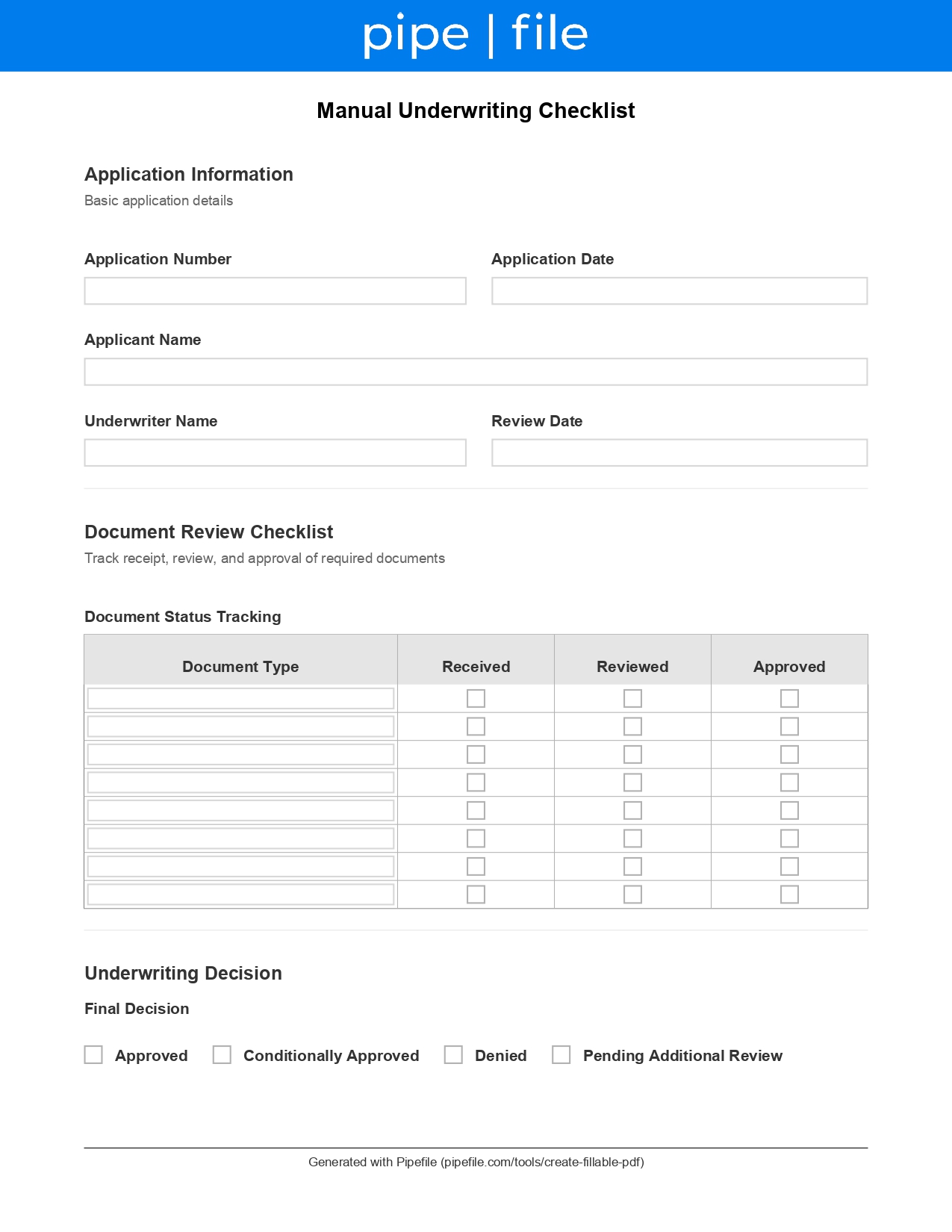
Manual Underwriting Checklist form template preview

Key Benefits

Reduce manual underwriting processing time by 60%
Ensure complete non-traditional borrower evaluation
Improve loan approval chances for complex cases
Streamline manual underwriting workflow
Professional financial standards compliance

Common Use Cases

Loan officers and underwritersFinancial institutions and lendersCredit unions and banksFinancial advisors and consultantsAlternative lending professionals

Frequently Asked Questions

What is manual underwriting and when is it used?
Manual underwriting is a loan evaluation process where underwriters manually review borrower information instead of relying solely on automated systems. It's used for non-traditional borrowers, complex financial situations, self-employed individuals, or cases that don't fit standard lending criteria.
What documents are typically required for manual underwriting?
Manual underwriting typically requires extensive documentation including detailed income verification, business financial statements, tax returns, bank statements, asset documentation, credit explanations, and additional supporting materials to justify the loan decision.
How can this checklist help with manual underwriting efficiency?
By ensuring all required documentation is collected upfront and organized systematically, you can reduce the time spent on follow-up requests, streamline the manual review process, and improve approval rates for complex loan scenarios.

Checklist

Initial Assessment

Complete initial application review and screening
Required

Review application completeness and identify red flags

Credit Analysis

Analyze credit report and identify derogatory items
Required

Review credit history, scores, and any negative items

Obtain written explanations for credit issues
Required

Borrower explanations for late payments, collections, etc.

Income Verification

Verify all sources of income thoroughly
Required

Employment, self-employment, rental, investment income

Complete employment verification and history
Required

Current and previous employment verification

Analyze self-employment income and stability

For self-employed borrowers - business analysis

Review personal and business tax returns
Required

Complete tax returns with all schedules and attachments

Analyze bank statements for income verification
Required

Review deposits, withdrawals, and account activity

Asset Verification

Verify all assets and account balances
Required

Checking, savings, investment, and retirement accounts

Verify down payment source and seasoning
Required

Source of down payment and minimum 60-day seasoning

Document gift funds and donor information

Gift letter, donor bank statements, and transfer records

Debt Analysis

Analyze all debt obligations and payments
Required

Credit cards, loans, mortgages, and other debts

Calculate debt-to-income ratios
Required

Front-end and back-end DTI calculations

Review payment history on all accounts
Required

Payment patterns and any late payments

Property Analysis

Analyze property value and condition
Required

Appraisal review, property condition, and market analysis

Complete title search and review
Required

Title search, liens, and encumbrances

Verify property and hazard insurance
Required

Insurance coverage and premium verification

Verify intended occupancy and use
Required

Primary residence, second home, or investment property

Risk Analysis

Complete comprehensive risk assessment
Required

Overall risk evaluation and mitigation strategies

Identify and document compensating factors
Required

Positive factors that offset risk concerns

Loan Structure

Review and optimize loan structure
Required

Loan amount, term, rate, and payment structure

Analyze loan pricing and risk-based pricing
Required

Interest rate, points, and pricing adjustments

Compliance

Complete compliance and regulatory review
Required

Regulatory compliance and fair lending review

Final Decision

Complete final underwriting approval
Required

Final underwriting decision and conditions

Review and clear all loan conditions
Required

Ensure all conditions are met before closing