Home/Templates/Finance/Accounting/Accounting Client Intake Form

Accounting Client Intake Form

Accounting and CPA Professional Resource

Standardize your accounting onboarding with an accounting client intake form built for CPAs, accounting firms, and outsourced finance teams. Capture entity details, current bookkeeping systems, bank and credit accounts, access requirements, reporting preferences, and key deadlines up front so you can start engagements cleanly, reduce follow-ups, and deliver consistent month-end close and financial reporting.
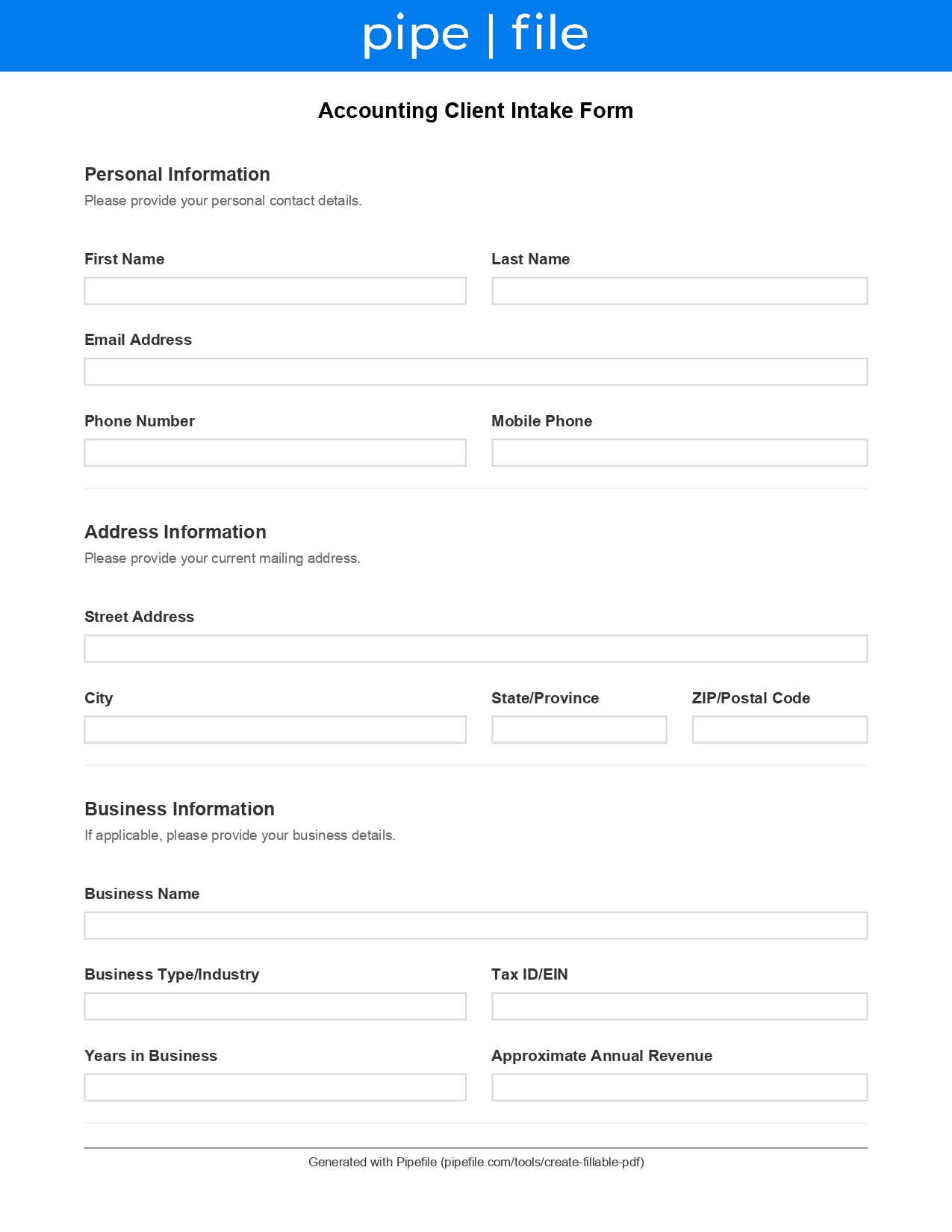
Accounting Client Intake Form form template preview

Key Benefits

Reduce intake back-and-forth with a structured accounting questionnaire
Document systems, accounts, and permissions before work begins
Standardize onboarding across team members and client types
Improve first-month close accuracy with a clear starting point
Set expectations for reporting cadence and deliverables
Minimize delays by capturing deadlines and stakeholder contacts early

Common Use Cases

CPA firms onboarding new monthly accounting clientsAccounting practices taking over books from a prior providerFractional CFO and finance teams standardizing client setupOutsourced accounting providers defining scope and access needsSmall businesses transitioning to new accounting systems

Frequently Asked Questions

What should an accounting client intake form include?
Include entity details, accounting software, bank and credit accounts, integrations, access roles, reporting requirements, close deadlines, and a summary of current pain points. This template is organized around those core setup needs.
How does an intake form help with a smoother first month close?
It helps you gather account access, prior records, and workflow expectations early. With a consistent intake, you can establish a clean starting point and reduce rework from missing statements, unclear approvals, or incomplete handoffs.
Can I use this intake form for both bookkeeping and full-service accounting?
Yes. The form is designed to cover foundational bookkeeping details plus broader accounting needs like reporting deliverables, review cadence, and stakeholder approvals. You can tailor it based on the engagement scope.

Checklist

Client Information

Business and entity details
Required

Legal name, DBA, entity type, jurisdictions, fiscal year, and primary contacts

Scope

Engagement scope and responsibilities
Required

Bookkeeping vs full-service accounting, who owns bill pay, invoicing, payroll, and approvals

Systems

Accounting software and system landscape
Required

QuickBooks/Xero/Sage details plus connected apps (POS, e-commerce, expense, payroll, banking)

Accounts

Bank, credit, and loan accounts to reconcile
Required

List all accounts and where statements are stored or how they will be shared

Access

Access, permissions, and security requirements
Required

User roles, MFA requirements, who grants access, and approval workflows for changes and payments

Records

Starting point and prior financial records
Required

Prior-year financials, trial balance, current reconciliations, and handoff items from prior provider

Reporting

Reporting deliverables and cadence
Required

Monthly reports, KPIs, classes/departments, and distribution list for stakeholders

Timeline

Close timeline and key deadlines
Required

Target close date, tax deadlines, board/investor reporting dates, and internal review schedule