Home/Templates/Finance/Accounting/Bookkeeping Client Intake Form

Bookkeeping Client Intake Form

Bookkeeping and Accounting Professional Resource

Streamline new bookkeeping engagements with a bookkeeping client intake form designed for bookkeepers, accounting firms, and outsourced finance teams. Collect business profile details, accounting system access, bank/credit accounts, reporting preferences, and key deadlines up front so you can start clean, reduce follow-ups, and deliver consistent monthly close and financial reporting.
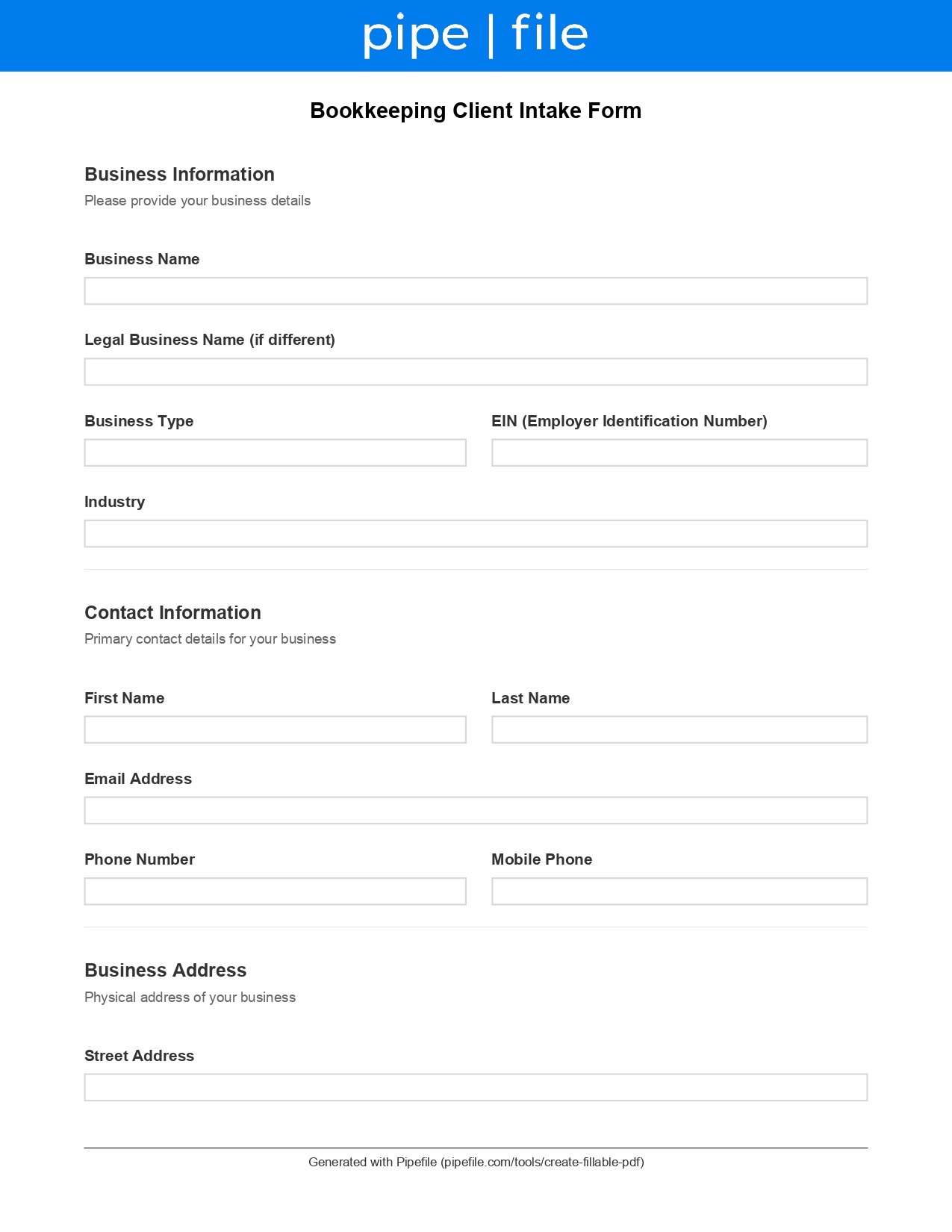
Bookkeeping Client Intake Form form template preview

Key Benefits

Reduce onboarding back-and-forth with a structured intake
Capture the right financial accounts and access requirements up front
Standardize client setup across your bookkeeping workflows
Set clear expectations for reporting cadence and close timelines
Improve data quality by documenting source systems and owners
Minimize missed details that slow down the first month close

Common Use Cases

Bookkeeping services onboarding a new monthly clientAccounting firms setting up ongoing bookkeeping supportFractional finance teams standardizing client intakeOutsourced accounting providers transitioning clients from another firmSmall business bookkeeping engagements that require clear scope and access

Frequently Asked Questions

What should a bookkeeping client intake form include?
Include business details, entity and tax info, accounting software, bank and credit accounts, users and access needs, document sources, reporting requirements, and close deadlines. This template is organized to capture those essentials up front.
How does an intake form help with a cleaner first month close?
It ensures you collect account access, prior records, and workflow expectations early, which reduces missing transactions and rework. A consistent intake also helps you set timelines and responsibilities from day one.
Can I use this for both QuickBooks and Xero clients?
Yes. The form is software-agnostic and focuses on the information you need regardless of platform, including access roles, connected apps, bank feeds, and the supporting documents required to reconcile accounts.

Checklist

Client Information

Business profile and primary contacts
Required

Legal name, DBA, address, owners, primary contact, and preferred communication channel

Tax Information

Entity and tax information
Required

Entity type, fiscal year, EIN (if applicable), and relevant tax filings and jurisdictions

Scope

Bookkeeping scope and responsibilities
Required

Monthly/quarterly tasks, who handles invoicing, bill pay, payroll, sales tax, and approvals

Systems

Accounting software and connected tools
Required

QuickBooks/Xero/Sage details, subscriptions, logins, and any integrated apps (POS, e-commerce, expense tools)

Accounts

Bank and credit accounts to reconcile
Required

List all operating, savings, credit cards, loans, merchant processors, and where statements are stored

Access

Access, user roles, and approvals
Required

Who grants access, required user roles, MFA requirements, and approval workflows for payments and journal entries

Records

Starting point and prior bookkeeping records
Required

Prior-year financials, trial balance, prior bookkeeper handoff, current reconciliations, and any known cleanup items

Reporting

Reporting preferences and close timeline
Required

Monthly close deadline, reporting package, departments/classes, and stakeholder distribution list