Accounting Onboarding Checklist
Accounting Professional Resource
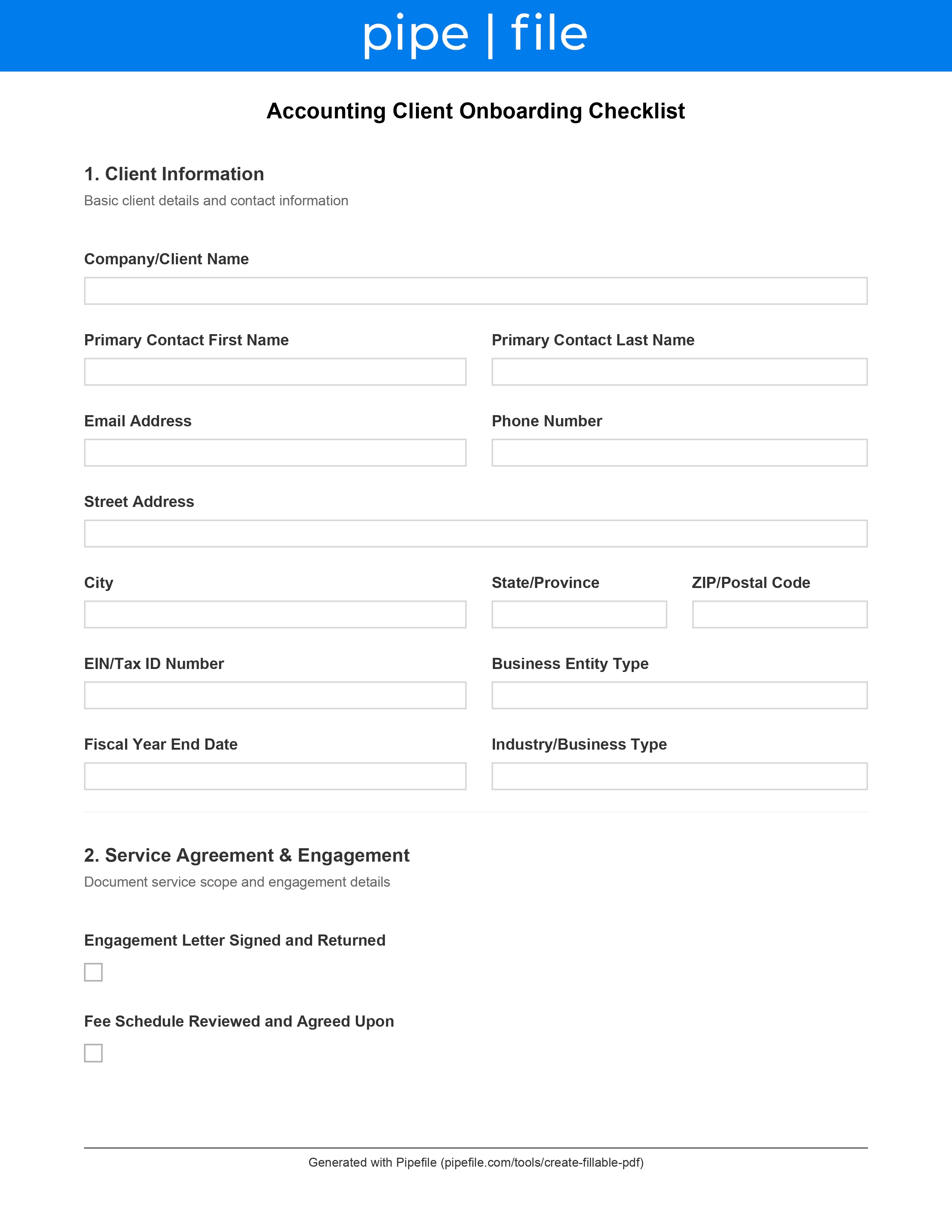
Streamline your accounting client onboarding process with our comprehensive checklist. Perfect for CPAs, accounting firms, bookkeepers, and financial professionals to ensure complete client setup, document collection, and service delivery for new accounting engagements.
Key Benefits
Common Use Cases
Frequently Asked Questions
What information should I collect during accounting client onboarding?
How can this onboarding checklist improve client satisfaction?
Is this checklist suitable for different types of accounting clients?
How should I handle sensitive financial information during onboarding?
Checklist
Client Information
Full name, business name, address, phone, email, and contact preferences
Business Information
Corporation, LLC, partnership, sole proprietorship, nonprofit, or other entity type
Calendar year vs fiscal year, reporting periods, and year-end dates
Tax Information
EIN, SSN, state tax ID, and other relevant identification numbers
Federal, state, and local tax filing requirements and due dates
Financial Information
Bank accounts, credit cards, loans, and other financial relationships
Technology Setup
QuickBooks, Xero, Sage, or other accounting software currently in use
User accounts, permissions, and training on accounting software
Secure cloud storage, file sharing protocols, and document organization
Regular data backups, disaster recovery plans, and data security measures
Hardware requirements, software compatibility, and integration needs
Accounting Setup
Current chart of accounts structure and any needed modifications
Financial Records
Previous year financial statements, tax returns, and supporting documentation
Current year bank statements, invoices, receipts, and transaction records
Outstanding invoices, customer payment terms, and collection procedures
Outstanding bills, vendor payment terms, and payment schedules
Payroll Information
Employee records, payroll systems, benefits, and tax withholdings
Asset Information
Inventory lists, fixed assets, depreciation schedules, and asset valuations
Transition
Obtain records from previous service provider and ensure smooth transition
Legal Documentation
Formal service agreement outlining scope, fees, and responsibilities
Confidentiality agreements to protect client information
Form 2848 for federal taxes and state equivalent forms
Financial Access
Online banking access, check writing authority, and payment processing
Communication
Preferred communication methods, meeting schedules, and reporting frequency
Primary contacts, emergency procedures, and after-hours communication
Service Delivery
Financial statement formats, reporting frequency, and special reports needed
Key performance indicators, service level agreements, and quality metrics
Monthly, quarterly, and annual review meetings and check-ins
Service scope, response times, availability, and professional boundaries
Compliance
Industry regulations, licensing requirements, and compliance obligations
Audit trail documentation, supporting schedules, and review procedures
Professional licensing, continuing education, and regulatory requirements
Financial Planning
Budget preparation, cash flow forecasting, and financial planning services
Tax Services
Quarterly tax planning meetings and year-end tax strategy sessions
Internal Controls
Segregation of duties, approval processes, and internal control procedures
Client Education
Software training, accounting education, and best practice guidelines
Financial Terms
Hourly rates, fixed fees, retainer arrangements, and payment schedules
Billing frequency, invoice formats, payment methods, and collection procedures
Security
Data security measures, access controls, and confidentiality procedures
Data recovery procedures, alternative work arrangements, and emergency protocols
Completion
Final review of all onboarding items and formal completion sign-off