←Home/Templates/Finance/Accounting/401(k) Rollover Checklist: Document Requirements

401(k) Rollover Checklist: Document Requirements

Financial Advisor and Retirement Planning Resource

Complete a 401(k) rollover with our document checklist. For financial advisors, CPAs, HR teams, and individuals moving retirement savings to an IRA or a new employer plan. Gather plan statements, distribution paperwork, receiving-account details, and tax forms so you avoid withholding mistakes, missed deadlines, and taxable distributions. Covers direct and indirect rollovers. Confirm current plan and IRS rules. Not tax or investment advice.
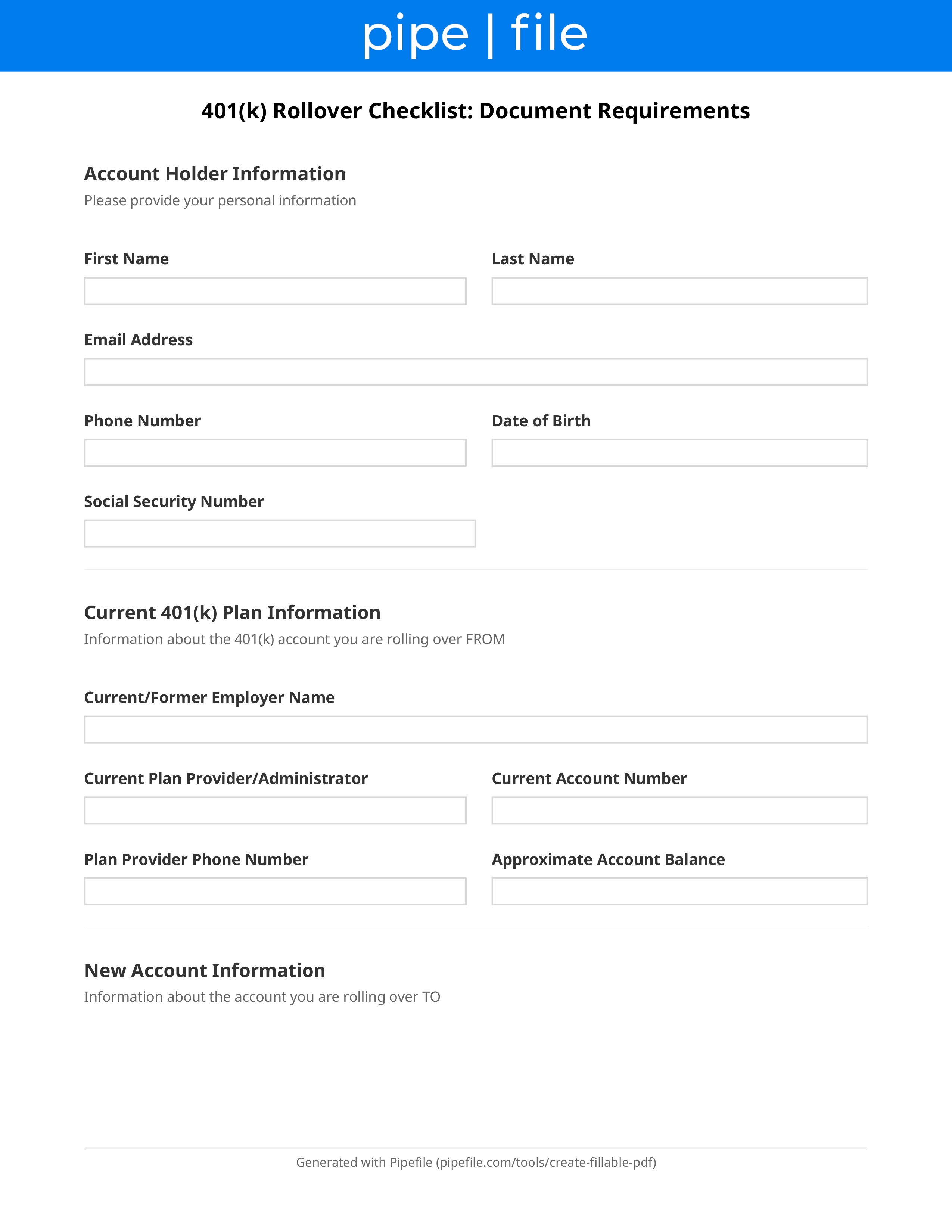
401(k) Rollover Checklist: Document Requirements form template preview

Key Benefits

Prefer direct (trustee-to-trustee) rollovers when available
Avoid 20% mandatory withholding on eligible rollover distributions
Meet the 60-day deadline if you receive a check
Keep plan statements and Form 1099-R organized
Coordinate old plan, new plan, and IRA custodians
Professional retirement transition workflow

Common Use Cases

Employees leaving a job with a 401(k) balanceAdvisors consolidating client retirement accountsHR supporting outgoing employees with rollover optionsCPAs documenting rollover tax treatment for clientsIndividuals rolling a 401(k) into an IRAWorkers moving funds into a new employer plan

Frequently Asked Questions

What is a direct 401(k) rollover?
In a direct rollover, the plan sends funds to your IRA or new plan without you taking possession. This usually avoids mandatory withholding and is the cleanest path. Ask both the old plan and the receiving custodian for their rollover instructions.
What happens in an indirect rollover?
If the plan pays you, eligible rollover amounts are often subject to 20% federal withholding. You generally have 60 days to deposit the full amount (including the withheld portion from other funds) into an eligible account to complete the rollover. Miss the deadline and the distribution may be taxable.
Which documents should I keep?
Keep recent plan statements, the distribution or rollover election forms, confirmation from the receiving IRA or plan, and Form 1099-R when issued. Your tax preparer may also need Form 5498 from the IRA custodian.
Can I roll a 401(k) into a Roth IRA?
A rollover from a pre-tax 401(k) to a Roth IRA is generally a conversion and may be taxable in the year of the conversion. Rules differ for Roth 401(k) sources. Confirm with a tax professional before electing a Roth destination.

Checklist

Plan Records

Recent 401(k) account statements (balance, sources, loans)
Required

Note pre-tax, Roth, and after-tax sources. Outstanding loans may need payoff or offset before distribution.

Plan contact info and rollover / distribution packet
Required

Request the plan’s rollover forms and eligible rollover distribution instructions from the administrator or recordkeeper.

Destination Account

Receiving IRA or new plan account number and custodian rollover instructions
Required

Open the IRA or enroll in the new plan first. Get the exact payee name and mailing or wire instructions for a direct rollover.

Forms

Completed distribution or rollover election forms from the old plan
Required

Elect direct rollover when possible. Keep signed copies and confirmation numbers.

Government ID and any spousal consent forms required by the plan
Required

Some plans require notarized spousal consent for distributions. Check the plan packet.

Tax

Special tax notice and withholding election acknowledgments
Required

Plans must provide the 402(f) notice. Read withholding and rollover timing carefully for indirect rollovers.

Form 1099-R when issued (and Form 5498 if rolling to an IRA)
Required

Code G often indicates a direct rollover. Provide copies to your tax preparer.

Follow-Up

Confirmation that the receiving IRA or plan accepted the funds
Required

Match amount and date to the old plan’s distribution confirmation.