←Home/Templates/Finance/Lending/Mortgage Commitment Letter Checklist: Documents Required

Mortgage Commitment Letter Checklist: Documents Required

Purchase Mortgage and Underwriting Resource

Streamline the path from pre-approval to a mortgage commitment letter with our document checklist. For buyers, listing agents, and loan officers. A commitment is the lender's decision after underwriting, often subject to listed conditions. Gather updated income and assets, the purchase contract, appraisal, insurance, and title items so remaining conditions can clear before closing.
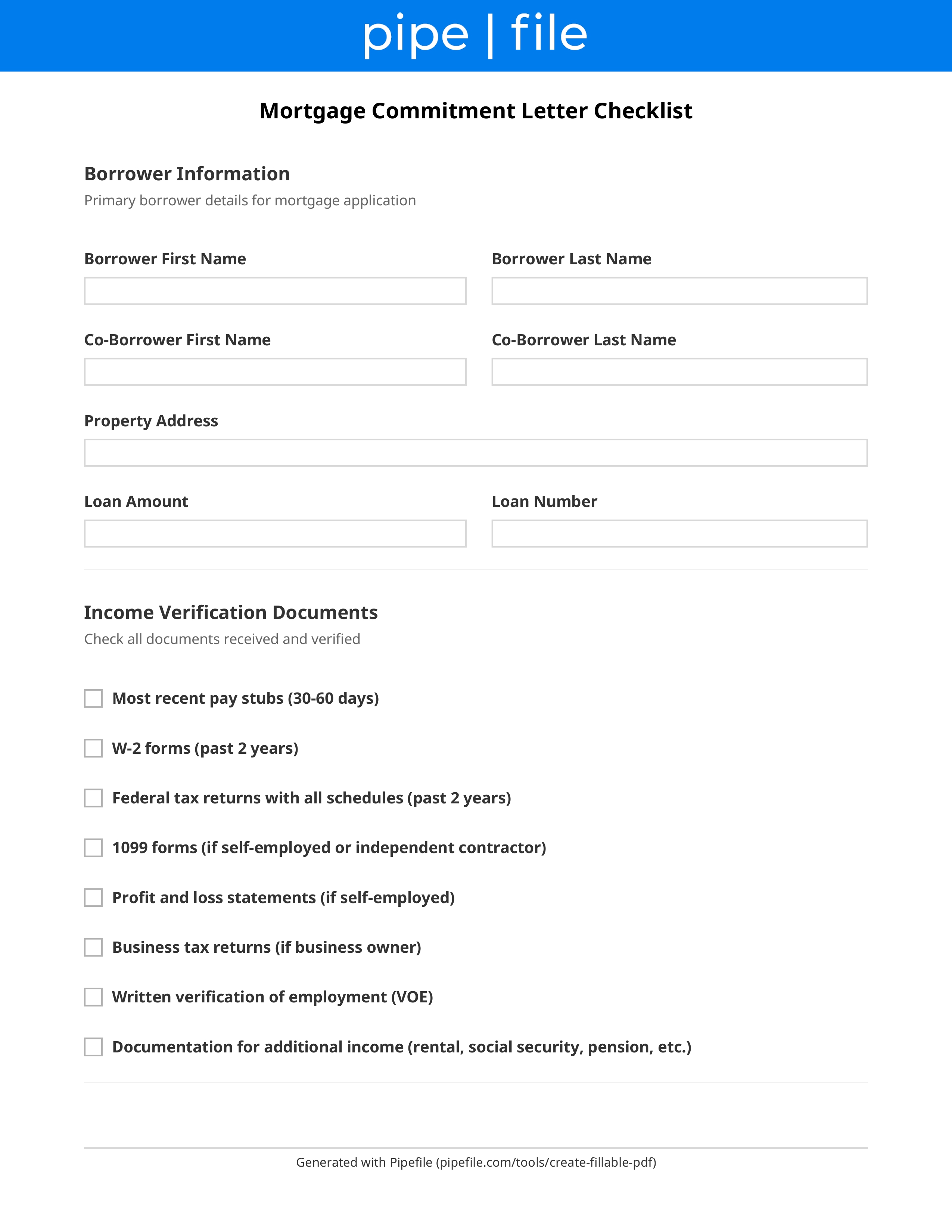
Mortgage Commitment Letter Checklist: Documents Required form template preview

Key Benefits

Move from pre-approval to a written commitment
Track underwriting conditions in one list
Update income, assets, and employment before the letter expires
Coordinate appraisal, title, and homeowners insurance
Reduce last-minute closing delays
Professional purchase-mortgage workflow

Common Use Cases

Buyers who need a commitment letter for a contract or condo boardLoan officers clearing underwriting conditionsListing agents confirming a buyer's financing is underwrittenRefinance files that still issue a commitment before closingCo-op or condo applications that require a commitmentProcessors assembling the conditions package

Frequently Asked Questions

How is a commitment letter different from a pre-approval?
A pre-approval is a credit and income review, often before a property is under contract. A commitment letter is issued after the file is underwritten on a specific property and usually lists conditions (appraisal, insurance, title, updated statements). Sellers and condo boards often require a commitment.
What documents are needed to get a commitment?
A full application, income and asset docs, credit authorization, the purchase contract, an appraisal (or waiver if allowed), homeowners insurance, and title or HOA items. Underwriting may still add conditions that must be cleared before the commitment is 'clear to close.'
How long is a commitment letter valid?
Often 30-90 days, and rate locks are a separate clock. If the letter expires, you may need updated statements, a new credit pull, or a recert of employment. Plan the closing date inside both the commitment and the lock.
What conditions usually remain after commitment?
Common leftover items are a satisfactory appraisal, proof of insurance, title clearance, updated pay stubs or bank statements, and a final VOE. Our checklist helps you gather those in parallel so the commitment can go clear to close.

Checklist

Application

Complete 1003 and signed disclosures
Required

Must match the contract names and occupancy. All borrowers.

Borrower Documentation

Current income and asset documentation
Required

Pay stubs, W-2s or returns, and all-pages statements. Update if they aged out.

Transaction

Fully executed purchase contract and addenda
Required

Price, dates, and financing contingency. Needed for property-specific underwriting.

Property Documentation

Appraisal ordered and any appraisal conditions addressed
Required

Lender-ordered. Repairs or value gaps become conditions on the commitment.

Homeowners insurance binder with mortgagee clause
Required

Must meet coverage and deductible overlays before clear to close.

Title commitment and HOA/condo docs if applicable
Required

Liens, survey, and project approval can hold a commitment.

Underwriting

Written list of outstanding underwriting conditions
Required

Track each item to a document. Goal is clear-to-close, not just a commitment.

Identity

Government-issued photo ID and any residency documents
Required

Required for closing package and often for the commitment itself.