←Home/Templates/Legal/Business/Corporate/Intellectual Property Client Intake Form

Intellectual Property Client Intake Form

Business and Legal Professional Resource

Open an IP matter with a client intake form for trademark, copyright, patent, and trade-secret work. Collect client and related-entity names for conflict checks, a description of the work or brand, first-use or creation dates, existing registrations and applications, ownership or assignment history, and the client's immediate goal (clearance, filing, enforcement, or license) so counsel can scope the engagement. For IP and business attorneys. This is not legal advice; registrability, deadlines, and ownership rules are fact-specific—confirm current USPTO, Copyright Office, or contract requirements for the matter type.
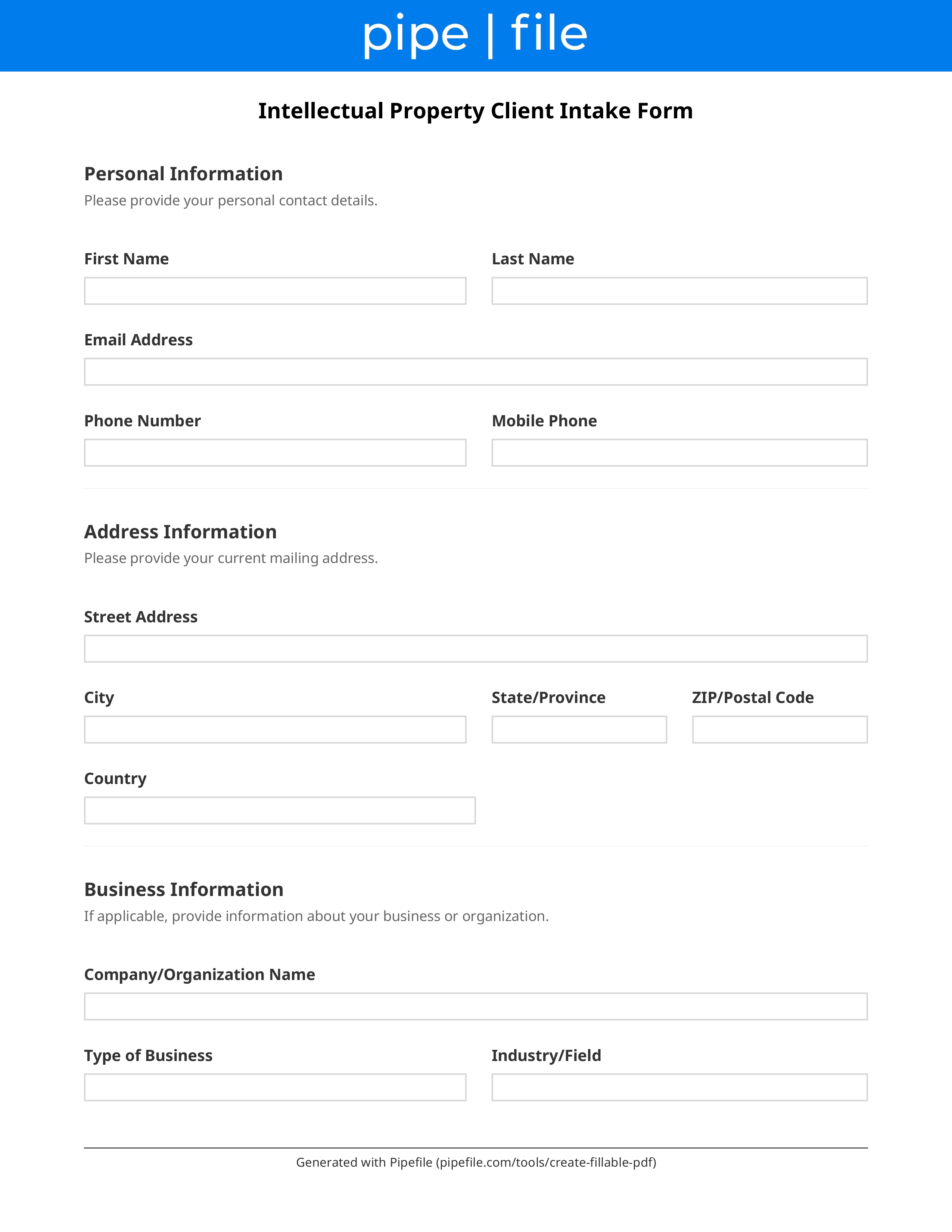
Intellectual Property Client Intake Form form template preview

Key Benefits

Run a conflict check across companies and inventors
Describe the mark, work, or invention in the client's words
Capture first-use, creation, and filing dates
List existing registrations, applications, and licenses
Clarify ownership versus inventor or contractor status
Scope clearance, filing, or enforcement before a proposal

Common Use Cases

Trademark counsel opening a clearance or filing matterCopyright lawyers intake for registration or takedown workPatent firms collecting inventor and priority-date factsBusiness attorneys screening a licensing requestIn-house teams sending a new brand to outside counselEnforcement matters gathering specimen and first-use facts

Frequently Asked Questions

Which names belong on the conflict check?
The client, parent and subsidiary companies, founders, named inventors, opposing parties, and any prior firm that already filed on the same mark or patent. IP conflicts often hide in related entities that own the registrations.
What dates matter most at intake?
First use in commerce for trademarks, creation and publication for copyright, and conception or filing dates for patents. Also record office action or opposition deadlines already pending so nothing expires during onboarding.
Why ask who created the work?
Ownership may sit with an employee, a contractor without an assignment, a joint author, or a prior company. Intake should flag missing work-for-hire language or assignments before you file in the wrong name.
Is this form legal advice?
No. It organizes facts. Registrability, freedom-to-operate, and deadline calculations require counsel licensed for the matter. Confirm current office rules before filing.

Checklist

Client Information

Client legal name, related entities, and individuals for the conflict check
Required

Include DBAs and the exact owner name that should appear on any filing.

Matter

Matter type: trademark, copyright, patent, trade secret, license, or enforcement
Required

A single intake can cover more than one, but scope fees separately.

Subject Matter

Description of the mark, work, or invention and goods, services, or field of use
Required

Attach a specimen or image if the client already has one. Do not file from a vague slogan alone.

Dates

First-use, creation, publication, or priority dates the client already knows
Required

Note the source (invoice, website capture, lab notebook). Flag any statutory deadline the client mentioned.

Prior Rights

Existing applications, registrations, office actions, and foreign filings
Required

Record numbers, classes, and counsel who filed them. Request copies of assignment records.

Ownership

Who created the work and whether written assignments or employment agreements exist
Required

Contractors and co-founders are the usual gap. List missing documents as follow-up.

Goals

Client goal: clearance, new filing, renewal, license, or cease-and-desist
Required

Capture countries or states of interest and any launch date.

Disputes

Known third parties, cease-and-desist letters, or marketplace listings already in dispute

Needed for conflicts and for whether a litigation hold should start.