←Home/Templates/Finance/Lending/Equipment Financing Checklist: Document Requirements

Equipment Financing Checklist: Document Requirements

Equipment Lending and Capital Expenditure Resource

Streamline your equipment financing application with our comprehensive document checklist. For businesses buying or leasing machinery, vehicles, or technology, and for equipment lenders. Collect the vendor quote, equipment specs, business financials, tax returns, entity documents, and insurance so the lender can underwrite the asset and the borrower together.
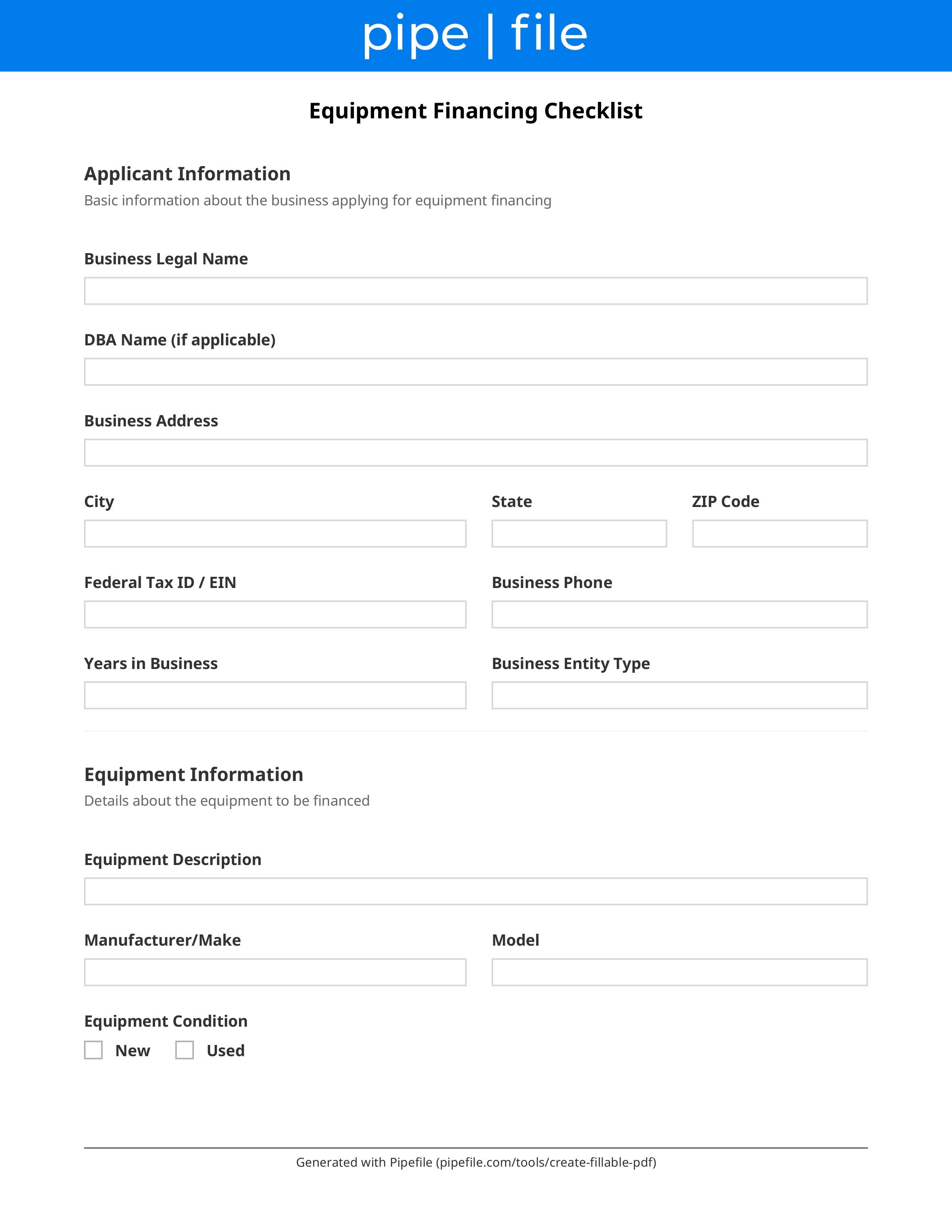
Equipment Financing Checklist: Document Requirements form template preview

Key Benefits

Package the vendor quote and equipment specifications
Gather business financials and tax returns for credit
Document ownership, guarantees, and existing debt
Prepare insurance and titling requirements before funding
Reduce conditions on equipment loans and capital leases
Professional equipment finance workflow

Common Use Cases

Companies financing new or used equipment purchasesEquipment lenders and brokers packaging credit filesManufacturers and contractors replacing machineryMedical, dental, and professional practices buying devicesFleets adding specialized vehicles or attachmentsSBA or bank lenders securing equipment as collateral

Frequently Asked Questions

What is equipment financing?
Equipment financing is a loan or capital lease used to buy machinery, vehicles, or other capital assets. The equipment usually secures the credit. Payments are sized to the asset's useful life. It differs from a general working-capital loan because underwriting focuses on both the borrower and the collateral.
What documents do equipment lenders require?
Expect a vendor invoice or quote with make, model, serial (or to-be-assigned), price, and delivery; business tax returns and financials; bank statements; entity docs; personal guarantees; and proof you can insure the asset. Startups lean more on personal credit and a down payment.
Can I finance used equipment?
Yes. Used equipment is commonly financed, often at a lower advance rate and shorter term. Lenders want a clear bill of sale, condition, and sometimes an inspection or valuation. Very old or specialized assets may need a larger down payment.
Is a down payment required?
Many programs finance 80-100% of invoice. Strong credits and new equipment from approved vendors may get low or no down payment. Weaker credits, used assets, or soft costs (delivery, training) often need cash in. Your quote should split hard cost vs. soft cost.

Checklist

Application

Equipment financing or lease application
Required

Business info, owners, requested amount, and equipment description.

Credit authorization for the business and guarantors
Required

Required to pull commercial and consumer credit.

Equipment

Vendor quote or invoice (make, model, price, new/used)
Required

Itemize soft costs. Used gear needs seller details and condition notes.

Financial Documentation

Business financial statements and YTD P&L
Required

Typically 2 years plus current interim. Startups may substitute projections.

Business and personal tax returns (typically 2 years)
Required

Supports cash flow and personal guarantee analysis.

Business bank statements (typically 3 months, all pages)
Required

Shows deposit activity and ability to carry the payment.

Business Documentation

Entity documents, EIN, and ownership schedule
Required

Articles, operating agreement or bylaws, and who can sign.

Collateral

Evidence that the equipment can be insured (binder or quote)
Required

Lender will be loss payee. Bind coverage before funding.