←Home/Templates/Finance/Lending/Bridge Loan Requirements: Document Checklist & Qualification Guide

Bridge Loan Requirements: Document Checklist & Qualification Guide

Short-Term and Transitional Lending Resource

Streamline your bridge loan application with our comprehensive document checklist. For homeowners, real estate investors, and lenders using short-term financing to buy before selling or close a timing gap. Cover the new purchase, existing property equity, payoff and listing status, exit strategy, credit, and identity so the bridge lender can size the loan and underwrite the takeout.
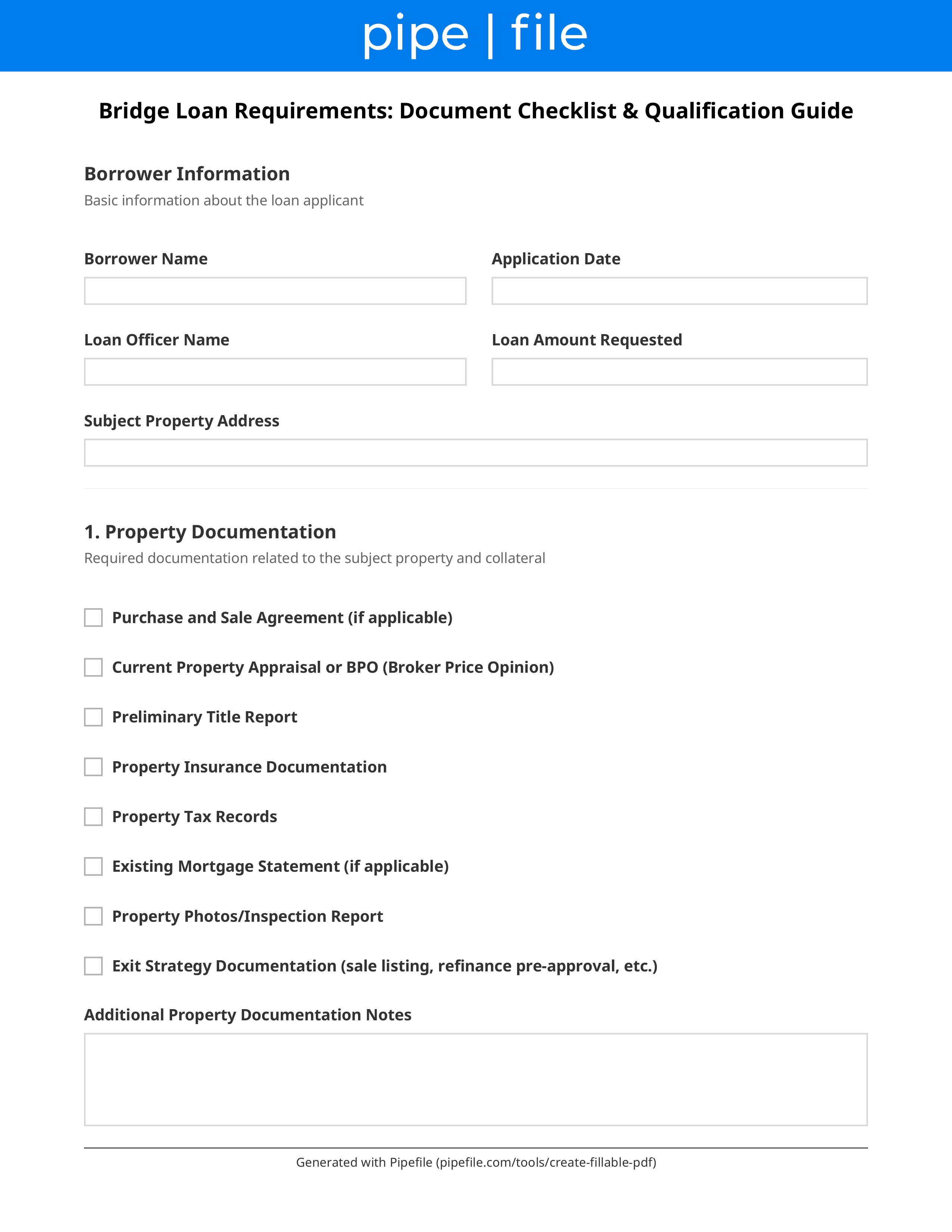
Bridge Loan Requirements: Document Checklist & Qualification Guide form template preview

Key Benefits

Document both the new purchase and the property you are exiting
Show equity, payoff, and listing or sale status
Spell out the takeout or sale exit strategy
Meet short-term lender credit and reserve requirements
Reduce conditions on time-sensitive closings
Professional bridge and transitional lending workflow

Common Use Cases

Homeowners buying a new house before selling the current oneInvestors bridging acquisition to permanent financingLoan officers packaging residential or commercial bridge filesHard-money and private lenders underwriting short-term notesBorrowers needing funds to close while a sale is pendingDevelopers covering a gap between construction and takeout

Frequently Asked Questions

What is a bridge loan?
A bridge loan is short-term financing that covers a timing gap, most often buying a new property before the current one sells or before permanent financing funds. It is usually interest-only, secured by one or both properties, and repaid from sale proceeds or a takeout loan.
What documents do bridge lenders require?
Typical files include the purchase contract, existing mortgage statements and payoff, listing agreement or pending sale, proof of equity, credit authorization, ID, and a written exit strategy. Investment or commercial bridges add rent rolls, entity docs, and project budgets.
How is a bridge loan repaid?
Most bridges are repaid when the departing property sells, when a construction project refinances, or when a permanent mortgage closes. Lenders underwrite that exit as carefully as the collateral. A weak or undocumented exit is a common denial.
Do I need to list my current home first?
Many residential bridge programs want the current home listed or under contract so the exit is credible. Some allow a non-listed home at a lower LTV. Confirm your lender's overlay before you waive the listing.

Checklist

Application

Complete bridge loan application
Required

Disclose both properties, loan purpose, and requested term. All borrowers sign.

Credit report authorization
Required

Signed authorization. Explain late payments or recent inquiries if asked.

Transaction

Executed purchase contract for the new property
Required

Price, dates, and contingencies. Amendments included.

Existing Property

Current mortgage statement(s) and payoff authorization
Required

Needed to calculate equity and combined liens on the departing property.

Listing agreement or pending sale contract for the departing property

Supports the exit. Some programs require a listing; others accept equity-only.

Underwriting

Written exit strategy (sale, refinance, or takeout commitment)
Required

Timeline, source of repayment, and backup plan if the sale slips.

Asset Documentation

Bank and asset statements for closing costs and reserves
Required

All pages. Shows ability to carry two properties if needed.

Identity

Government-issued photo ID for all borrowers
Required

Driver's license or passport. Entity borrowers add formation docs.