Home/Templates/Legal/Litigation/Workers' Compensation Client Intake Form

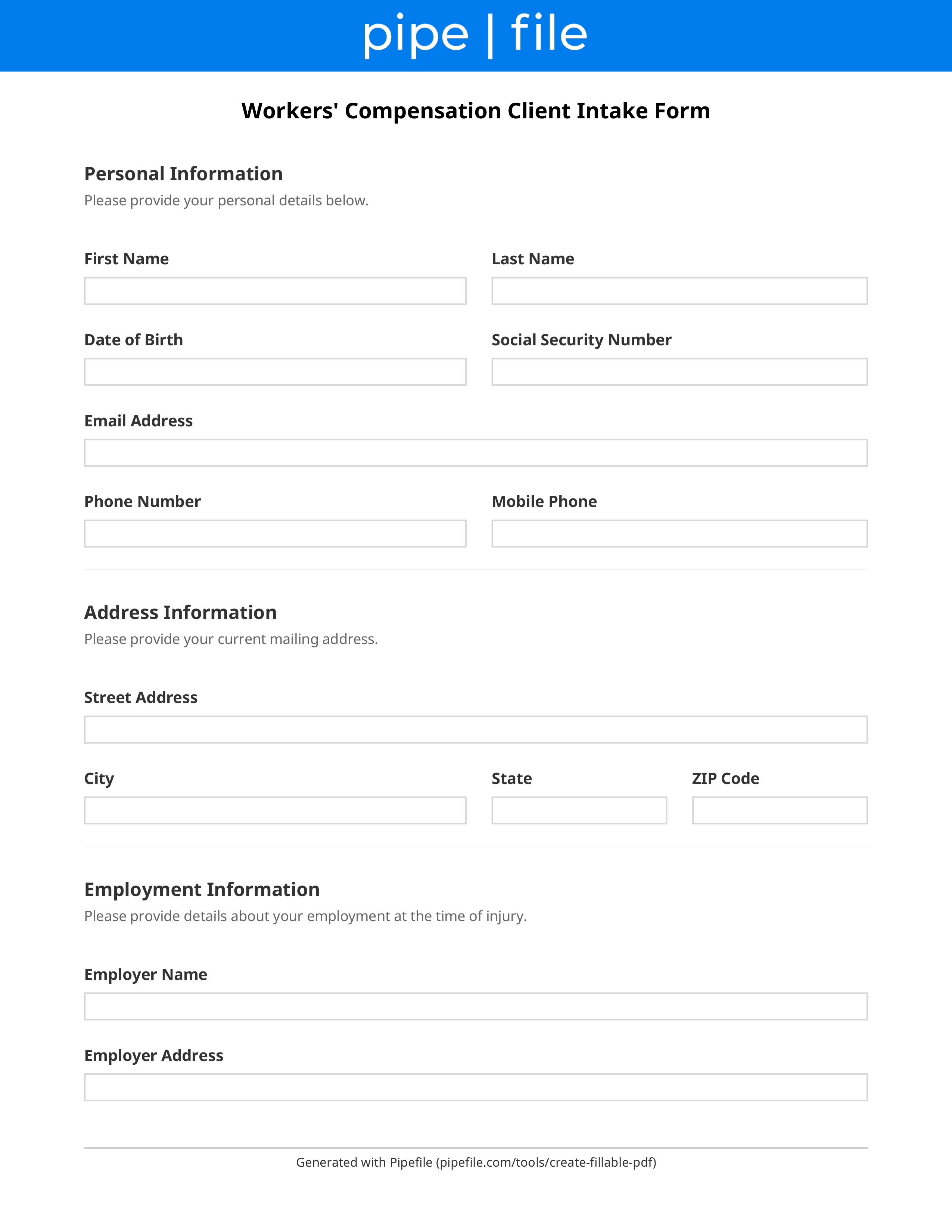
Workers' Compensation Client Intake Form

Workers' Compensation Attorney and Legal Intake Resource

Streamline workers' compensation case intake with our client intake form guide. For workers' comp attorneys, paralegals, and legal intake staff. Collect injured worker and contact information, employer and job details, date and circumstances of the injury or occupational exposure, body parts affected, medical treatment and providers, witnesses, wage and employment history, prior injuries or claims, and whether the employer or carrier has been notified so you can assess coverage, liability, and next steps. Use this structure for initial consultations and new workers' comp claims. State laws and deadlines vary; confirm reporting and claim requirements in your jurisdiction.
Key Benefits

Capture injured worker and employer information in one place
Document injury date, mechanism, and body parts clearly
Track medical treatment and providers from the start
Record wage and employment history for benefits calculation
Identify witnesses and prior claims
Professional workers' comp intake workflow

Common Use Cases

Workers' compensation attorneys conducting initial consultationsParalegals and intake staff onboarding injured worker clientsLaw firms standardizing workers' comp intake across the practiceAssessing whether the claim is work-related and within scopePreparing for first report of injury and carrier notificationClaims that may involve denial, dispute, or litigation

Frequently Asked Questions

What is a workers' compensation intake form used for?
An intake form helps the attorney and staff collect consistent information from the injured worker at the start of a claim. It covers the worker's identity, employer, how and when the injury happened, what body parts are affected, medical care received, wages, and any prior injuries or claims. It supports conflict checks, case assessment, and preparation for filing or disputing a workers' comp claim.
What should the client bring to the first meeting?
In addition to the intake information, the client should bring any incident or accident reports, medical records or bills from treatment so far, pay stubs or wage information, and the name of the employer's workers' comp carrier or claim number if they have already reported the injury. A list of witnesses and their contact information is also helpful.
Are there deadlines for reporting a work injury?
Yes. Most states require the employee to report the injury to the employer within a certain period (e.g. 30 days or promptly) and to file a claim or application for benefits within a statute of limitations (often 1–2 years from the injury or last benefit). Missing these deadlines can bar benefits. The intake helps identify dates so the attorney can ensure timely action.
Can I get benefits if the employer says I was at fault or it wasn't work-related?
Workers' comp is generally no-fault: you can still be eligible for benefits even if you contributed to the injury, as long as it arose out of and in the course of employment. Disputes over whether the injury is work-related or over the extent of benefits are common. An attorney can help you present the claim, gather evidence, and appeal a denial.

Checklist

Client Information

Client (injured worker) full name, contact information, and preferred method of contact
Required

Phone, email, mailing address. Note if safe to contact at work or home; language preference if any.

Employer Information

Employer legal name, address, and (if known) workers' comp carrier or claim number
Required

Where the client was working at the time of injury. Carrier and claim number if injury was already reported.

Employment Information

Job title, duties, and length of employment
Required

Supports 'in the course of employment' and job description for modified duty or vocational issues.

Wage information: rate of pay, hours, overtime, and other compensation (for benefits calculation)
Required

Average weekly wage often determines indemnity benefits. Pay stubs, W-2, or tax returns. Include bonuses or overtime if applicable.

Injury Details

Date, time, and location (specific place at work) where injury occurred
Required

Exact date and time if possible. Building, area, or worksite. Critical for reporting deadlines and investigation.

How the injury occurred: mechanism, activity, and whether sudden accident or gradual/repetitive
Required

Describe what the client was doing and what happened. For occupational disease or repetitive trauma, note exposure or activities over time.

Body parts injured and nature of injury (e.g. fracture, strain, laceration)
Required

List all affected areas. Distinguish new injury from aggravation of pre-existing condition if relevant.

Medical Information

Medical treatment to date: providers, ER, urgent care, referrals, and current treating doctor
Required

Names and addresses of all providers. Some states have employer/carrier choice of physician rules; note who authorized treatment.

Evidence

Witnesses to the injury or to conditions that caused it (names and contact info if available)
Required

Co-workers, supervisors, or others who saw the incident or the hazardous condition. Get contact information for later.

Claim Information

Whether and when the client reported the injury to the employer; to whom; any written report
Required

Many states require prompt notice to the employer. Document who was told, when, and whether an incident report was completed.

Current work status: still working, modified duty, off work, or terminated since injury
Required

Whether client is out of work and seeking wage replacement; on light duty; or returned to full duty. Any termination may affect claim.

Case History

Prior work-related injuries or workers' comp claims (same or other employer); prior conditions to same body part
Required

Carrier may allege pre-existing condition or apportionment. Disclose to avoid conflicts and to prepare for defense arguments.

Intake Process

Conflict check: employer, carrier, and any related parties for conflict clearance
Required

Run conflict check before engagement. Note any prior representation of the employer, carrier, or related entity.