Offer Letter Template
HR and Recruiting Resource
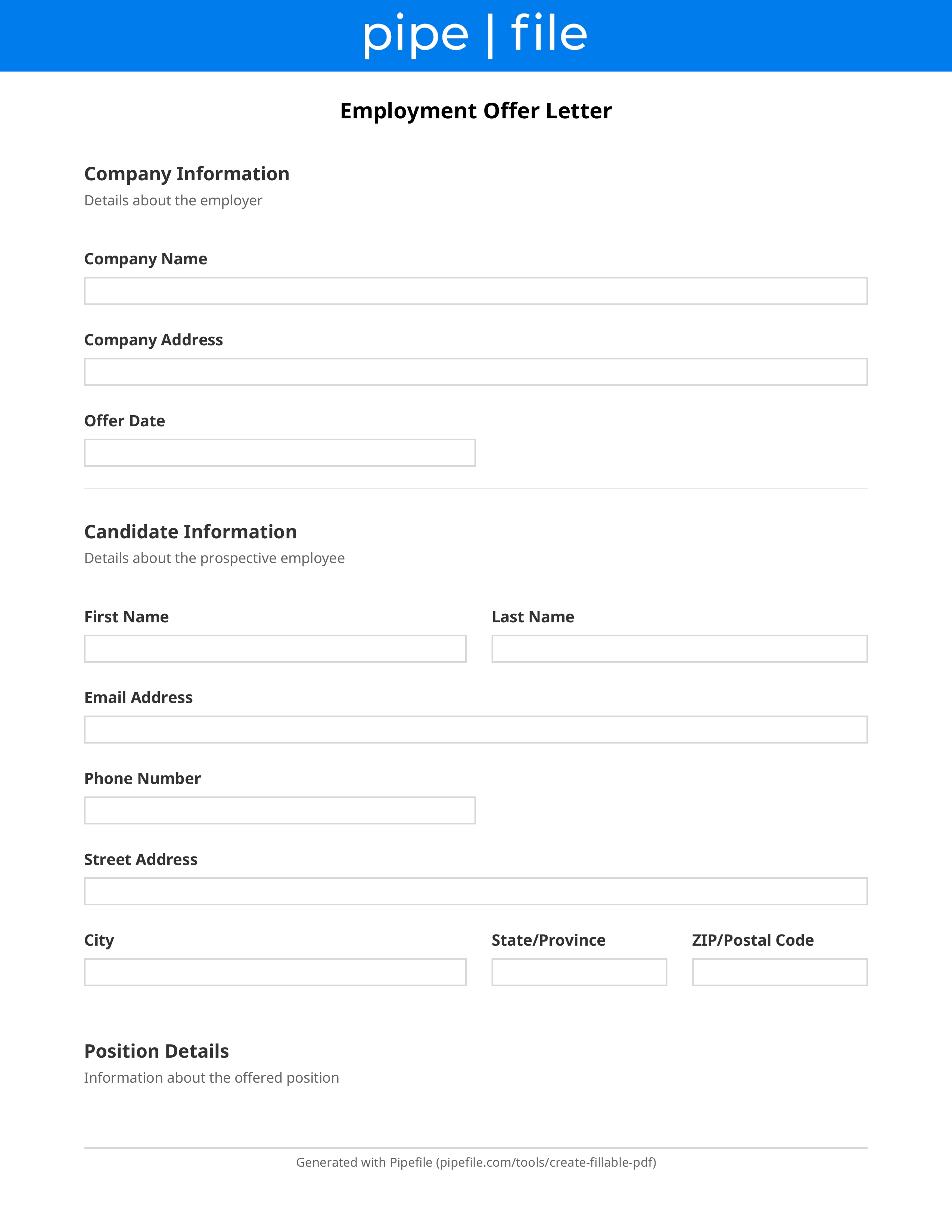
Extend job offers clearly and consistently with our offer letter template and checklist. For HR, hiring managers, and employers. An offer letter sets out the position title, start date, compensation (salary or wage, pay period), benefits summary, at-will or contract terms, and any contingencies (background check, references, I-9). Use this checklist to draft or review offer letters so candidates and the company agree on key terms before the first day—and so onboarding (I-9, W-4, signed offer) stays aligned. Customize for your jurisdiction and policy.
Key Benefits
Common Use Cases
Frequently Asked Questions
What is an offer letter?
What is the difference between at-will and a contract?
What contingencies should we include?
When should the candidate sign the offer letter?
Checklist
Role
Exact job title and where the role sits (department, division). Avoid vague titles that could create contract or FLSA confusion. Match to internal job description and payroll.
Primary work location: office address, remote, or hybrid. For remote, state any state/country eligibility or tax implications. Align with payroll and compliance (e.g. registered states).
Name or title of the person they will report to. Sets expectations and helps the candidate accept.
Timing
Specific date. Note if contingent on background check or other conditions; state that start may be delayed if contingencies are not met by that date.
Compensation
State base salary (e.g. annual) or hourly rate and how often the employee is paid (weekly, biweekly, semimonthly, monthly). Include any guaranteed bonus or commission structure if applicable. Exempt vs non-exempt should align with role and law.
Benefits
Brief summary of eligibility for health insurance, PTO/vacation, retirement, and other benefits. Clarify eligibility date (e.g. first of month after 30 days). Direct to plan documents or HR for full details; avoid promising specific terms not in the plans.
Legal
In the U.S., if employment is at-will, state clearly that either party may terminate at any time with or without cause or notice (subject to applicable law). If you use a contract, the offer letter should reference it or be subject to a separate agreement. Consult counsel for your state/country.
If the employee will sign a separate confidentiality, IP, or non-compete agreement, mention it in the offer and that acceptance includes agreement to sign those documents. Do not rely on the offer letter alone for restrictive covenants; use separate agreements per counsel.
Conditions
State that the offer is contingent on satisfactory background check, reference check, and verification of eligibility to work (I-9). List any other conditions (e.g. signing confidentiality agreement). Employment may not begin until contingencies are satisfied.
Process
Give a reasonable deadline to accept (e.g. 5–7 business days). Specify how to accept: sign and return the letter (or acceptance section) by email or portal. Stating a deadline avoids open-ended offers.
Execution
Company signatory (authorized HR or hiring manager) and candidate signature line with date. Retain signed copy in personnel file. Electronic signatures are generally acceptable if valid under your jurisdiction.
Compliance
Brief EEO statement that the company is an equal opportunity employer. Supports compliance and culture. Keep generic unless you have a specific policy to attach.