←Home/Templates/Insurance/Liability Claim Intake Form

Liability Claim Intake Form

Claims, TPA, and Risk Management Resource

Open a third-party liability claim with an intake form for insurers, TPAs, risk managers, and brokers. Collect claimant and insured contacts, policy numbers, incident date and location, alleged injury or damage, witnesses, and the first notice details so the file can be reserved and assigned. Distinct from the general insurance-claim intake page: this form is scoped to liability. Notice and cooperation duties are in the policy. Not legal or coverage advice; confirm current claim-reporting rules and do not admit liability on the form.
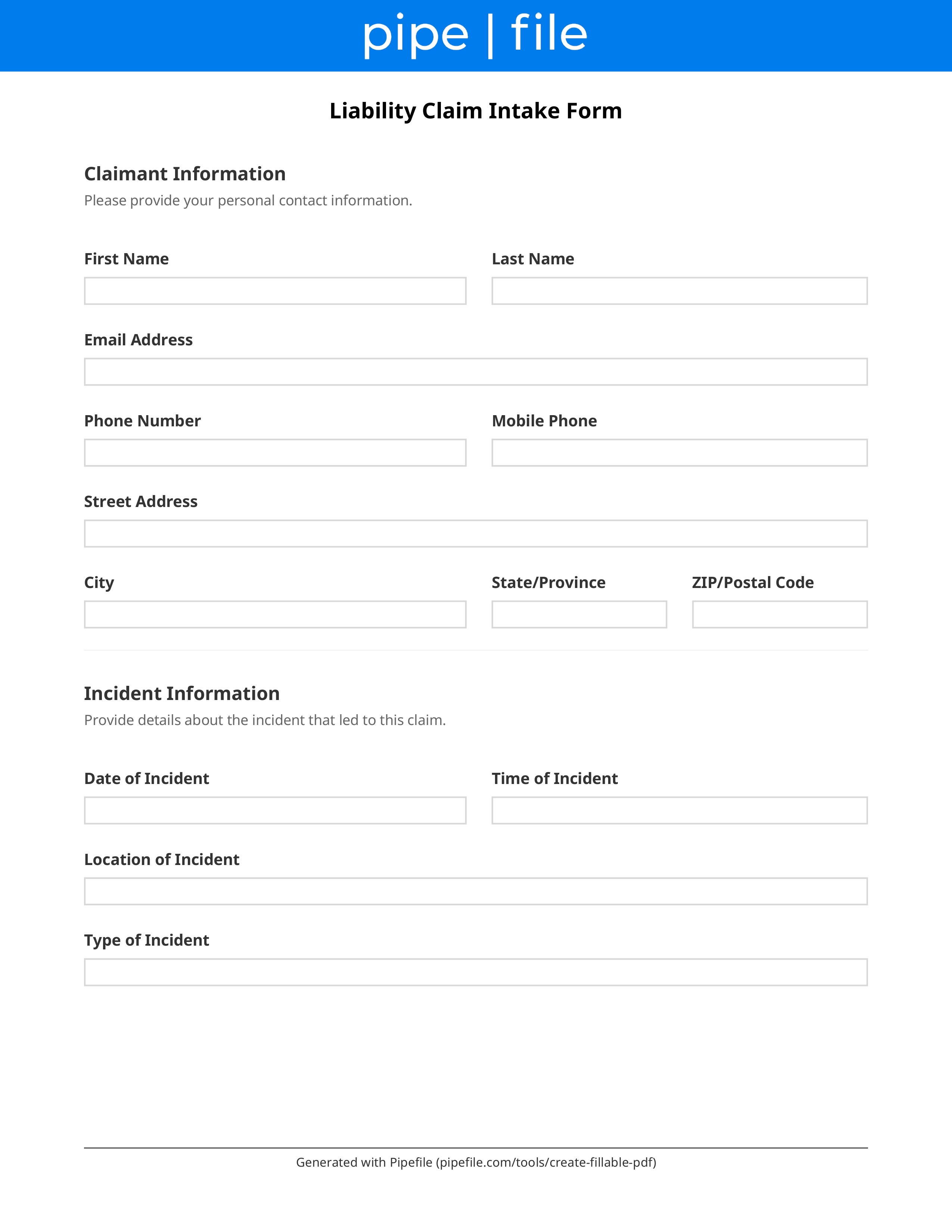
Liability Claim Intake Form form template preview

Key Benefits

Capture first-notice facts in a consistent layout
Record claimant, insured, and broker contacts
Tie the incident to a policy number and coverage line
List witnesses and existing photos or reports
Note injuries, property damage, and other alleged harm
Start the file without drafting a coverage position

Common Use Cases

Insurer or TPA first notice of lossRisk managers reporting a premises incidentBrokers submitting a liability FNOL for a clientContractor jobsite injury or property-damage reportsProduct-complaint intakes that may become claimsAuto liability notices that need a separate auto file

Frequently Asked Questions

What is first notice of loss for liability?
It is the first report that an incident happened that may involve a third-party claim. Collect who, what, when, where, and how you heard about it. Coverage decisions come later from the claims team.
Should the insured admit fault on this form?
No. Record facts as reported. Admissions can prejudice the defense. The form should capture narrative, not a legal conclusion.
How is this different from insurance-claim-intake-form?
The existing insurance-claim-intake-form is a general claims intake. This page is a liability-focused FNOL (people, premises, products, or operations). Use the page that matches how you file templates.
Is this coverage advice?
No. Reporting a claim does not create coverage. Confirm notice provisions, self-insured retentions, and tender duties with the policy and assigned adjuster.

Checklist

Insured

Named insured, reporting person, and callback numbers
Required

Location or job name if a contractor risk.

Policy

Policy number, carrier, and coverage line (GL, auto, umbrella)
Required

Effective dates if known.

Incident

Incident date, time, location, and narrative of what was reported
Required

Facts only; no fault conclusion.

Claimant

Claimant name, contact details, and alleged injury or damage
Required

Attorney name if already represented.

Evidence

Witness names and phone numbers

Employees and third parties.

Photos, incident reports, and video already collected

Do not wait to report while gathering more.

Authorities

Police, OSHA, or other agency report numbers if any

Attach the report when available.

Notice

Date first reported to carrier or TPA and how it was sent
Required

Keep the confirmation number.