←Home/Templates/Legal/Immigration/I-212 Checklist: Permission to Reapply for Admission

I-212 Checklist: Permission to Reapply for Admission

Immigration Attorney and Inadmissibility Resource

Prepare Form I-212 with our permission-to-reapply checklist. Form I-212 (Application for Permission to Reapply for Admission into the United States After Deportation or Removal) is used when someone is inadmissible under INA 212(a)(9)(A) or (C) because of a prior removal, deportation, or certain unlawful reentries and needs consent to apply for admission again. This checklist helps immigration attorneys and applicants gather the removal order, identity documents, and evidence of rehabilitation, family ties, and equities. I-212 is often paired with a waiver (I-601) or consular processing; strategy depends on the ground of inadmissibility. Confirm current instructions on USCIS.gov. Not legal advice.
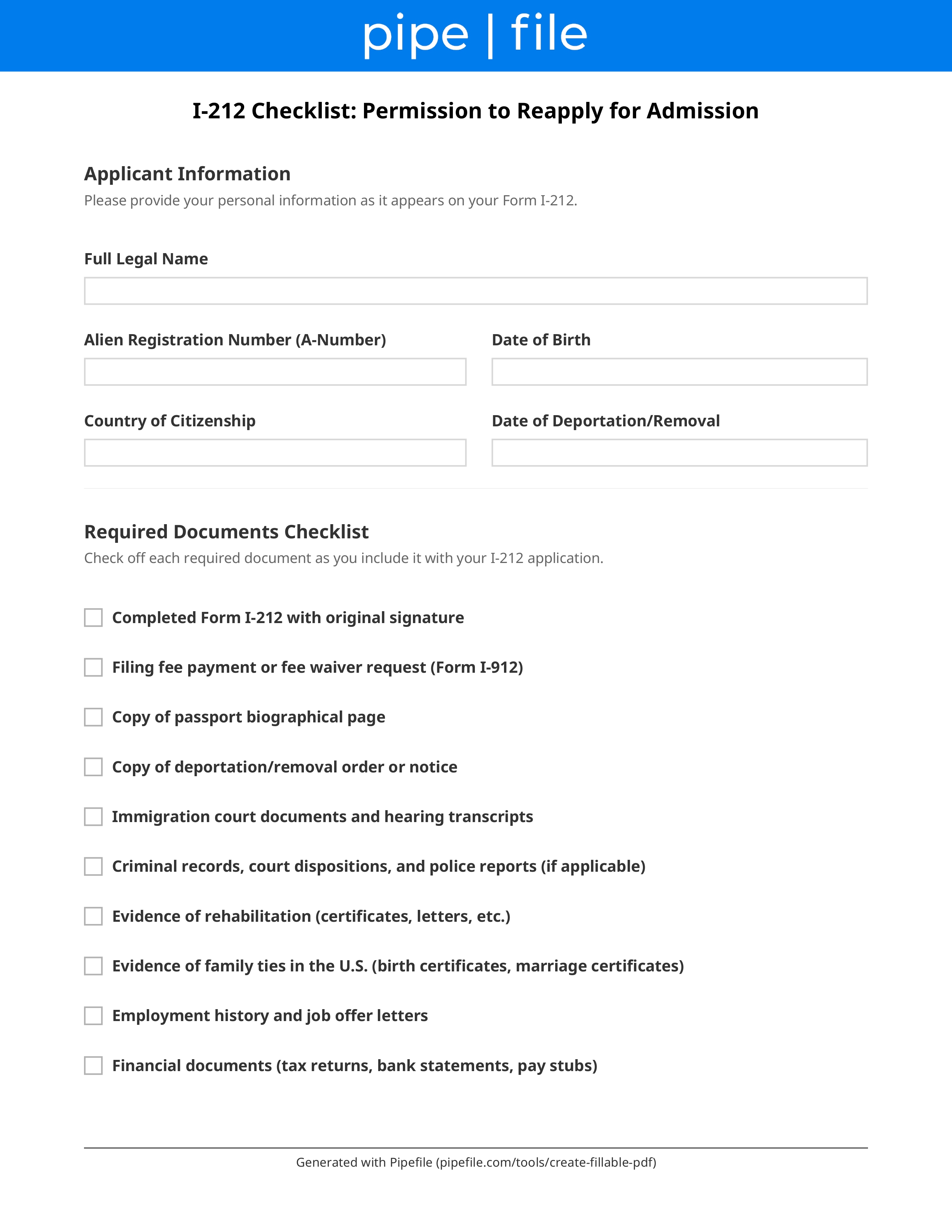
I-212 Checklist: Permission to Reapply for Admission form template preview

Key Benefits

Identify whether I-212 is the correct consent application
Gather the removal order and complete immigration history
Document rehabilitation, family ties, and equities
Coordinate timing with departure, consular processing, or I-601
Reduce RFEs on identity and prior removal records
Professional inadmissibility workflow

Common Use Cases

Applicants with a prior deportation or removal orderPeople inadmissible under INA 212(a)(9)(A) or (C)Consular processing after removal when consent to reapply is requiredImmigration attorneys preparing I-212 with or without I-601Paralegals assembling removal records and supporting evidenceFamily members of U.S. citizens seeking to reapply for admission

Frequently Asked Questions

What is Form I-212 used for?
I-212 asks DHS for permission to reapply for admission after deportation or removal, or in certain unlawful-reentry situations. It does not forgive all grounds of inadmissibility. Other grounds (fraud, unlawful presence, crimes) may need Form I-601 or a different waiver. Counsel should map the exact INA section before filing.
When can I file I-212?
Timing depends on the ground of inadmissibility. Some applicants must wait outside the United States for a stated period; others may file before departing when the instructions allow. Filing too early or from the wrong location can result in denial. Use the current form instructions and the removal order dates.
What evidence helps an I-212?
Typical evidence includes the removal or deportation order, complete immigration and criminal history, identity documents, proof of rehabilitation, evidence of family ties in the United States, hardship to qualifying relatives, and any prior visa or petition approvals. Quality and credibility matter more than volume.
Do I also need Form I-601?
Often yes if a separate waiver ground applies (for example fraud or unlawful presence). I-212 is consent to reapply after removal; I-601 waives other inadmissibility grounds. They can be filed together in some consular cases. They are not interchangeable.

Checklist

USCIS Forms

Complete Form I-212 (Application for Permission to Reapply for Admission After Deportation or Removal)
Required

Use the current edition. Explain the prior removal and why consent should be granted.

Immigration History

Copy of the deportation, exclusion, or removal order and related notices
Required

Include I-205, I-294, IJ order, or reinstatement paperwork as applicable. Dates drive eligibility timing.

Identity Documents

Passport biographic page and any prior I-94, visa, or A-number documents
Required

Names and dates must match the removal record. Include name-change documents if any.

Supporting Documents

Written immigration history: entries, status, departures, and prior filings
Required

Inconsistencies with government records are a common RFE and credibility issue.

Certified court dispositions for any arrests or convictions

Required if there is a criminal history. Dispositions must show the final outcome.

Evidence of rehabilitation, employment, and community ties

Letters, tax records, school records, and proof of good moral character since removal.

Evidence of U.S. citizen or LPR family ties and hardship if consent is denied

Marriage and birth certificates, plus evidence of the relative's circumstances.

Financial Requirements

Filing fee payment (check current fee on USCIS.gov)
Required

Confirm where to file (USCIS vs. consulate) based on the applicant's location and the instructions.