←Home/Templates/Real Estate/Foreclosure Prevention Checklist

Foreclosure Prevention Checklist

Homeowner and Housing Counselor Resource

Assemble a loss-mitigation file with a foreclosure prevention checklist for homeowners, housing counselors, and real-estate professionals. Collect the mortgage and servicer statements, notices of default, a hardship explanation, income and asset documents, and the servicer’s current application forms so a review can start. Options (reinstatement, modification, forbearance, short sale) depend on the investor and current programs. This is not legal, credit, or foreclosure-defense advice. Confirm current servicer and state procedures; deadlines on foreclosure notices are strict.
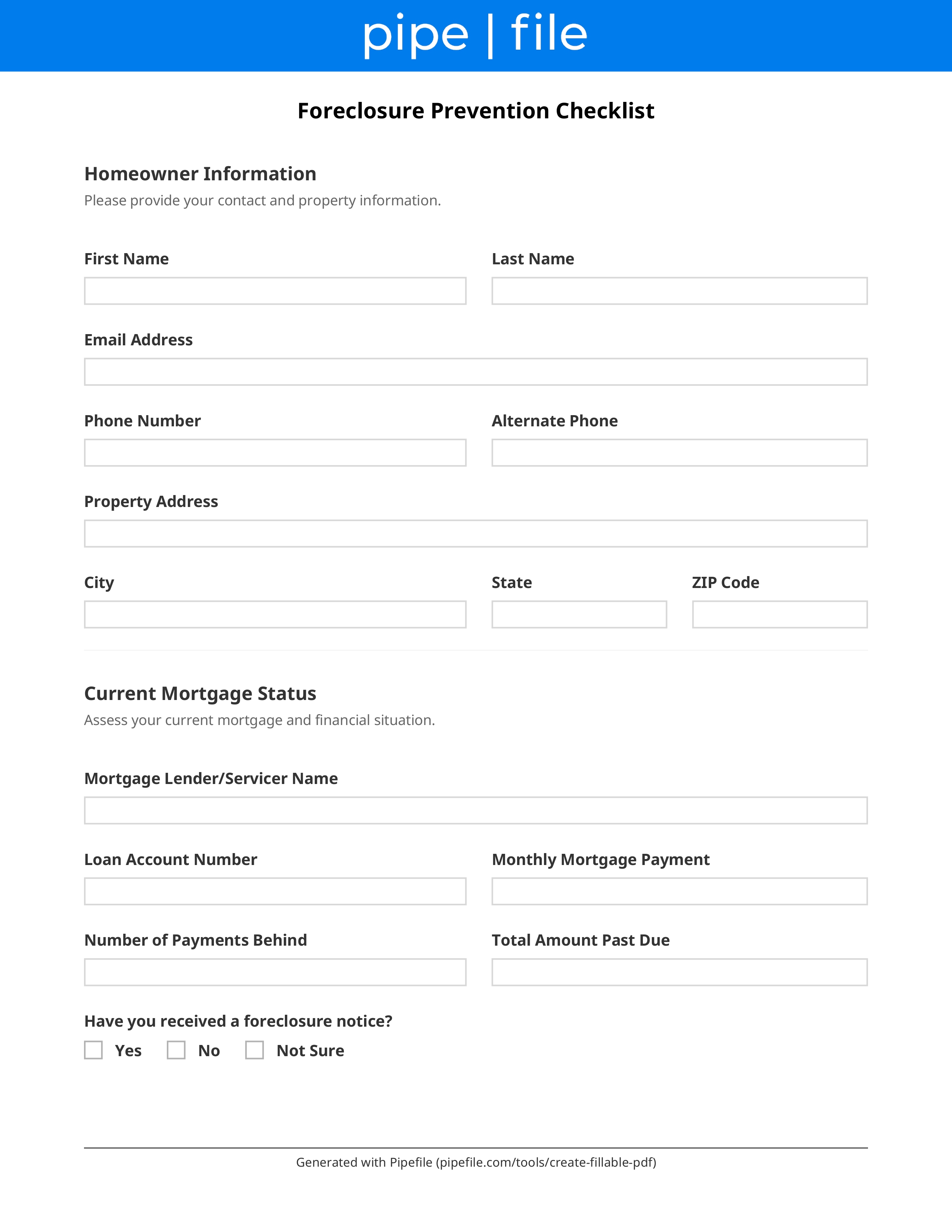
Foreclosure Prevention Checklist form template preview

Key Benefits

Pull every servicer statement and default notice
Write a dated hardship explanation with facts
Attach income, tax, and asset support the servicer lists
Use the current loss-mitigation application, not an old PDF
Log call dates, reference numbers, and who you spoke with
Calendar statutory and sale dates from the notices

Common Use Cases

Homeowners starting a hardship reviewHUD-approved counselor document collectionBorrowers comparing modification vs sale optionsAttorneys assembling a client intake fileSuccessor servicer transfers mid-reviewDocumenting a complete package for investor guidelines

Frequently Asked Questions

What is loss mitigation?
It is the servicer’s review of alternatives to foreclosure: payment plans, forbearance, modification, short sale, or deed-in-lieu. Each investor has document lists and timelines. Sending an incomplete package can restart the clock.
Will this checklist stop a foreclosure sale?
No. Only a complete application accepted under current servicing rules, a court order, or another legal stop can affect a sale. Notice and sale dates are jurisdiction-specific. Contact the servicer and a counselor or attorney immediately if a sale is set.
What income documents are commonly required?
Recent pay stubs, benefit letters, profit-and-loss for self-employed borrowers, tax returns, and bank statements. Servicers publish a list—use that list, not a generic guess.
Is this legal advice?
No. Foreclosure defense, bankruptcy, and modification eligibility are specialized. Confirm current state process and servicer requirements. Beware of foreclosure-rescue scams.

Checklist

Loan

Most recent mortgage statements and payoff or reinstatement quote
Required

Include every lien if there is a second mortgage.

Notices

Notice of default, breach, acceleration, or sale documents received
Required

Calendar every deadline printed on the pages.

Hardship

Signed hardship letter with dates and the reason payments changed
Required

Facts only; attach supporting events (job loss, medical).

Income

Pay stubs, benefit letters, or self-employed profit-and-loss
Required

Follow the servicer’s look-back period.

Recent federal tax returns and W-2 or 1099 forms
Required

As listed on the current application.

Assets

Bank and retirement statements the servicer requests
Required

All pages, even blanks.

Forms

Current servicer or investor loss-mitigation application
Required

Do not submit an expired form version.

File

Servicer call log with dates, names, and reference numbers

Helps if the file is transferred or lost.