Employee Termination Checklist
HR and People Operations Resource
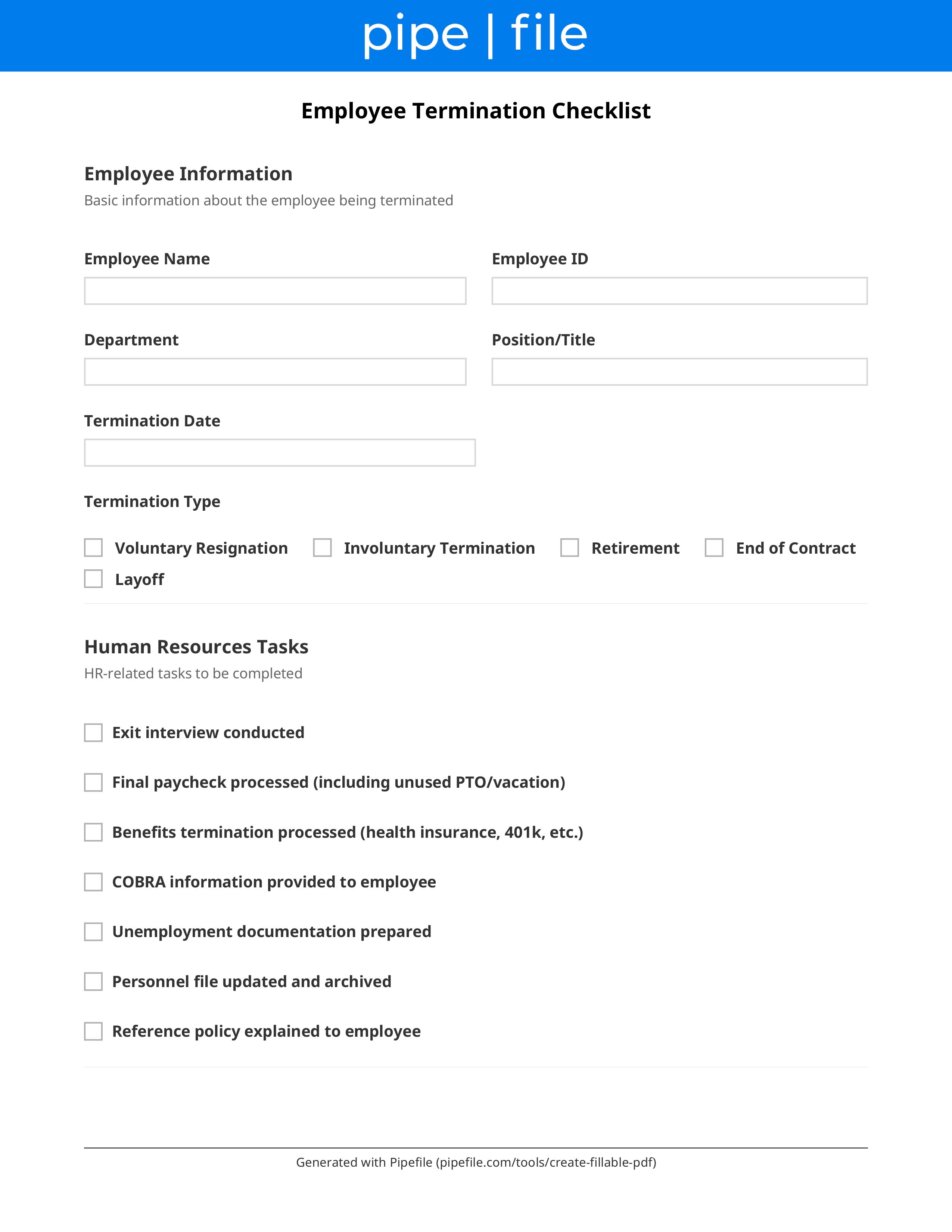
Manage employee separations consistently and compliantly with our employee termination checklist. For HR professionals, managers, and business owners. Covers decision documentation, termination meeting and notice, final pay and benefits, return of company property, access revocation, COBRA and benefit continuation, exit interview, reference policy, and personnel file retention. Use this checklist for voluntary resignations and involuntary terminations so you reduce risk, meet wage and notice requirements, and keep offboarding professional.
Key Benefits
Common Use Cases
Frequently Asked Questions
What is an employee termination checklist?
What is the difference between voluntary and involuntary termination?
When is final pay due?
What should we do about benefits after termination?
Checklist
Documentation
Record whether resignation (voluntary) or employer-initiated (involuntary). For cause: document policy violated and steps taken. For layoff/RIF: document business reason and selection criteria. Have appropriate approval per company policy.
Confirm last day of work, final pay date, benefit end date, and any severance or continuation terms. Employee acknowledgment optional but useful. Retain in personnel file.
File termination letter, property return acknowledgment, proof of COBRA mailing. Retain per retention schedule and legal requirements (e.g. 3–7 years depending on jurisdiction).
Process
Typically manager and HR. Be clear, brief, and consistent. Communicate effective date, final pay timing, benefits continuation, and return-of-property expectations. For involuntary, avoid debate; direct questions to HR or follow-up communication.
Voluntary exit interview or survey to capture feedback. Keep confidential and aggregate for trends. Not required but supports retention and process improvement.
Inform employee what references the company will provide (e.g. title, dates only). Ensure managers and HR follow the same policy to avoid defamation risk.
Payroll
Meet state/local deadline (e.g. next payday or within X days). Include all earned wages, accrued PTO if payout is required by policy or law. Payroll and HR should confirm date and method of payment.
Property & Access
List all items: ID badge, keys, laptop, phone, credit cards, files. Obtain signed acknowledgment of return. For remote workers, arrange shipping and track return. Document any unreturned items.
Coordinate with IT and facilities. Disable email, VPN, and application access as of termination time. Building access and keys collected. For resignations with notice, set access end date; for involuntary, typically immediate.
Benefits
Required for group health plans subject to COBRA (or state equivalent). Send election notice within required timeframe. Retain proof of mailing. Document deadline for employee to elect.
401(k): provide distribution options per plan. PTO: pay out if required by policy/state. Severance: if offered, provide agreement and payment schedule. Document each in checklist.
Compliance
If RIF or mass layoff, determine if WARN or state equivalent applies (advance notice to employees and/or state). Consult legal. Include in checklist when applicable.