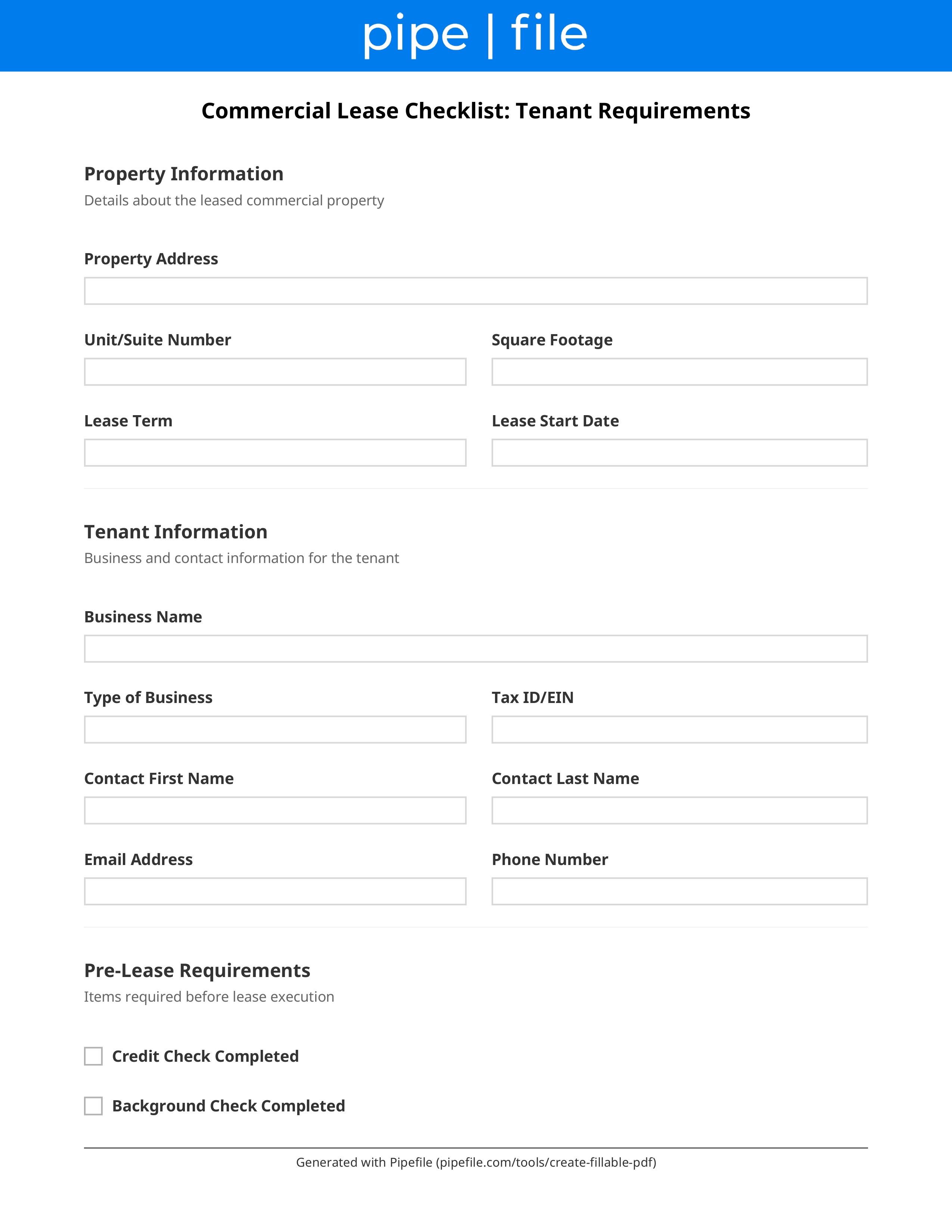
Commercial Lease Checklist: Tenant Requirements
Tenant and Commercial Real Estate Resource
Review and negotiate commercial leases with our commercial lease checklist for tenants. For business tenants, tenant reps, and real estate advisors. Covers key lease terms: parties and premises, term and rent (base rent, CAM, escalations), permitted use, build-out and improvements, security deposit, insurance, maintenance and repairs, assignment and subletting, default and remedies, estoppel and SNDA, and personal guarantee. Use this checklist before signing so you understand tenant obligations, avoid surprises, and identify negotiable points. Not legal advice; consult an attorney for your lease.
Key Benefits
Common Use Cases
Frequently Asked Questions
What is a commercial lease?
What are CAM charges and how do they work?
What should a tenant negotiate in a commercial lease?
What is an SNDA?
Checklist
Basic Terms
Correct legal names of landlord and tenant. Exact description of the leased space (address, suite, rentable vs usable square footage). Confirm square footage matches what you were shown; rent is often based on rentable area.
Term
Commencement and expiration dates. Whether rent starts on possession or a later date. Renewal options: how many, notice period, and how rent is determined (e.g. fair market value, fixed % increase).
Rent
Base rent per square foot or flat amount; monthly or other frequency. Escalation: fixed % each year, CPI, or step increases. Understand total rent over the term.
How CAM and tenant's share of taxes and insurance are calculated (e.g. pro rata). What is included in CAM; exclusions (e.g. capital costs). Estimate or cap if possible. Audit rights for CAM.
Use
Use must match your business. Restrictive use limits your ability to change or assign. Exclusivity (e.g. only coffee shop in center) protects you from direct competitors; confirm in writing.
Improvements
What landlord will provide (allowance, turnkey build-out). Who designs and constructs; who pays over allowance. Condition of delivery (vanilla box, etc.). Approval process for changes.
Deposit
Amount and when due. Cash vs letter of credit (LOC may be required for larger tenants). When and how it is returned; deductions. Interest if any.
Insurance
Minimum limits (e.g. $1M liability); property insurance; naming landlord as additional insured. Proof of insurance before possession and annually. Subrogation waiver if negotiable.
Operations
Who maintains HVAC, interior, exterior, common areas. Triple net (NNN) vs modified gross: tenant often pays more in NNN. Clarify structural vs tenant responsibility.
Transfer
Landlord consent required; whether consent may be withheld or must be reasonable. Recapture right (landlord can take space back). Sublet profits: who keeps. Important for flexibility if you sell or downsize.
Legal
What constitutes default (non-payment, breach). Cure period (e.g. 5–10 days for payment). Late fees and interest. Landlord's remedies: re-enter, terminate, pursue rent. Notice and opportunity to cure.
Tenant may be required to sign estoppels (confirming lease terms) for lender or buyer. SNDA: request non-disturbance so if landlord is foreclosed, tenant's lease survives. Negotiate SNDA early.
Landlord may require a personal guarantee from principal(s). Limit amount (e.g. 6–12 months rent), term (e.g. first 2 years only), or negotiate release after certain conditions. Entity-only obligation is preferable if possible.