←Home/Templates/Legal/Litigation/Civil Litigation Client Intake Form

Civil Litigation Client Intake Form

Litigation Attorney and Legal Intake Resource

Open a civil case with a litigation client intake form for plaintiff and defense counsel. Collect party and related-entity names for conflicts, a factual timeline, the amount in controversy, jurisdiction and venue clues, existing contracts or demand letters, insurance information, and any statute-of-limitations or upcoming deadline the client already knows so the firm can evaluate the claim and send a litigation hold. For litigators and intake staff. This is not legal advice; claims, deadlines, and notice rules are jurisdiction-specific—confirm current law before filing or answering.
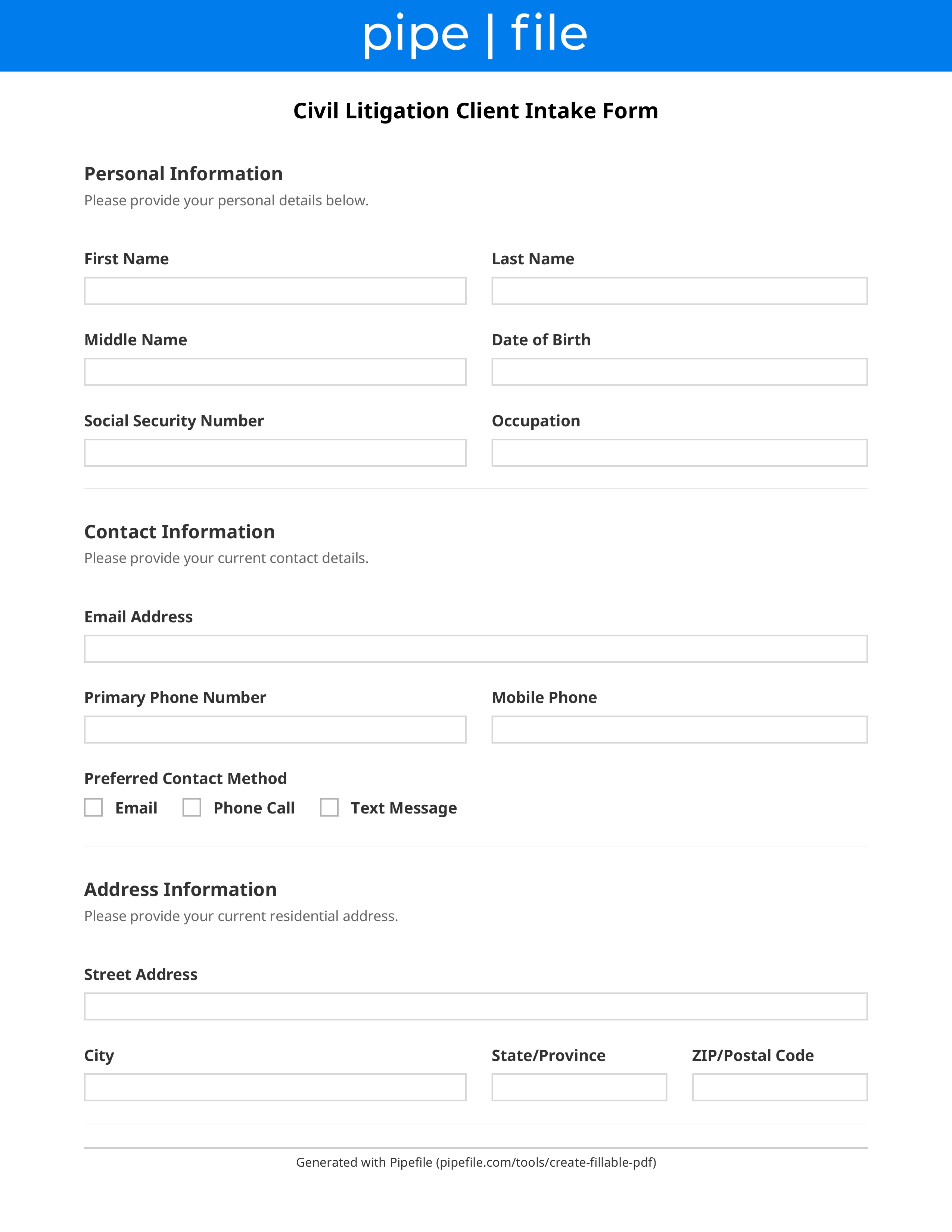
Civil Litigation Client Intake Form form template preview

Key Benefits

Conflict-check every party, insurer, and related entity
Capture a dated factual timeline at the first call
Record damages, venue facts, and insurance
Collect contracts, demands, and pleadings already in hand
Flag limitation periods and upcoming hearing dates
Trigger a litigation hold before evidence disappears

Common Use Cases

Plaintiff firms screening a new commercial or tort matterDefense counsel opening a file after a complaint is servedParalegals collecting the client's existing document stackIn-house teams referring a dispute to outside counselMediation-bound matters that still need a docketed caseInsurance-coverage counsel gathering the underlying claim facts

Frequently Asked Questions

What names belong on the conflict check?
Every plaintiff, defendant, parent company, individual officer the client wants to name, insurers, and opposing counsel if known. Commercial cases often hide affiliates. Run conflicts before you read a confidential attachment.
How detailed should the intake timeline be?
Dates of the key events, when the client first knew of the harm, and any written notice already sent or received. A short chronology is enough to spot a limitations issue; a full witness outline can wait for the interview.
Why ask about insurance so early?
Coverage may fund the defense or a settlement, and late notice can prejudice rights. Collect carrier, policy number, and any reservation-of-rights letter the client already has.
Is this form legal advice?
No. It organizes facts for evaluation. Whether a claim exists, where to file, and when it expires are questions for licensed counsel in the relevant jurisdiction.

Checklist

Parties

Client, adverse parties, related entities, and insurers for the conflict check
Required

Include individuals who may later be added. Note any prior representation of the other side.

Facts

Dated factual timeline and when the client learned of the dispute
Required

Enough to spot a limitations or notice issue. Attach a longer memo only after engagement.

Case Information

Amount in controversy, where events occurred, and where parties reside
Required

Supports jurisdiction, venue, and whether the matter is likely state or federal.

Documents on Hand

Contracts, demand letters, complaints, or orders the client already has
Required

Do not ask the client to create evidence. Collect what exists.

Insurance

Insurance carrier, policy number, and any claim or reservation letter

Note notice deadlines in the policy if the client has the document.

Deadlines

Known statutes of limitation, answer dates, or hearing dates
Required

Calendar anything the client mentions on the day of intake. Verify later against the file.

Preservation

Key custodians and systems that should receive a litigation hold
Required

Email, phones, shared drives, and a named business owner. Send the hold after engagement.

Goals

Client goals: settlement, injunction, collection, or defense verdict
Required

Shapes staffing and whether early mediation is realistic.